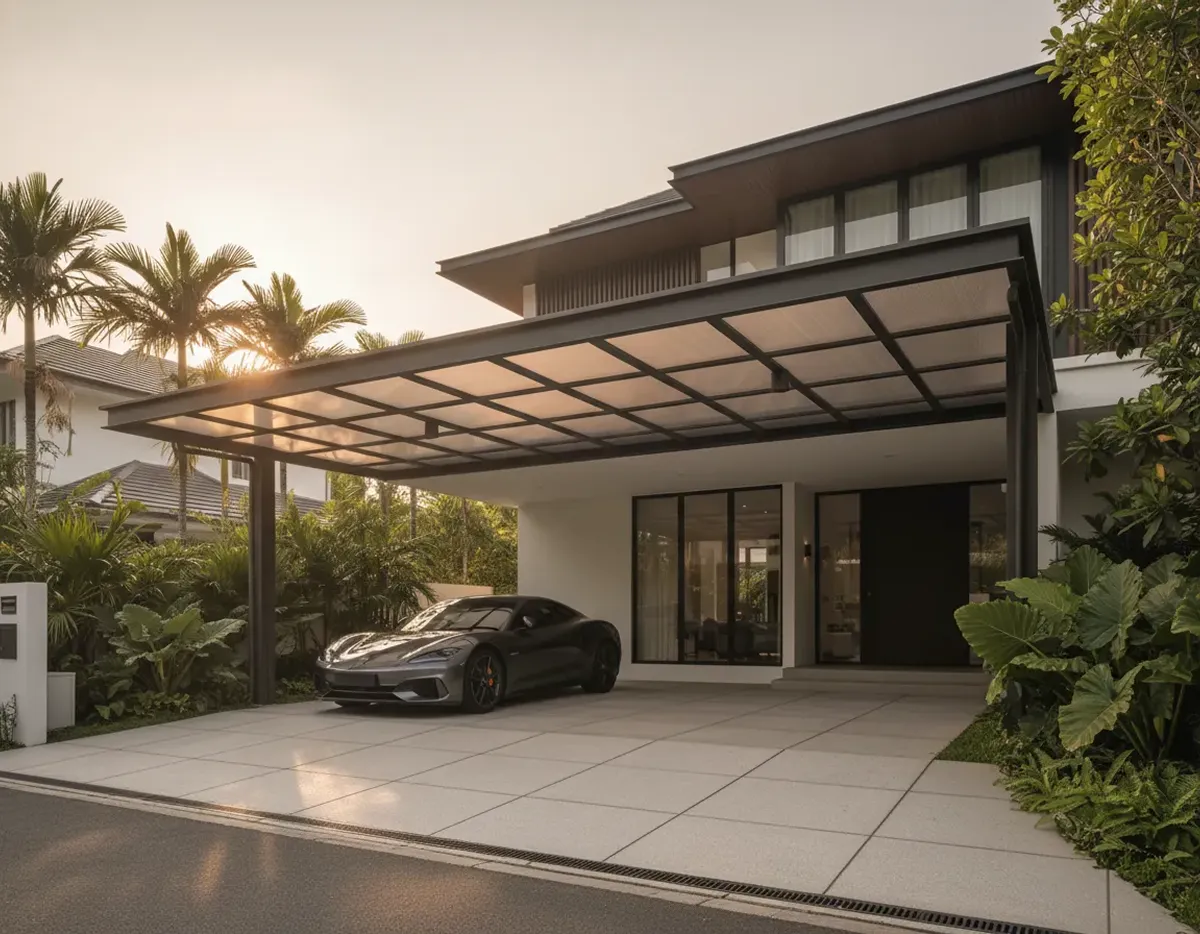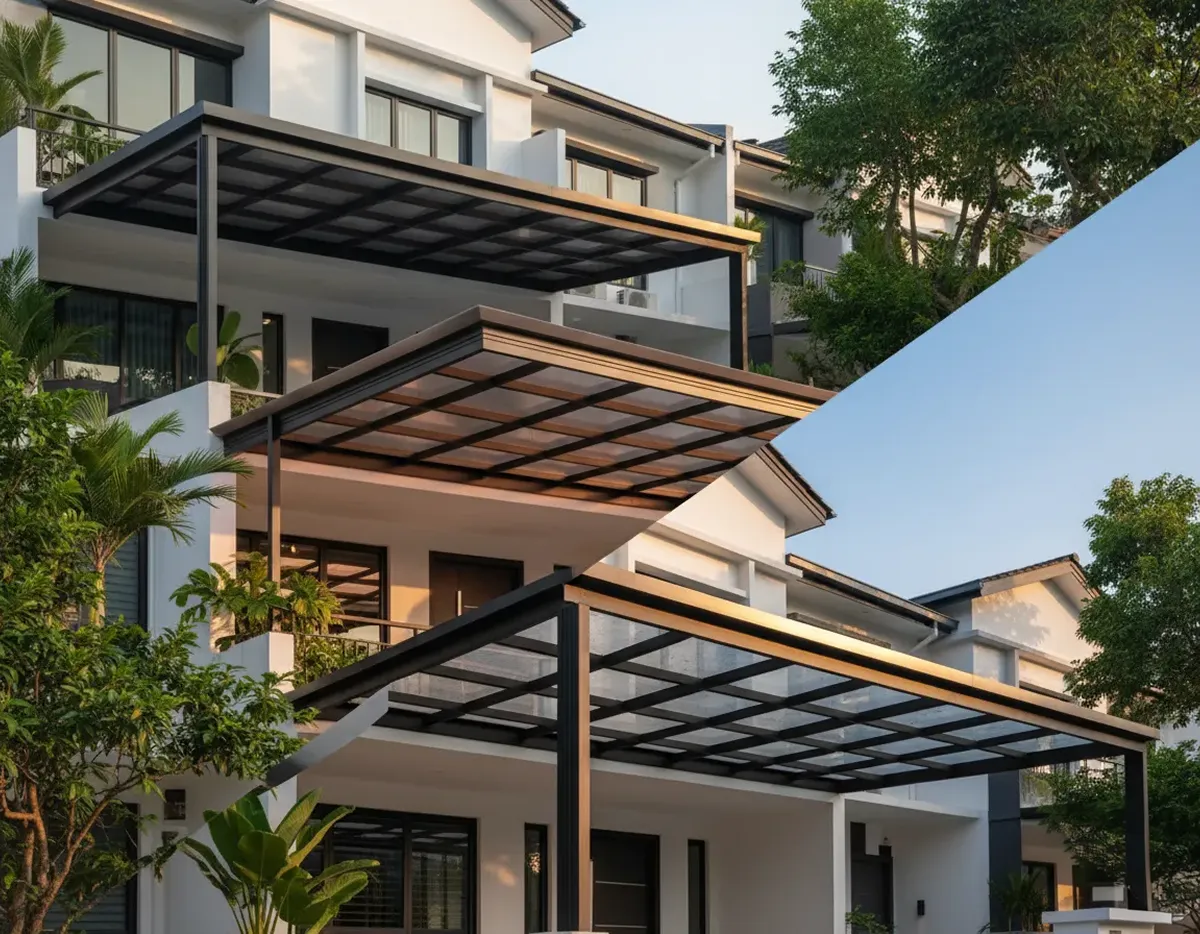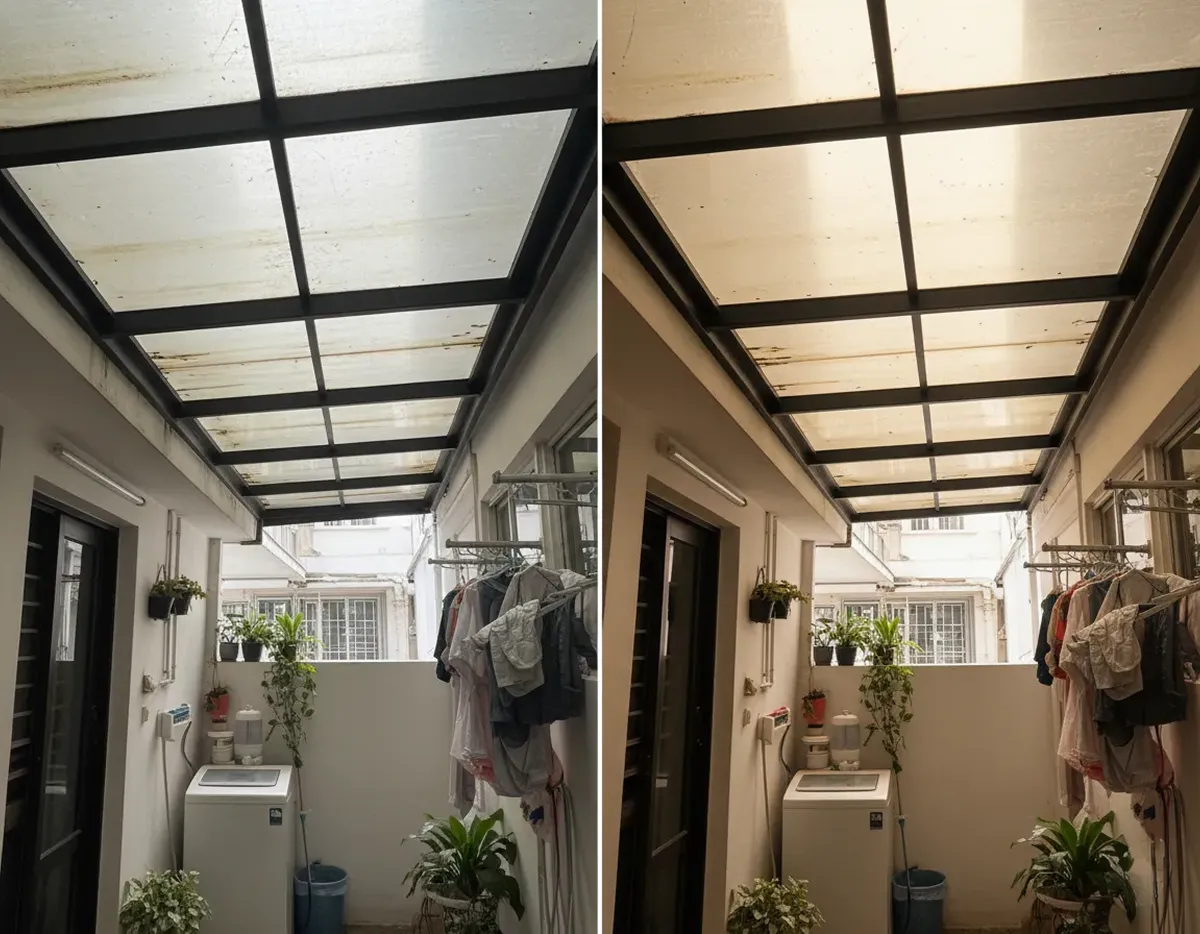
Clear roofs looking yellow? Learn why polycarbonate discolours, how to slow it down, and when to switch materials for cooler, cleaner outdoor spaces.
Clear polycarbonate roofs are popular because they let in daylight while keeping rain out. Over time, though, many owners notice the panels turn yellow or hazy, making spaces feel dull and tired. If that’s happening at your home, this plain-English guide explains why it occurs, what you can realistically do to slow it, and when it’s smarter to upgrade.
Why polycarbonate yellows
1) UV and heat.
Even UV-protected sheets slowly break down under Singapore’s intense sun. UV energy causes photo-oxidation in the plastic, shifting it towards a yellow tint. Heat accelerates the process.
2) Surface wear and micro-scratches.
Dust, bird droppings and rough cleaning pads create fine scratches. These scatter light, so the roof looks milky and “dirty” even after washing.
3) Pollution and contaminants.
Haze, salt spray (near the coast), and air pollutants can bond to the surface, staining the sheet and reacting with protective coatings.
4) Wrong side up or film left on.
Polycarbonate often has a UV-treated side. If that side isn’t installed facing the sun—or if the protective film isn’t fully removed—premature yellowing and patchy marks are common.
5) Low-grade panels or ageing.
Budget sheets, thin gauges, and older installs (5–10+ years) simply reach the end of their appearance life faster.
How to slow yellowing (if you’re keeping polycarbonate)
Use gentle cleaning only.
Wash quarterly with mild soap, lots of water, and a soft sponge or microfiber. Avoid harsh solvents (thinners, acetone), abrasive powders, and stiff brushes—they damage the UV layer and scratch the sheet.
Rinse first, wipe second.
Always hose off grit before touching the surface. Most “scrub damage” happens when dry dust is dragged across the panel.
Mind the chemistry.
Skip “all-purpose” cleaners with ammonia or strong alkalis. Neutral pH is safest. If you must spot-clean, test a tiny corner first.
Control runoff and drip lines.
Stains track where water concentrates. Proper guttering, downpipes and flashing reduce dirty streaks that bake into the sheet.
Choose smarter tints when replacing like-for-like.
Bronze or grey tints reduce glare and slow the “old and yellow” look. Thicker, UV-co-extruded solid sheets last better than ultra-thin options.
Reality check: Cleaning slows the appearance of yellowing, but it can’t reverse UV ageing. If clarity and brightness matter most, plan for panel replacement on a sensible cycle.
When it’s time to upgrade the material
If your priorities have shifted from “maximum daylight” to shade, heat control, privacy and low maintenance, a solid aluminium (ACP) roof is usually the better fit.
Why owners switch to ACP (solid roof):
- Cooler, no glare: Blocks direct sun, so spaces stay usable at midday.
- Quieter in rain: Aluminium dampens drum-like noise better than thin plastics.
- No yellowing: Wipe clean; finish stays consistent for years.
- Modern look: Flat lines, tidy flashing, and colours that match your façade.
If you still want a clear premium look and are prepared for glass care, tempered/laminated glass stays optically clear (no yellowing) but needs robust structure and regular cleaning to avoid water spots.
Quick options map
- Keep polycarbonate (best for daylight):
Upgrade to thicker, UV-co-extruded sheets with a suitable tint, improve guttering, and follow gentle cleaning practices.
- Switch to ACP (best for shade/quiet/low upkeep):
Choose 3 mm for budget spans or 4 mm for wider, stiffer panels; pick a finish (matte/metallic/wood-grain); add optional insulation for rain noise.
- Go glass (best for premium clarity):
Tempered/laminated with proper flashing and drainage; expect periodic cleaning for spots.
Build quality matters more than the brochure
Most leaks and “grime lines” come from detailing, not the material. A proper job includes:
- A thorough site survey (spans, supports, neighbour boundaries, drainage path)
- Correct sub-frame, slope, and flashing at wall junctions
- Gutters/downpipes that prevent streaks and splash-back
- Clean edges and matching trims that look built-in
Bottom line
- If you want to keep daylight, replace with better-grade polycarbonate, treat it gently, and improve drainage.
- If you want shade, cooler temps, privacy and lower upkeep, ACP is the long-term answer.
- If you want clear premium aesthetics and accept maintenance, consider glass.
Ready to fix yellowing for good?
Book a Free Site Check. We’ll assess your existing awning, show polycarbonate replacement, ACP solid roof, and glass options with photos from nearby installs, and give a clear price range—so you can choose confidently.
Explore next: ACP Roofing Singapore, Polycarbonate Roofing Singapore, Awning Leak & Flashing Repairs