TL;DR:
- Want shade, cooler temps & less noise → ACP
- Want daylight → Polycarbonate
- Want premium daylight (accept heat/cleaning) → Glass
Choosing the right roofing material for an outdoor patio, car porch, or extension in Singapore’s tropical climate is a decision that balances aesthetic appeal, thermal comfort, and long-term maintenance. With heavy monsoon rains and intense UV exposure, the three industry-leading contenders—Aluminum Composite Panel (ACP), Polycarbonate, and Glass—each offer distinct advantages.
This detailed guide provides a comprehensive technical comparison based on industry standards and local architectural trends.
1. Aluminum Composite Panel (ACP) Roofing
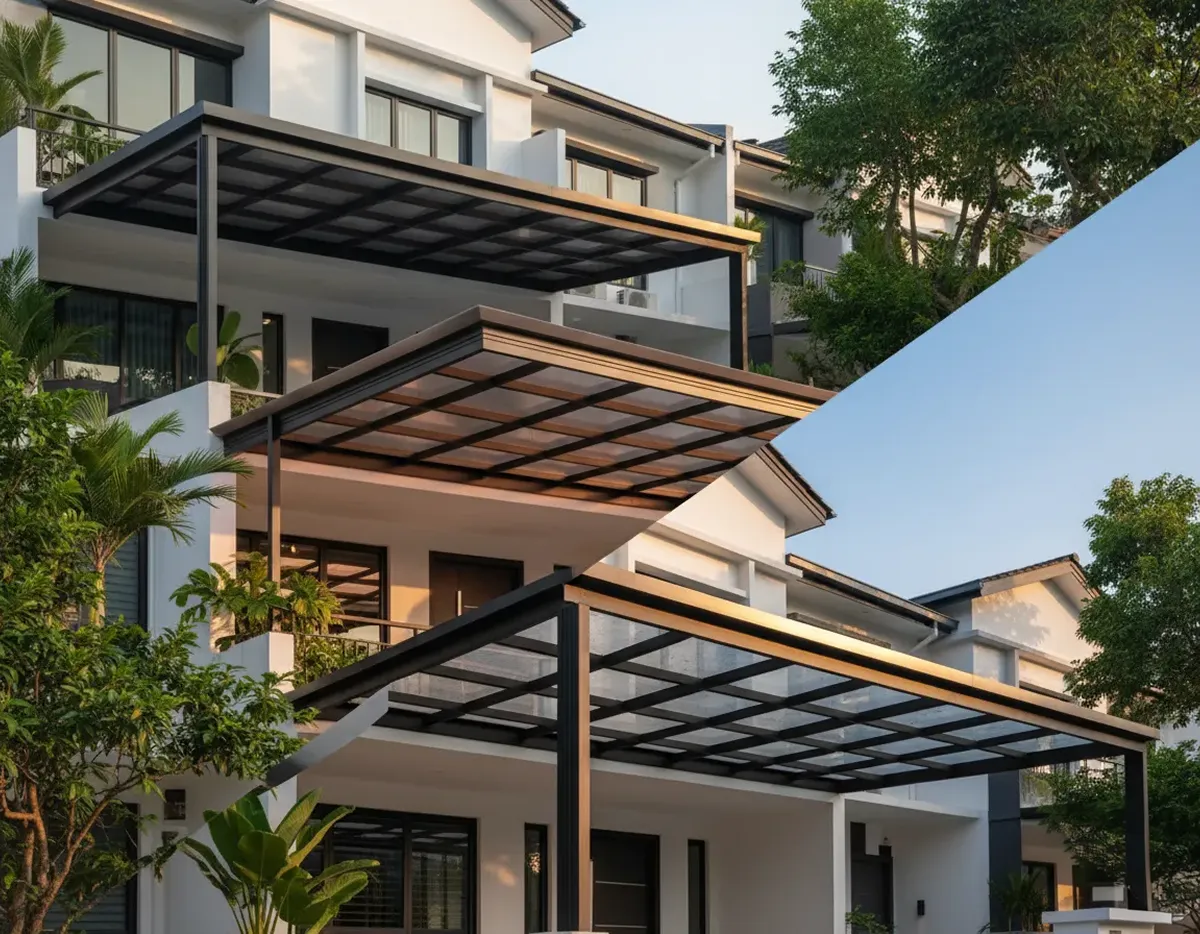
ACP has surged in popularity for Singaporean landed homes and commercial linkways. It is a "sandwich" panel consisting of two thin coils of aluminum bonded to a non-aluminum core (typically polyethylene or a fire-retardant mineral).
Key Technical Features
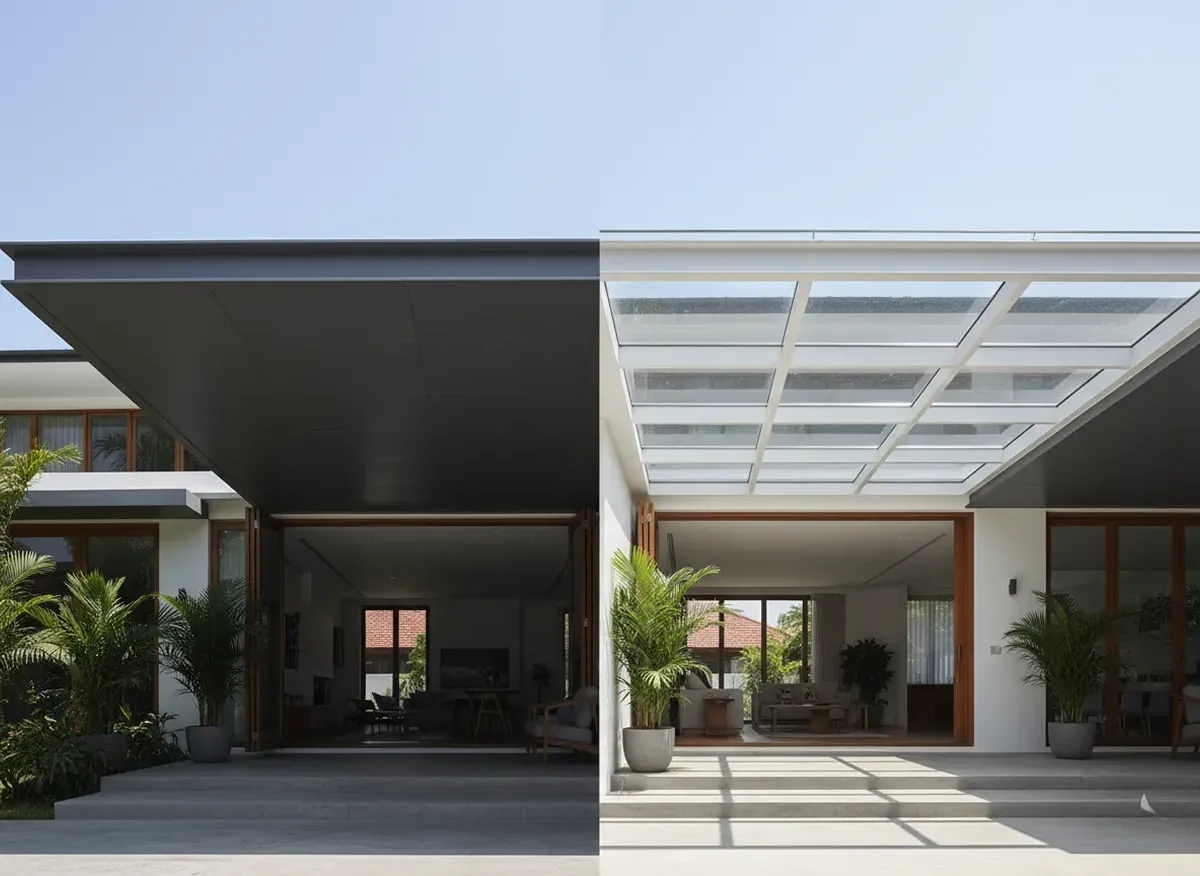
- Opaque Nature: Unlike the other two options, ACP is completely opaque. It provides 100% shade, making it the superior choice for areas where heat reduction is the primary goal.
- Thermal Insulation: High-quality ACPs often feature a PVDF (Polyvinylidene Fluoride) coating. This coating reflects solar radiation, while the composite core acts as a thermal break, preventing heat from radiating downward.
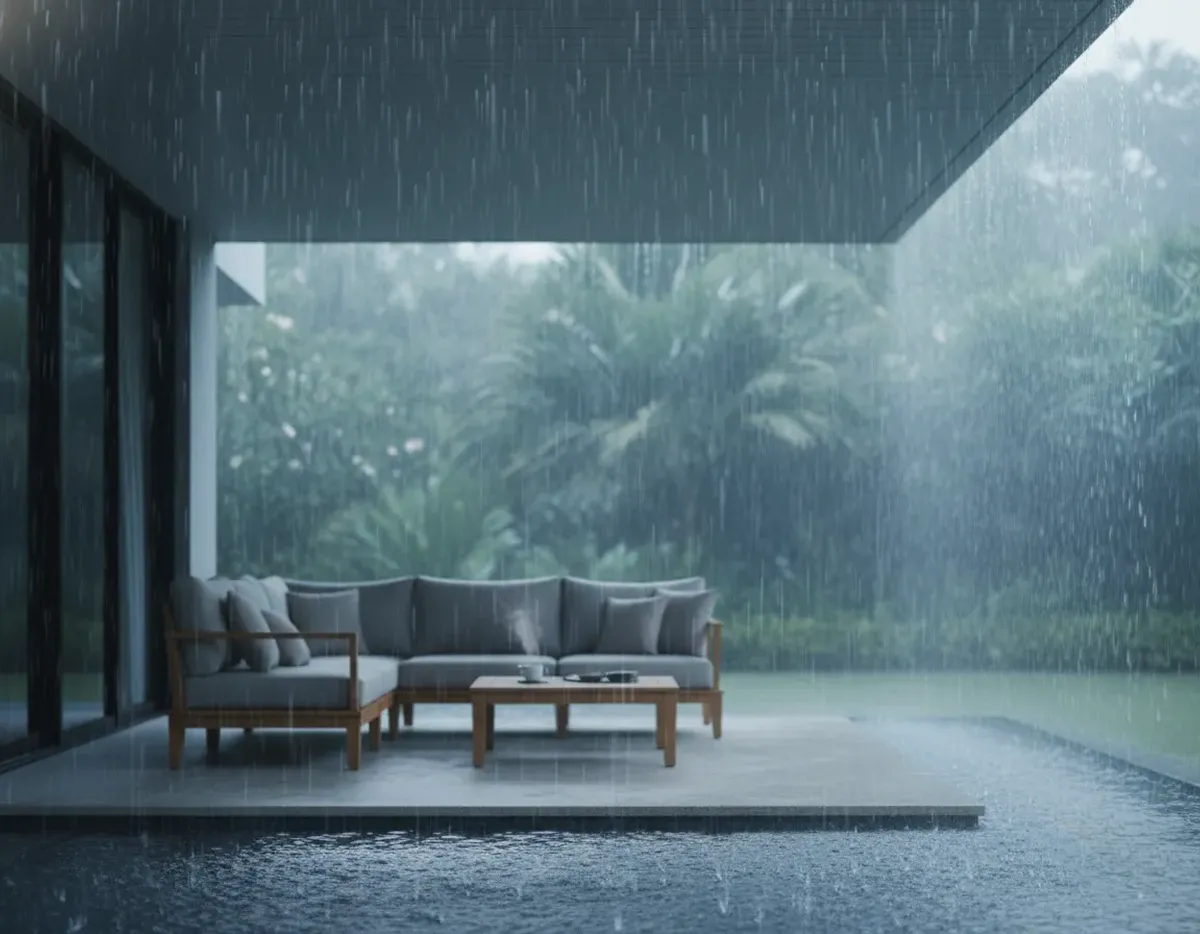
- Acoustic Performance: Because of its composite sandwich structure, ACP is remarkably quiet during heavy downpours. It dampens the "drumming" effect of rain significantly better than thin metal sheets or polycarbonate.
Pros
- Durability: With a lifespan of 15–25 years, it is highly resistant to corrosion and warping.
- Low Maintenance: The smooth surface is largely self-cleaning with rain and does not show dirt or algae as prominently as transparent materials.
- Modern Aesthetic: Offers a sleek, flat, and metallic finish that complements contemporary architecture.
Cons
- Zero Natural Light: It can make adjacent indoor rooms darker if the extension is large.
- Fire Safety: Standard PE-core ACPs are combustible. In Singapore, it is critical to specify FR-grade (Fire Retardant) panels to meet SCDF safety requirements.
2. Polycarbonate Roofing
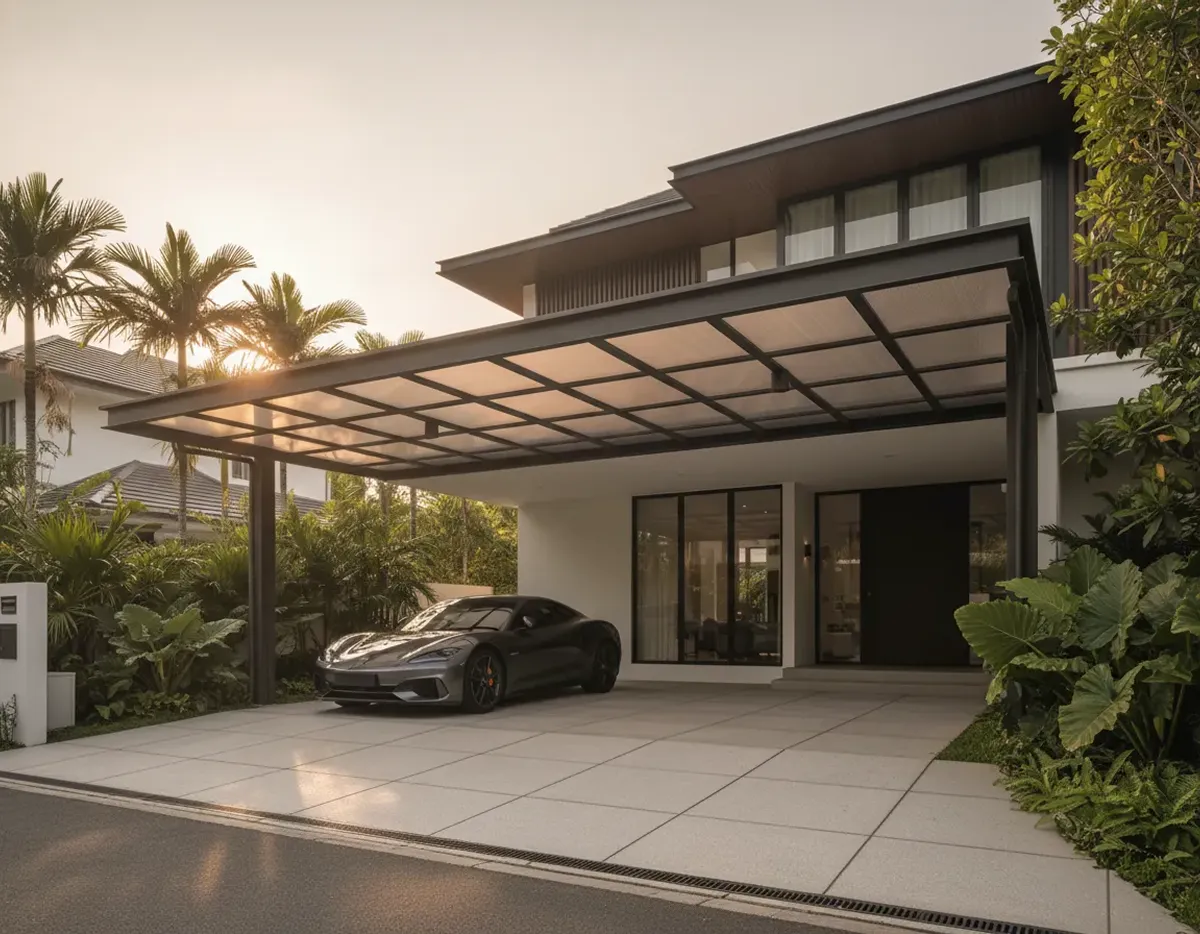
Polycarbonate is a high-performance thermoplastic. It is widely used in Singapore for areas that require natural light, such as service yards, skylights, and garden walkways.
Varieties of Polycarbonate
- Solid Sheets: Look like glass but are 200 times stronger.
- Twin-wall/Multi-wall: Feature air pockets for better heat insulation but can trap condensation/algae if not sealed correctly.
- Embossed/Textured: Diffuses light to reduce glare.
Key Technical Features
- Impact Resistance: It is virtually unbreakable. It can withstand falling branches or heavy hailstones (rare in SG, but relevant for durability) without cracking.
- UV Protection: Modern sheets are co-extruded with a UV-resistant layer that prevents the plastic from becoming brittle and yellowing under the equatorial sun.
- Weight: It is roughly 1/6th the weight of glass, allowing for lighter, more cost-effective support structures.
Pros
- Natural Lighting: Allows 80–90% light transmission, keeping spaces bright.
- Flexibility: Can be easily curved or cold-bent on-site to create arched roofs.
- Cost-Effective: Generally the most affordable option for both material and installation.
Cons
- Noise: Rain noise is much louder on polycarbonate compared to ACP or Laminated Glass.
- Yellowing: Even with UV coatings, cheaper grades may haze or turn yellow after 8–10 years.
- Expansion/Contraction: Plastic expands significantly in heat; poor installation can lead to "popping" sounds or leaks at the joints.
3. Glass Roofing
For a high-end, "luxury" finish, glass is the undisputed leader. In Singapore, building codes strictly mandate the use of Safety Glass for overhead applications.
Mandatory Standards
- Laminated Glass: This consists of two glass panes bonded by a PVB (Polyvinyl Butyral) or SGP (SentryGlas) interlayer. If broken, the shards adhere to the plastic interlayer rather than falling.
- Tempered Laminated Glass: The gold standard. It combines the strength of tempered glass with the safety of lamination.
Key Technical Features
- Clarity and Longevity: Unlike polycarbonate, glass does not scratch easily, nor does it yellow or haze over time.
- Weight: Glass is extremely heavy (approx. 25–30kg/m² for a standard 13mm panel). This requires heavy-duty steel or aluminum hollow section framing, increasing overall project costs.
- Heat Control: Raw glass is a heat trap. To make it viable in Singapore, it must be treated with Low-E (Low-Emissivity) coatings or solar films to block IR and UV rays.
Pros
- Unmatched Aesthetics: Provides a premium "open air" feel and seamless integration with the sky.
- Acoustic Insulation: Laminated glass is heavy enough to block high-frequency rain noise effectively.
- Property Value: Often considered a value-add for residential property resale.
Cons
- High Cost: Can be 3 to 5 times more expensive than polycarbonate when factoring in the required structural reinforcement.
- Maintenance: Shows bird droppings, dust, and water spots very clearly. Requires regular professional cleaning.
- Heat Gain: Even with films, a glass roof can feel significantly warmer than an opaque ACP roof during mid-day.
4. Head-to-Head Comparison Table
FeatureACP (Aluminum Composite)PolycarbonateLaminated GlassLight Transmission0% (Opaque)80% - 90%90%+Heat InsulationExcellent (Reflective)Moderate (Better in Twin-wall)Poor (Requires Films)Rain NoiseLow / MuffledHigh / DrummingVery LowImpact ResistanceHigh (Dents, won't break)Extremely HighModerate (Can shatter)Lifespan15 - 25 Years8 - 12 Years25+ YearsMaintenanceVery LowMedium (Algae/Yellowing)High (Cleaning visible dirt)Cost (Estimated)Mid-rangeLow to Mid-rangeHigh / Premium
5. Critical Selection Factors for the Singapore Market
A. The "Heat Trap" Effect
If your patio faces the West sun, ACP is almost always the better choice. Transparent roofs (Glass and Polycarbonate) create a greenhouse effect. While solar films for glass can block up to 60-70% of heat, the remaining 30% can still make an outdoor deck uncomfortable during a 2:00 PM BBQ.
B. Structural Load and Framing
If you are retrofitting a roof onto an existing balcony or a lightweight pergola, Polycarbonate or ACP are preferred. Glass requires a structural engineer’s endorsement in many cases because the weight of the glass plus the heavy-duty steel frame can exceed the load-bearing capacity of existing concrete slabs.
C. Rain and Noise
In Singapore’s "Sumatra" squalls, noise becomes a major factor. If the roof is right outside a bedroom window, the drumming of rain on polycarbonate can be disruptive. In such cases, ACP or Laminated Glass is recommended for a quieter indoor environment.
D. Maintenance and Aesthetics
- For a "Clean" Look: Glass stays the clearest but requires quarterly cleaning.
- For "Set and Forget": ACP is the most durable with the least amount of visible aging.
- For "Budget Brightness": Polycarbonate provides the best light-to-cost ratio.
6. Summary Recommendations
Choose ACP if: You want maximum shade, the coolest possible temperature, a modern look, and a roof that requires almost zero maintenance for the next 20 years.
Choose Polycarbonate if: You are on a budget but want a bright, airy space, or if you need a curved roof design. It is perfect for service yards or small side-linkways.
Choose Laminated Glass if: Budget is not a primary concern and you want a high-end, luxury aesthetic that maximizes the view of the sky without the risk of the material yellowing over time.
Before proceeding, always ensure your contractor provides a warranty on waterproofing (usually 1–3 years) and that the materials used are compliant with local fire safety codes (Class 0 or Class 1) for residential use.