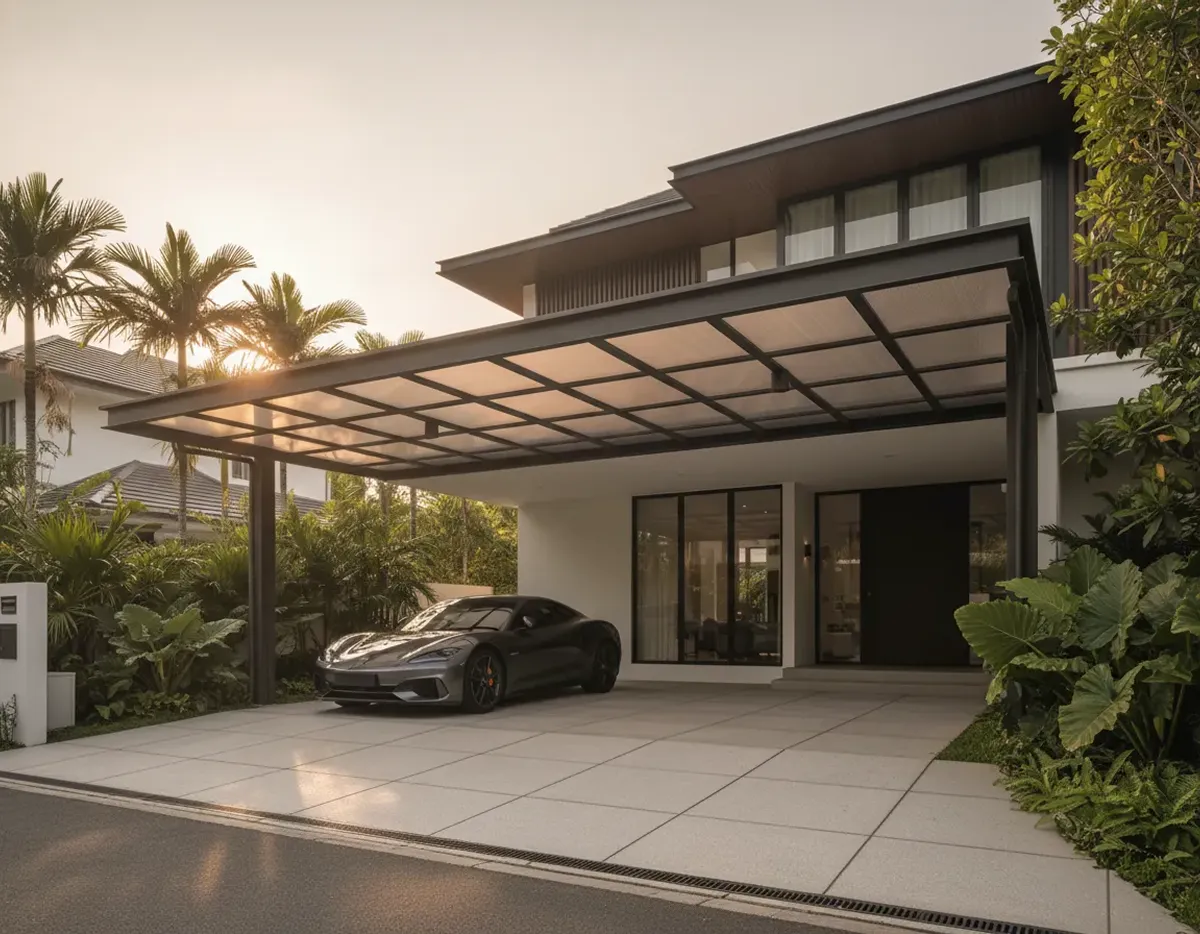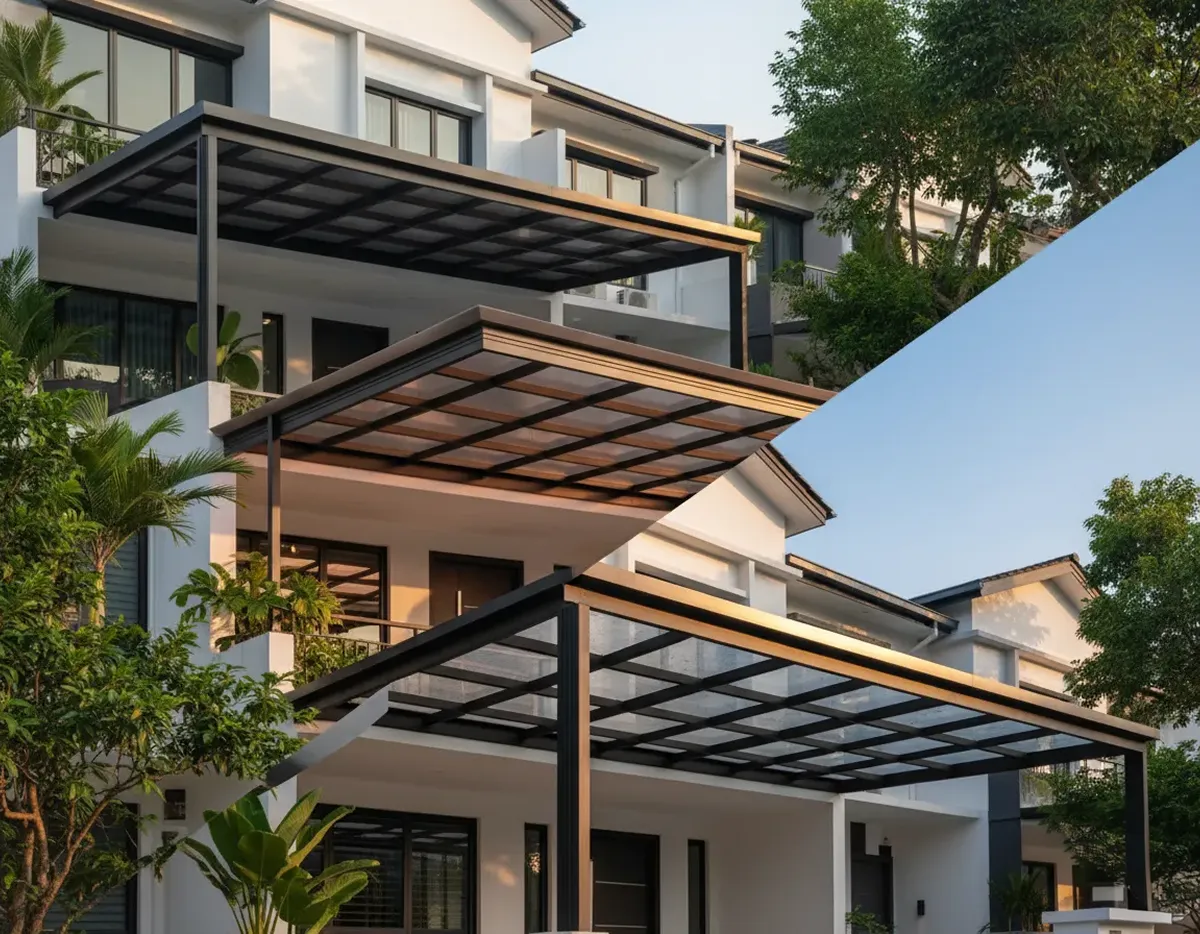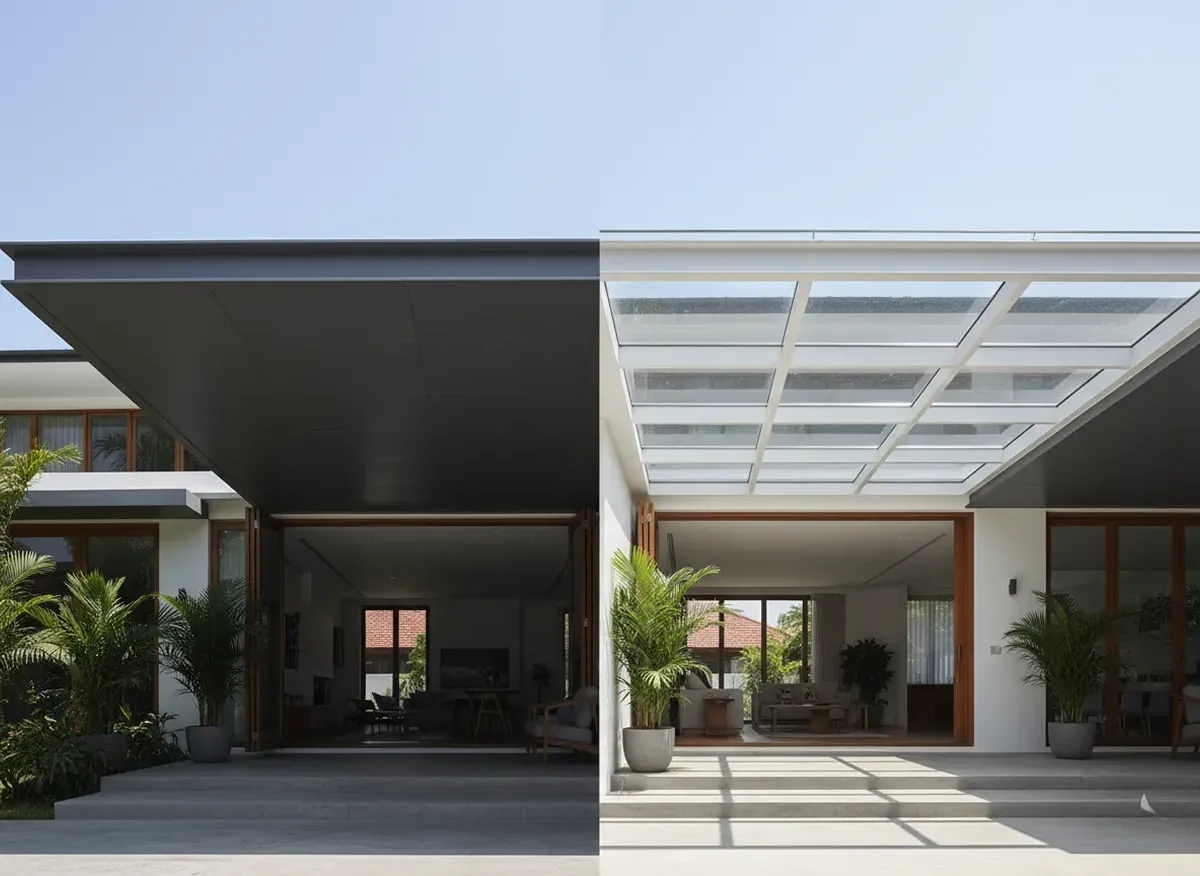
When Singapore homeowners say “awning,” they usually mean one of two very different roofs. A solid roof—typically Aluminium Composite Panel (ACP)—is opaque, blocks heat and glare, and gives a clean, modern look. A see-through roof—usually polycarbonate or glass—lets daylight flood the space while keeping rain out. This guide explains the trade-offs, so you can confidently choose.
What a solid (ACP) roof does best
Shade & heat control. ACP blocks direct sun and glare, so under-roof temperatures feel noticeably cooler at midday. On driveways and west-facing balconies, that can be the difference between “usable” and “avoid in the afternoon.”
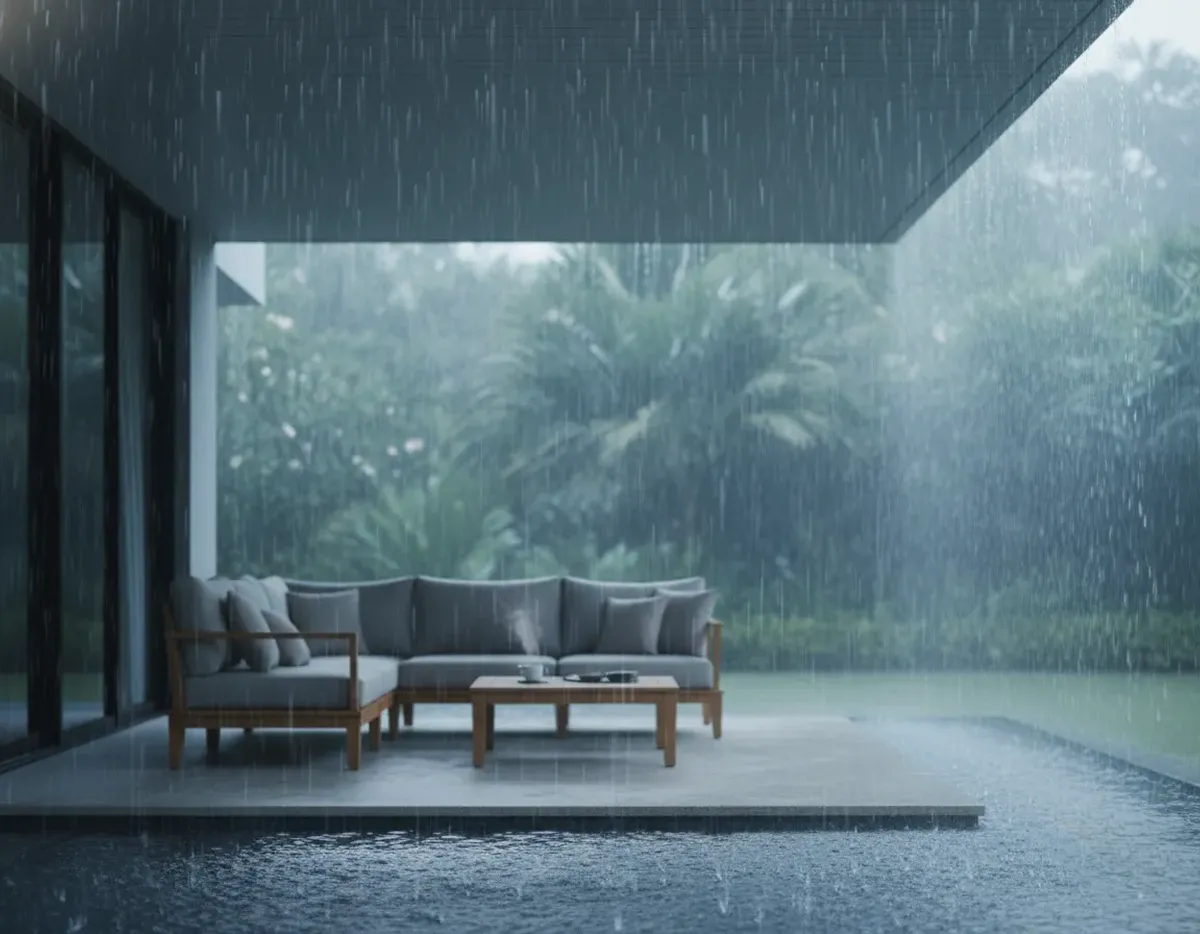
Quieter in rain. Solid aluminium dampens rainfall better than thin plastics. If storm noise bothers you—or you host guests outdoors—ACP is the calmer option. Add an insulation layer for even more noise reduction.
No yellowing, low upkeep. ACP doesn’t haze or yellow. Maintenance is usually a quick washdown; you won’t be babying a delicate clear sheet.
Privacy & façade tidiness. Because it’s opaque, ACP hides ceiling clutter, laundry racks, and stored items. With neat flashing and matching trims, it reads as part of the architecture rather than an add-on.
Who it suits. Owners who value shade, privacy, low maintenance and quiet—especially for car porches, balconies, and alfresco dining.
What a see-through (polycarbonate/glass) roof does best
Daylight, always. If you want plants to thrive, to brighten a kitchen yard, or to keep an airy feel, see-through wins. The sky stays visible; spaces feel open even when it rains.
Material nuances.
- Polycarbonate is light, tough, and budget-friendly with tints for glare control. It can show surface wear over time and may yellow if poorly maintained or exposed to harsh cleaners.
- Glass (tempered/laminated) looks premium, resists yellowing, and stays optically clear. It’s heavier, needs robust support, and will show water spots if not cleaned.
Who it suits. Owners who prize natural light, don’t mind occasional cleaning, and prefer an open, sky-view feel for service yards, atriums, and bright balconies.
Quick comparison (at a glance)
Use-case guide (choose by goal, not material)
- Car porch / Driveway → If you often arrive mid-afternoon or host outdoors, pick ACP for cooler shade and less rain noise.
- Balcony / Service yard → Want daylight for plants or drying? Choose polycarbonate (or glass if you want a premium look). If privacy and heat control matter more, go ACP.
- Walkway / Linkway → Either works; consider ACP for glare-free movement and polycarbonate for brighter corridors.
- Shopfront / F&B → ACP gives a neat brand line and easy lighting integration; glass keeps frontage bright and premium.
Cost & long-term value
Upfront cost varies with area, spans, thickness, finish, and detailing. Polycarbonate often starts lower; ACP tends to win on lifetime upkeep (no yellowing, fewer cleans, less “refresh” work). Glass sits higher on structure and cleaning expectations. The smart play is to request two options—value vs premium—so you can weigh finish and maintenance honestly.
Compliance & build quality
Condo MCSTs and HDB guidelines may affect placement, colours, and drainage. A good installer handles site survey, drawings, and approvals guidance, then builds with proper sub-frame, flashing, sealing and gutters. Most leaks come from detailing, not the material—so craftsmanship matters more than any brochure claim.
A simple decision framework (5 questions)
- Is daylight or shade more important?
- Do heat and rain noise bother you?
- How much maintenance are you willing to do?
- Do you want to hide or show what’s above (pipes, racks, beams)?
- Which look fits your façade—sleek solid lines, or airy transparency?
If you answered “shade/quiet/low upkeep” to most → start with ACP (solid).
If you answered “daylight/airy/premium clarity” → start with polycarbonate/glass.
Next step: Book a Free Site Check and we’ll map both options on-site with photos from nearby installs, plus a clear price range.