Singapore F&B/shopfront canopy guide—get shade and storm protection without hiding your sign. Materials, layouts, lighting, drainage, and approval tips.
A great canopy should increase dwell time and make your brand easier to spot. For Singapore shopfronts and alfresco F&B, that means real shade at 3–6 pm, splash-free entries during storms, and a façade that still frames your logo and menu. Use this practical guide to choose materials and details that lift comfort and curb appeal.
Start with outcomes (what success looks like)
- Comfort: cooler tables, less glare, dry entries in monsoon rain.
- Visibility: clear sight of logo/menu from 10–20 m; no fascia blocking the brand.
- Clean lines: concealed fixings, tidy trims, hidden gutters; looks “built-in”, not bolted on.
- Approvals: MCST/landlord-friendly colours, proportions, and drainage routing.
Materials that fit shopfront goals
ACP (solid aluminium) — opaque shade, calmer rain sound, no yellowing. Ideal for alfresco zones and queues.
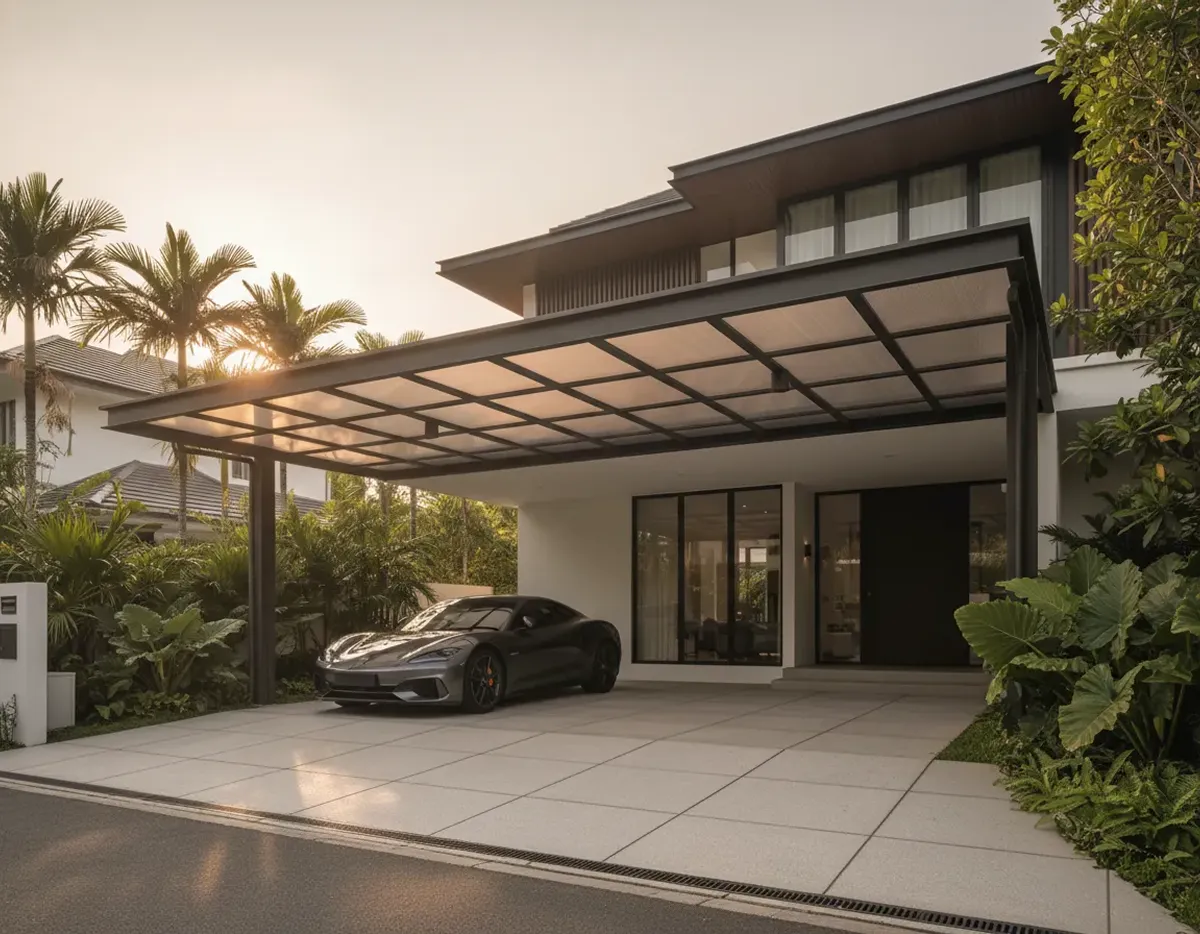
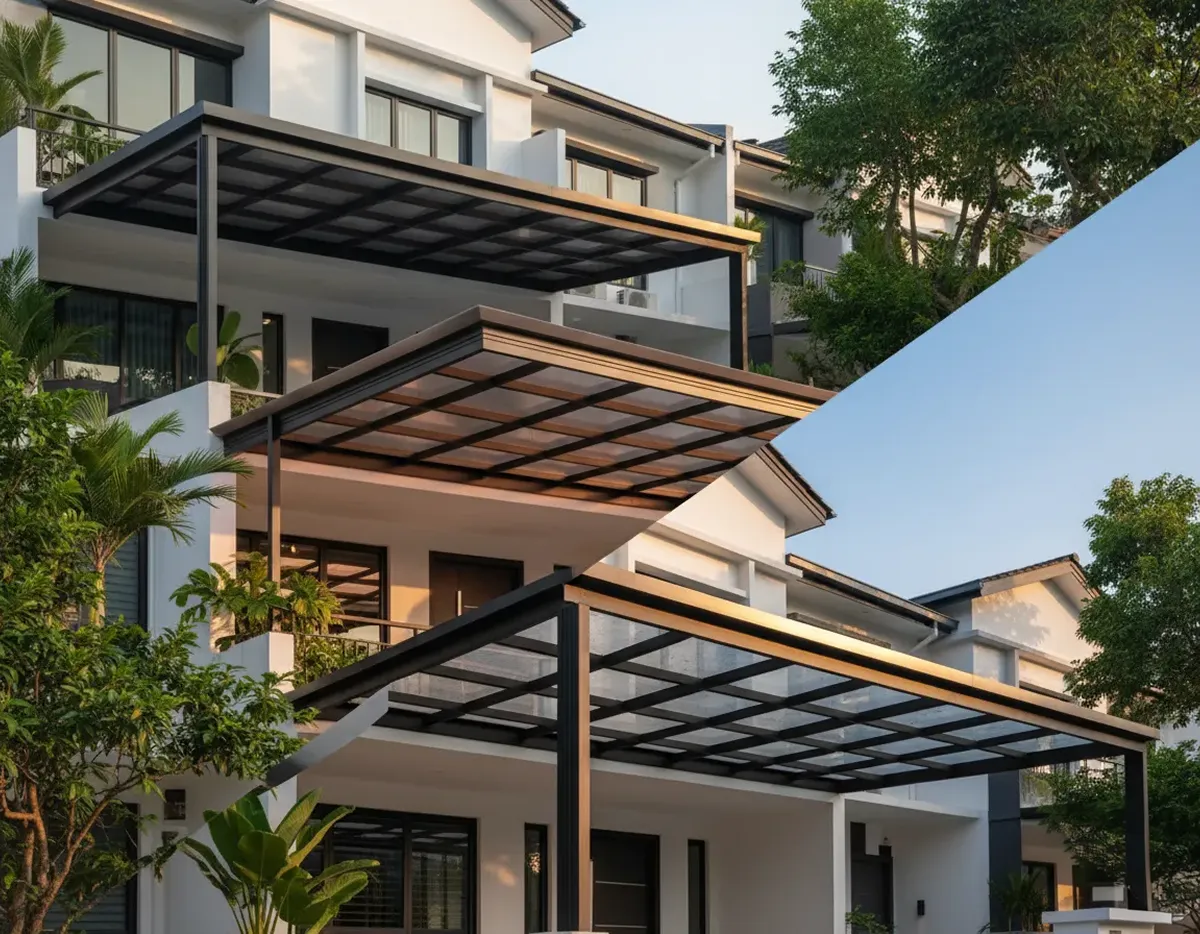
Polycarbonate (clear/tinted) — bright and airy with UV filtering; choose thicker sheets and bronze/grey tints for west sun.
Glass (tempered/laminated) — premium clarity; needs robust structure and a cleaning cadence for water spots.
Rule of thumb: Long sit-downs? Go ACP. Want “bright/open”? Pick poly or glass, then plan for glare and cleaning.
Three layout blueprints you can copy
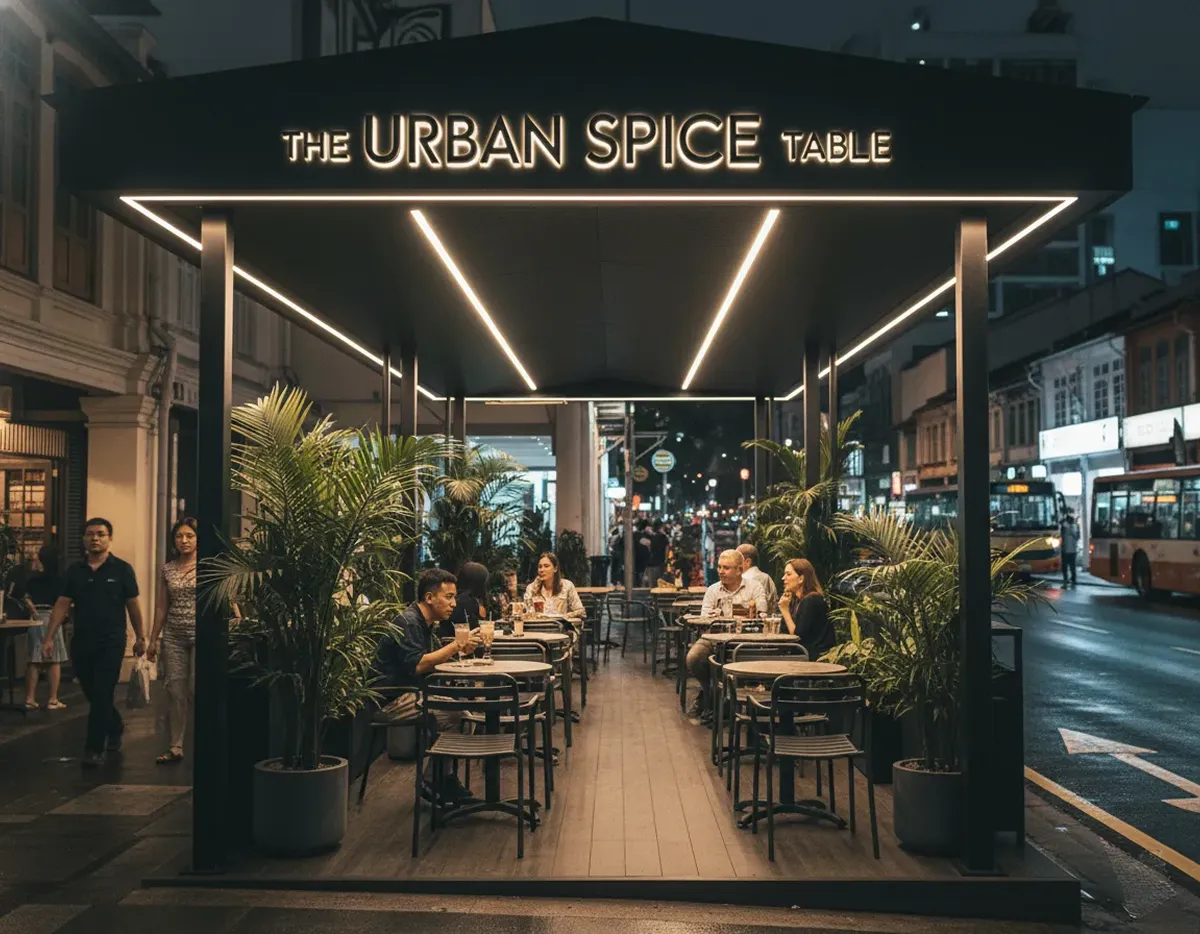
1) Alfresco Shade (ACP Quiet Pack)
- Flat ACP canopy with hidden gutter.
- Short side return on windward edge to stop rain drift.
- Under-lip LED strip aimed at tables; warm white, low-glare.
- Fascia height set below the signage sightline.
2) Bright Retail Front (Tinted Polycarbonate)
- Bronze/grey solid sheet, thicker gauge, de-rattle tape at frame contact points.
- Continuous gutter to a concealed downpipe behind a column.
- Mini film visor above sign if glare hits glass frontage at 4 pm.
3) Premium Entry (Glass Statement)
- Laminated/tempered glass on a robust frame.
- Crisp flashing at wall line; recess cabling for logo wall-wash LEDs.
- Set a monthly clean for water spots; add anti-slip at the threshold.
Design around branding (never through it)
- Sightline box: Stand across the street; draw an invisible rectangle from eye level to your sign. Keep canopy fascia clear of that box.
- Light the message: Use a slim under-lip strip to wash the logo/menu—visibility jumps at dusk.
- Colour discipline: Two neutrals + one brand colour. Match trims to door/window frames for a “designed” feel.
Drainage & detailing (where most projects fail)
- Consistent fall to a gutter; no flat patches that drum with ponding.
- Hidden gutters and downpipes routed to legal drains (not public footpaths).
- Flashing & sealing: Clean junctions stop whistling and leaks; this is the defect hotspot.
- Edge trims: Straight fascia lines sell the quality—even from a distance.
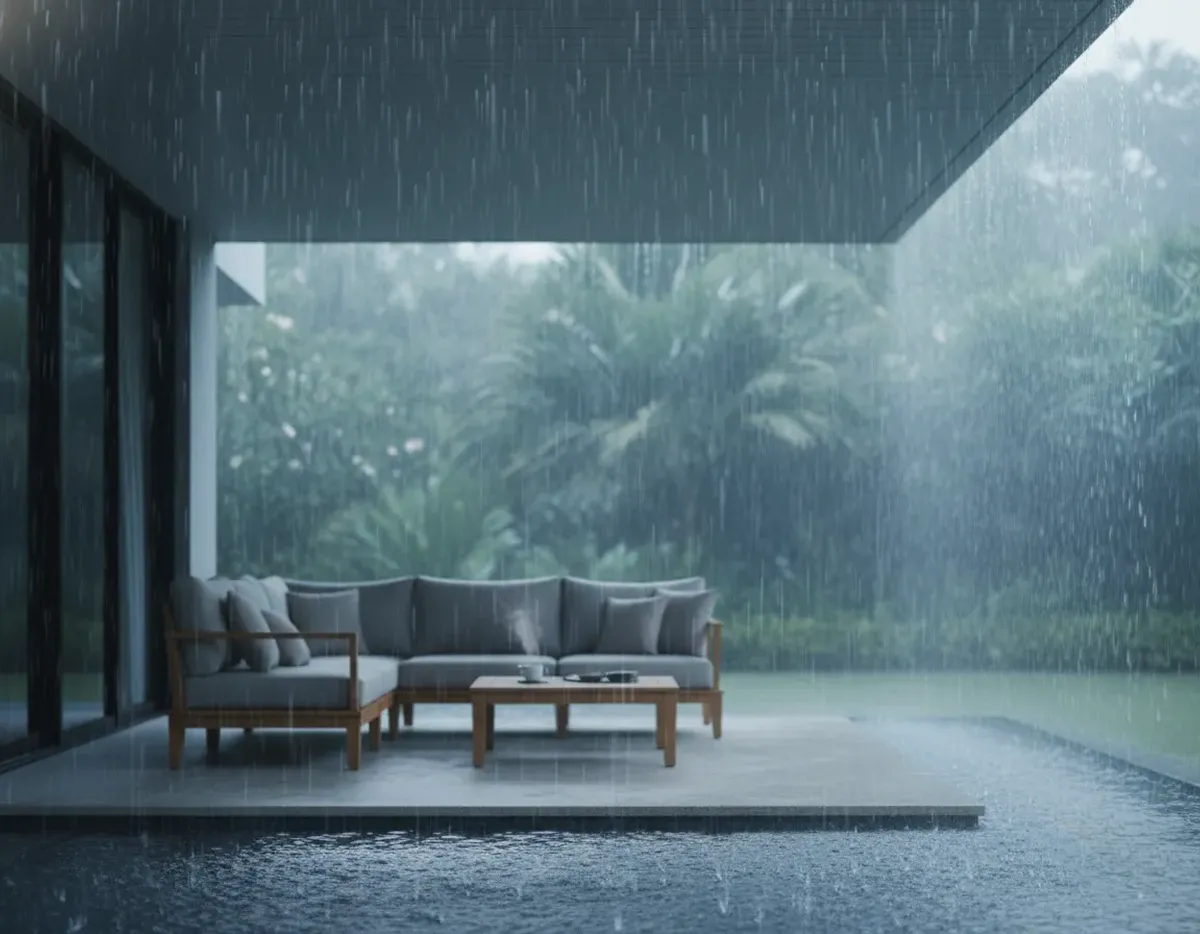
Noise & comfort in a storm
- De-rattle kit: rubber washers + closed-cell tape at sheet/frame contact; torque fixings correctly.
- Material choice: ACP is quieter by nature; if staying clear, step up thickness and add a slim acoustic underlay on the frame.
- Floor echo: Planters/outdoor rug near the entrance halve harsh reflections.
Quick approval playbook (MCST/Landlord)
- Keep projection and headroom within by-laws; note in drawings.
- Submit plan/elevation with dimensions, flashing details, drainage route, colour samples, and a short method statement (quiet hours, protection).
- Match estate colours where required; avoid shiny fascias on heritage fronts.
Cost vs impact (choose on lifetime value)
Clear plastics may start cheaper, but ACP often wins on upkeep and ambience. Glass commands a premium look with stronger structure + cleaning. Ask for two options (value vs premium) to balance finish, care and ROI.
10-point checklist before you sign
- Spans/support plan (no over-spanning).
- Slope and gutter capacity.
- Downpipe routing to legal drain.
- Wall flashing detail.
- Edge trims & fascia height vs sign sightline.
- Material thickness (esp. clear roofs).
- De-rattle/insulation at frame.
- Lighting plan & cable routing.
- Colour/finish samples for approval.
- Submission pack & work hours.
Ready to add shade that sells more seats—without hurting curb appeal?
Book a Free Site Check. We’ll map brand sightlines, design ACP/Polycarbonate/Glass options with proper drainage and lighting, and show before/afters from nearby shopfronts—plus a clear price range so you can decide confidently. Explore next: [ACP Roofing Singapore], [Polycarbonate Roofing Singapore], [Awning Leak & Flashing Repairs].