Singapore shopfront canopy guide—add shade and storm protection while boosting curb appeal. Materials, branding sightlines, drainage, lighting, and approval tips.
A shopfront canopy should do two jobs at once: keep guests comfortable in Singapore’s heat and rain, and make your brand easier to spot from the street. The right design increases dwell time, protects entries during storms, and frames your signage instead of hiding it. Use this guide to choose materials and details that protect and elevate your curb appeal.
What “good” looks like (outcomes first)
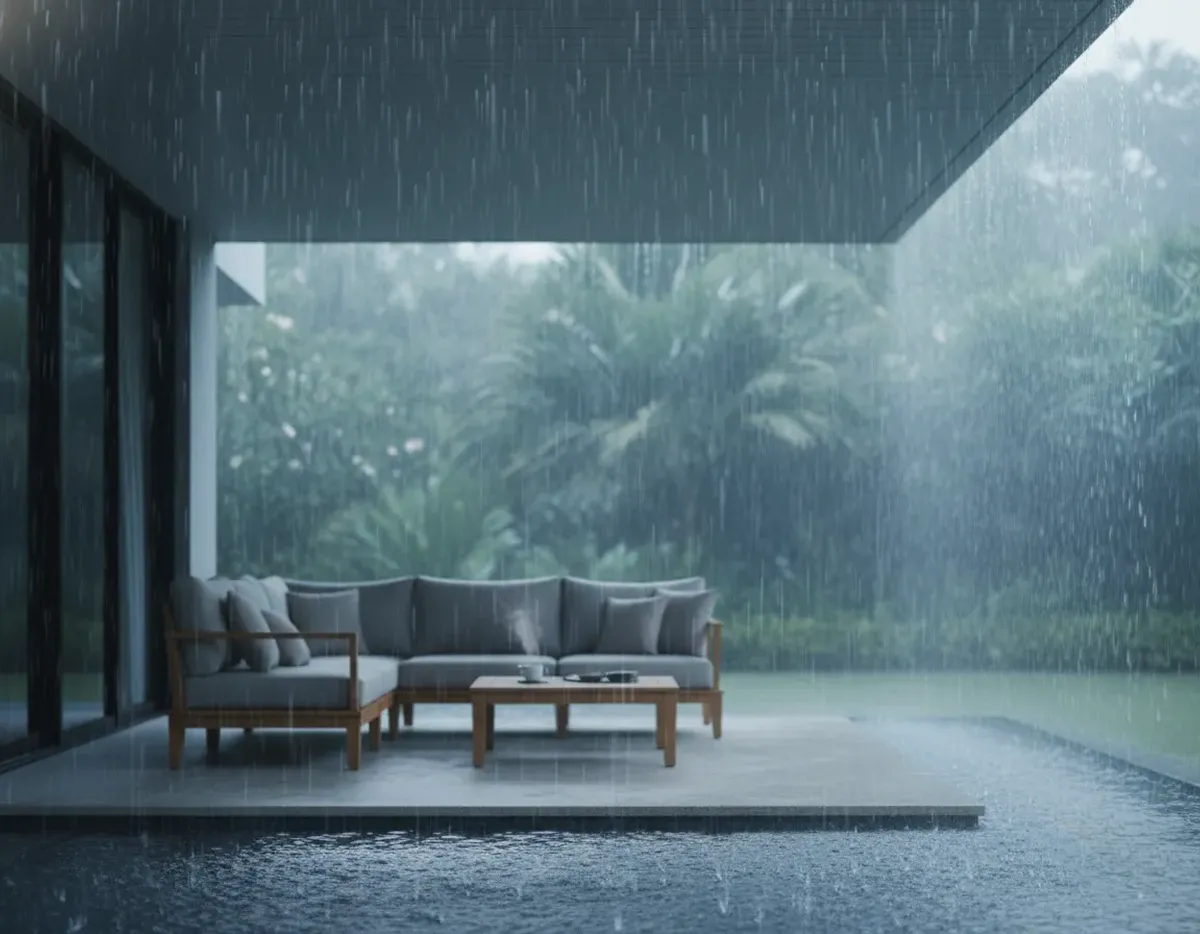
- Comfort: real shade at 3–6 pm, dry entries in monsoon rain, calmer sound during storms.
- Visibility: clear sightlines to logo and menu from 10–20 m; no fascia slicing through the sign.
- Clean lines: concealed fixings, straight trims, hidden gutters—looks “built in,” not bolted on.
- Compliance: MCST/landlord-friendly colours, projections, and drainage routing.
Materials that match storefront goals
ACP (Aluminium Composite Panel, solid)
Opaque shade, strong silhouette, quieter in rain, won’t yellow; low maintenance. Ideal for alfresco seating and queues where comfort drives spend.
Polycarbonate (clear/tinted)
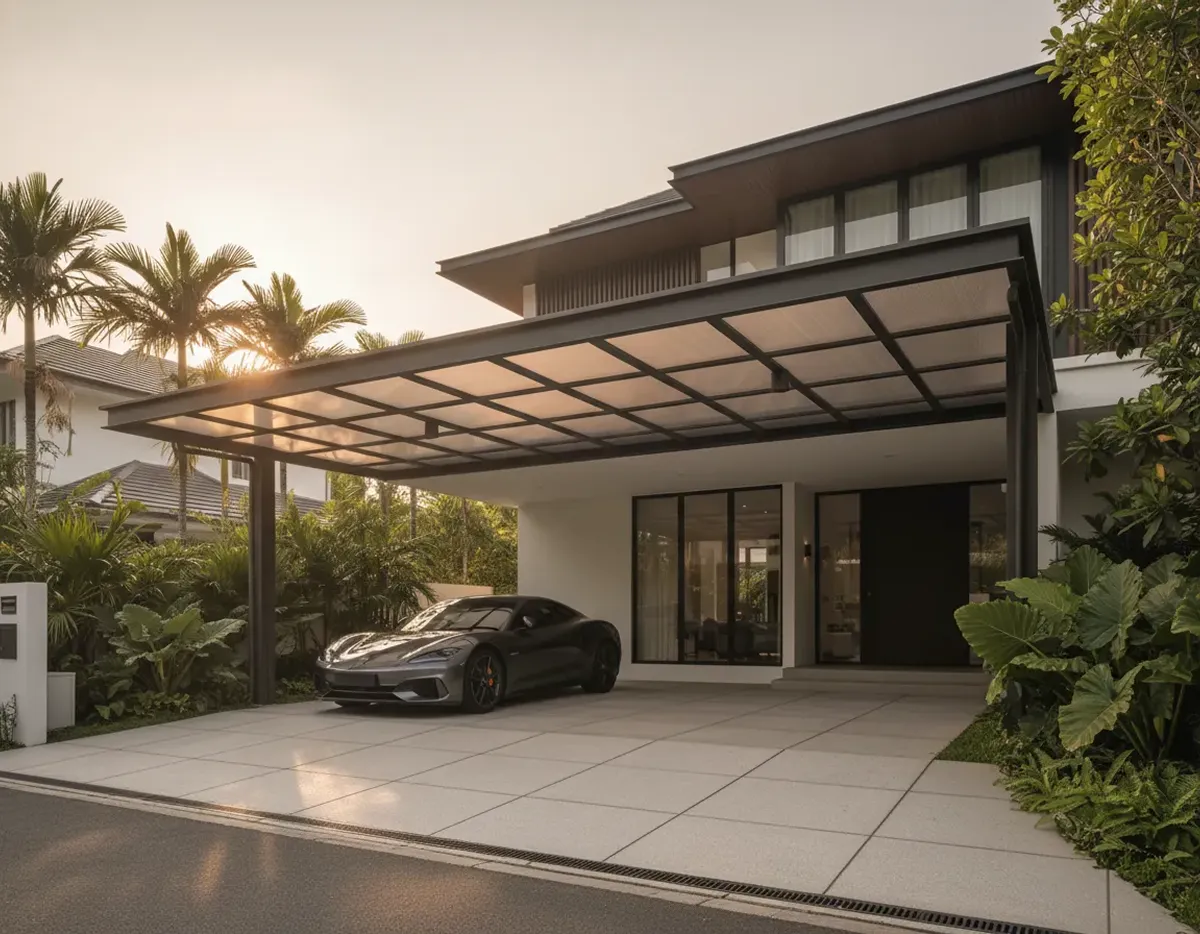
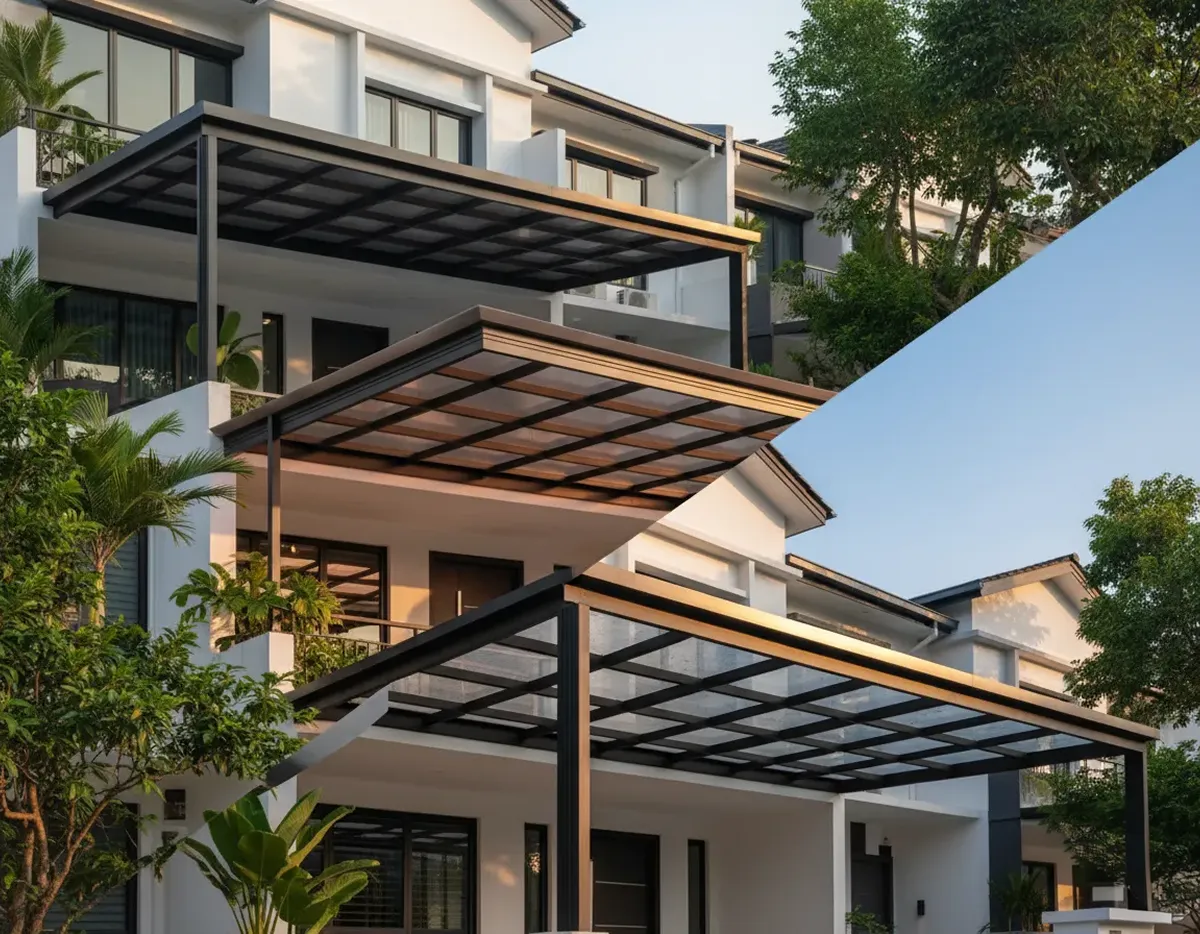
Bright and airy with UV filtering; tints (bronze/grey) reduce glare. Choose thicker solid sheets and de-rattle detailing for windy streets.
Glass (tempered/laminated)
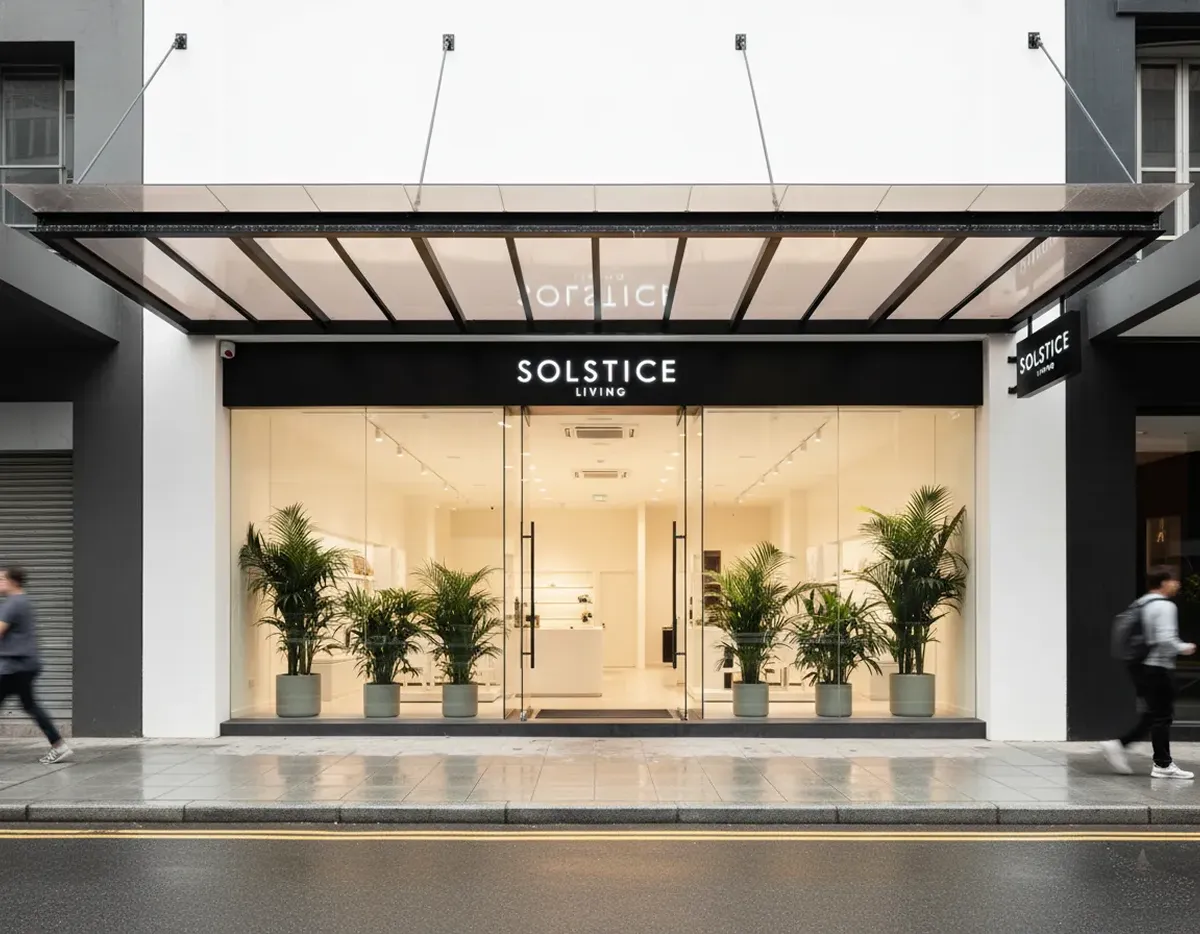
Premium clarity and modern lines; needs a robust frame and a cleaning routine for water spots. Great for statement entries.
Rule of thumb: If you sell ambience (long sit-downs), ACP’s shade and sound profile win. If you sell “bright and open,” clear materials work—just plan for glare control and cleaning.
Design around branding (not the other way round)
- Sightline box: Stand across the street and draw an invisible rectangle around your sign/menu at eye height. Keep the canopy fascia above or below that box—never through it.
- Proportion & height: Shallow fascias look premium and avoid brand cut-through; set the leading edge high enough to preserve sign readability.
- Colour discipline: Two neutrals + one brand colour is plenty. Match trims to door/window frames for a cohesive façade.
Drainage & weatherproofing (where most failures start)
- Consistent slope to a continuous gutter—no flat patches that pond and drum.
- Hidden gutters with downpipes routed to legal drains; avoid visible, crooked pipes and splash-back at the entry.
- Flashing & sealing at the wall line: the number-one leak point. Clean junctions prevent whistling and dirty streaks.
- Side returns (short vertical panels) tame wind-driven rain without boxing in the storefront.
Noise & comfort in a storm
- De-rattle kit: rubber washers, closed-cell tape at sheet/frame contact points, correctly torqued fixings.
- If staying clear: step up thickness and add a slim acoustic underlay to the frame.
- Quietest option: ACP naturally damps vibration; pair with tidy gutters for calmer evenings.
Three layout recipes you can copy
1) Alfresco Shade, Calm Sound (ACP)
Flat ACP canopy, hidden gutter, short side return on the windward edge, under-lip LEDs. Fascia trimmed below the sightline box so the sign stays dominant.
2) Bright Retail Front (Tinted Polycarbonate)
Bronze/grey solid sheet (thicker gauge), de-rattle tape, continuous gutter to a concealed downpipe. Optional small film visor above glass frontage for late-afternoon glare.
3) Premium Entry (Glass Statement)
Laminated/tempered glass on a robust frame, crisp flashing, recessed cabling for logo wall-wash. Add anti-slip at the threshold and a monthly clean plan.
Approvals & neighbours (smooth rollout)
- MCST/landlord by-laws often dictate colours, projection, and drain routing—design to the rulebook first to avoid delays.
- Keep projection within lot lines and headroom over public ways.
- For mixed-use blocks, schedule noisy works off-peak, protect common areas, and document method statements.
Cost vs lifetime value
Day-one prices vary by area, spans, thickness, finish and detailing. Clear plastics often start lower; ACP usually wins on upkeep and ambience (no yellowing, quieter storms, fewer refresh cycles). Glass delivers a premium look with stronger structure and cleaning expectations. Ask for two options—value vs premium—so you can weigh finish, maintenance, and ROI on dwell time.
10-point checklist before you sign
- Spans/support plan (no over-spanning)
- Slope and gutter capacity
- Downpipe routing to legal drain
- Wall flashing detail (leak hotspot)
- Fascia height vs signage sightline
- Material thickness (if clear)
- De-rattle/insulation at frame
- Lighting plan & cable routing
- Colour/finish samples for approval
- Submission pack & work hours
Ready to add shade that boosts curb appeal?
Book a Free Site Check. We’ll map branding sightlines, design ACP/Polycarbonate/Glass options with proper drainage and lighting, and show before/afters from nearby shopfronts—plus a clear price range so you can choose confidently. Explore next: [ACP Roofing Singapore], [Polycarbonate Roofing Singapore], [Awning Leak & Flashing Repairs].