Understanding Why a Retractable Awning Gets Stuck
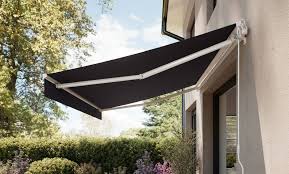
A retractable awning operates through a mechanical system of springs, arms, rollers, and either a manual crank or motorised drive — and like any mechanical system, each component is a potential failure point. When a retractable awning refuses to extend or retract, the cause is almost never a single catastrophic failure but rather a progressive accumulation of wear, corrosion, misalignment, or obstruction that has finally reached the point where the system cannot overcome the resistance. Understanding the mechanics before applying force is critical — a retractable awning that is forced open or closed against a genuine mechanical obstruction will bend arms, strip gears, tear fabric, and turn a straightforward repair into a full replacement.
Safety Assessment Before Touching Anything
Before attempting any intervention, stand back and assess the awning visually from a safe distance. Look for visible arm deformation — a bent or twisted arm indicates the awning has been forced against wind resistance or an obstruction at some point and the geometry of the system is no longer correct. Check the bracket fixings at the wall for any gap between the mounting plate and the wall face, cracked render, or visible rust streaking from the anchor bolt positions. An awning with compromised wall fixings can pull away from the wall suddenly when tension is applied during extension or retraction and must not be operated until the fixings are inspected and confirmed sound.
Check the fabric for any visible snagging — fabric caught on a bracket, a protruding screw, or an adjacent structure will prevent movement and applying drive force against a snagged fabric tears it instantly. Identify the snag point before attempting to move the awning.
Identifying the Type of Stuck
The awning being stuck in the fully open position is a fundamentally different problem from the awning being stuck in the fully closed or partially open position, and each requires a different diagnostic approach.
Stuck in the Open Position
An awning that will not retract is most commonly caused by spring tension loss in the roller tube, a motor that has lost power or tripped its thermal overload, a manual crank mechanism that has seized, or fabric that has expanded slightly in Singapore's heat and humidity and is now binding against the cassette housing or guide rails. In manual systems, a crank that turns freely without engaging the roller indicates a stripped worm gear inside the gearbox. In motorised systems, a motor that hums but does not turn indicates a mechanical obstruction that the motor cannot overcome — continuing to apply power in this condition will burn out the motor winding within minutes.
Stuck in the Closed Position
An awning that will not extend is most commonly caused by a cassette lid or housing that has warped and is pinching the fabric as it tries to feed out, a roller tube that has corroded and seized on its end brackets, spring tension that has wound so tight it is preventing the roller from turning in the extension direction, or in motorised systems, a limit switch that has been incorrectly set and is preventing the motor from running in the extension direction.
Stuck Partially Open
An awning stuck at an intermediate position indicates either an obstruction that appeared during operation — a branch, a loose fabric fold, or a foreign object in the cassette — or a motor that has tripped mid-cycle due to thermal overload or a power interruption. In manual systems, a partial stuck position often indicates that the spring tension is uneven across the width of the roller, causing one side of the awning to lead the other until the fabric twists and jams.
Step 1: Check the Obvious Causes First
Before investigating mechanical components, eliminate the simple causes that account for the majority of stuck awning calls.
For motorised awnings, check the power supply first. Confirm the circuit breaker serving the awning motor has not tripped — awning motors draw a significant current on startup and a weak or aging breaker will trip under this inrush. Reset the breaker and attempt operation. If the breaker trips immediately again, there is a short circuit or motor fault that requires an electrician before any further investigation. Check the remote control battery — a flat battery produces exactly the same symptom as a motor fault, and replacing the battery takes thirty seconds. If the awning has a wall switch in addition to a remote, test the wall switch independently to confirm whether the issue is the remote or the motor circuit.
For manual awnings, confirm the crank handle is fully engaged in the gearbox socket before concluding the mechanism is seized. A partially engaged crank will turn freely without transmitting torque to the gearbox and feels identical to a stripped gear until the handle is pushed fully home.
Step 2: Inspect the Arms and Fabric
With power isolated for motorised systems, manually inspect each arm across its full visible length. Retractable awning arms are articulated — they fold at a central elbow joint when retracted and extend straight when the awning is open. The elbow joint is the most common point of corrosion and seizure, particularly in Singapore's humidity where the steel pivot pin inside the joint can rust solid against the aluminium arm casting within a few years of inadequate maintenance.
Apply a penetrating lubricant — WD-40 or equivalent — directly to the elbow joint pivot pin on both sides of each arm and allow it to dwell for 20 to 30 minutes before attempting to move the joint manually. Do not force a seized elbow joint with a lever or pipe extension — the aluminium arm casting will crack before the rusted steel pin releases, and a cracked arm requires full replacement.
Check the fabric along its full width for any fold, pleat, or tuck that has developed and is now preventing the fabric from feeding smoothly over the roller or through the cassette opening. A fabric fold typically develops when the awning has been retracted unevenly — one arm leading the other — and the excess fabric on the leading side has bunched. In this condition the fabric must be manually straightened before any drive force is applied.
Step 3: Inspect the Roller Tube and Cassette
The roller tube is the horizontal tube at the wall end of the awning around which the fabric winds when the awning retracts. In cassette awnings — the most common type in Singapore's residential market — the roller tube sits inside a protective aluminium housing that shields it from rain and UV when the awning is closed. This housing is also the most common location for fabric jamming.
Remove the cassette lid if it is designed to be user-removable — most cassette systems have a snap-fit or screw-retained lid along the front face — and inspect the fabric as it feeds from the roller. Any point where the fabric is pinched between the roller tube and the cassette housing indicates either a cassette that has warped from heat, a roller tube that has deflected downward at mid-span under fabric tension, or a fabric that has thickened from water absorption and mould accumulation and is now too thick to pass through the original clearance.
Warped cassette housings are common in Singapore where aluminium cassettes on west-facing walls receive direct afternoon sun for hours daily, reaching surface temperatures that cause permanent thermal deformation over time. A warped cassette cannot be straightened and must be replaced — attempting to force the fabric through a pinch point caused by housing deformation will tear the fabric at that point on every subsequent operation.
Step 4: Motor and Gearbox Diagnosis
For motorised awnings that have power confirmed at the motor but will not run, the diagnosis sequence moves to the motor and gearbox assembly.
Most tubular motors used in retractable awnings incorporate a built-in thermal overload protector that cuts power to the motor windings when operating temperature exceeds a threshold — typically 130 to 150°C internally. In Singapore's climate, an awning motor running a large or heavy awning on a hot afternoon can trip its thermal overload within a single operating cycle. The motor will not respond to any command until it has cooled sufficiently for the thermal protector to reset — typically 15 to 30 minutes. If the motor runs normally after this cooling period, the thermal trip is a symptom of an undersized motor for the awning load, a motor that is aging and losing efficiency, or a fabric and mechanism that has developed excessive friction increasing the load on the motor beyond its design rating.
Limit switches inside the motor control the end-stop positions — the points at which the motor cuts out at the fully open and fully closed positions. If a limit switch has drifted from its set position due to vibration or has failed electronically, the motor may stop before the awning reaches its intended position, or may not start at all if the switch logic interprets the current position as already at the limit. Limit switch adjustment requires accessing the motor end cap and is model-specific — the motor manufacturer's technical manual must be consulted for the correct adjustment procedure.
Step 5: When to Call a Professional
Attempt DIY resolution only for the simple causes — power supply checks, remote battery replacement, penetrating lubricant on accessible pivot points, and manual fabric straightening. Any of the following conditions require a qualified awning technician: a bent or deformed arm, a seized roller tube that does not free after lubricant treatment, a warped cassette housing, a motor that hums without turning or trips its breaker immediately, limit switch adjustment, and any situation where the wall fixings show signs of pull-out or corrosion. Applying force beyond what can be achieved by hand to any stuck component risks escalating a repairable fault into a full awning replacement — in Singapore where quality motorised retractable awnings range from SGD 2,000 to SGD 8,000 installed, the cost of a professional service call is a fraction of the cost of a replacement driven by a DIY intervention that went wrong.
Sonnet 4.6