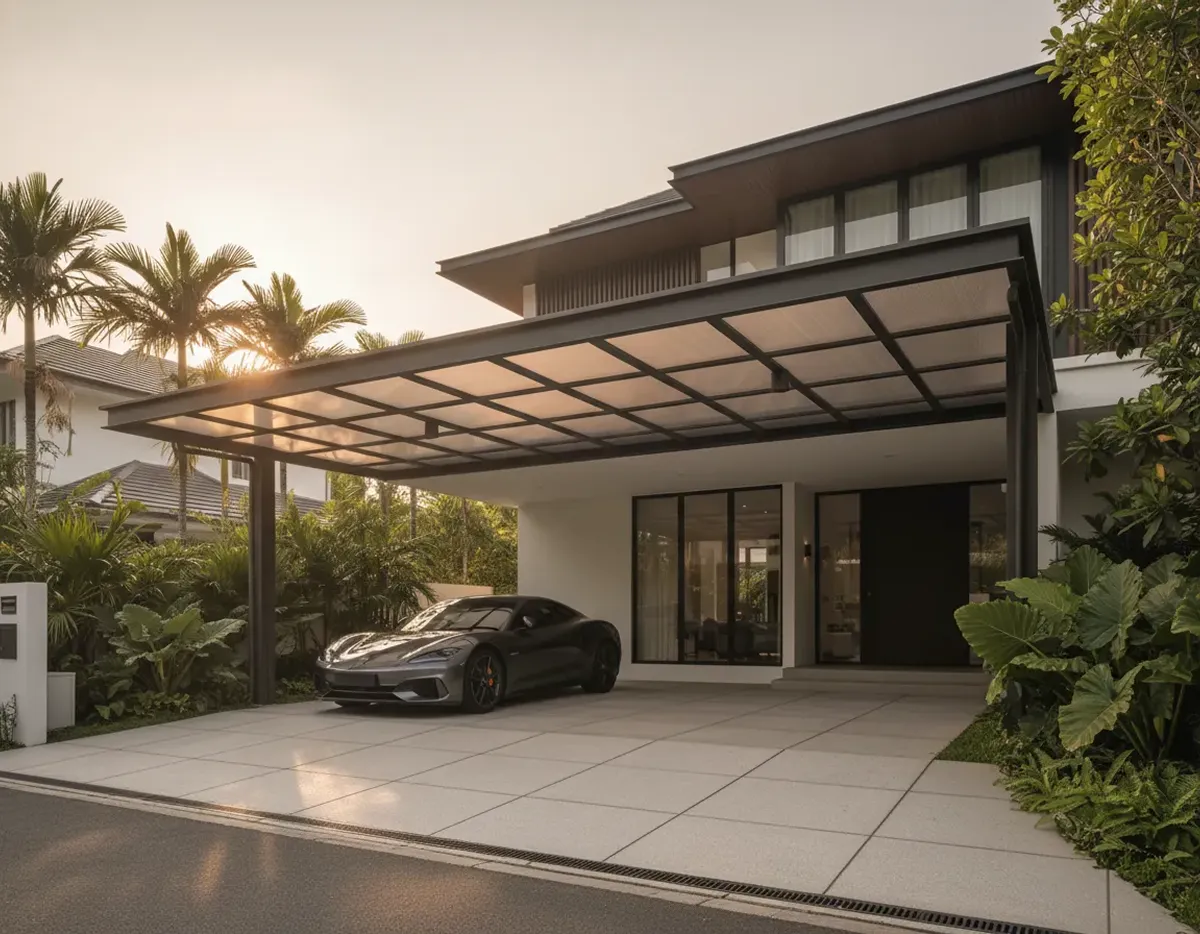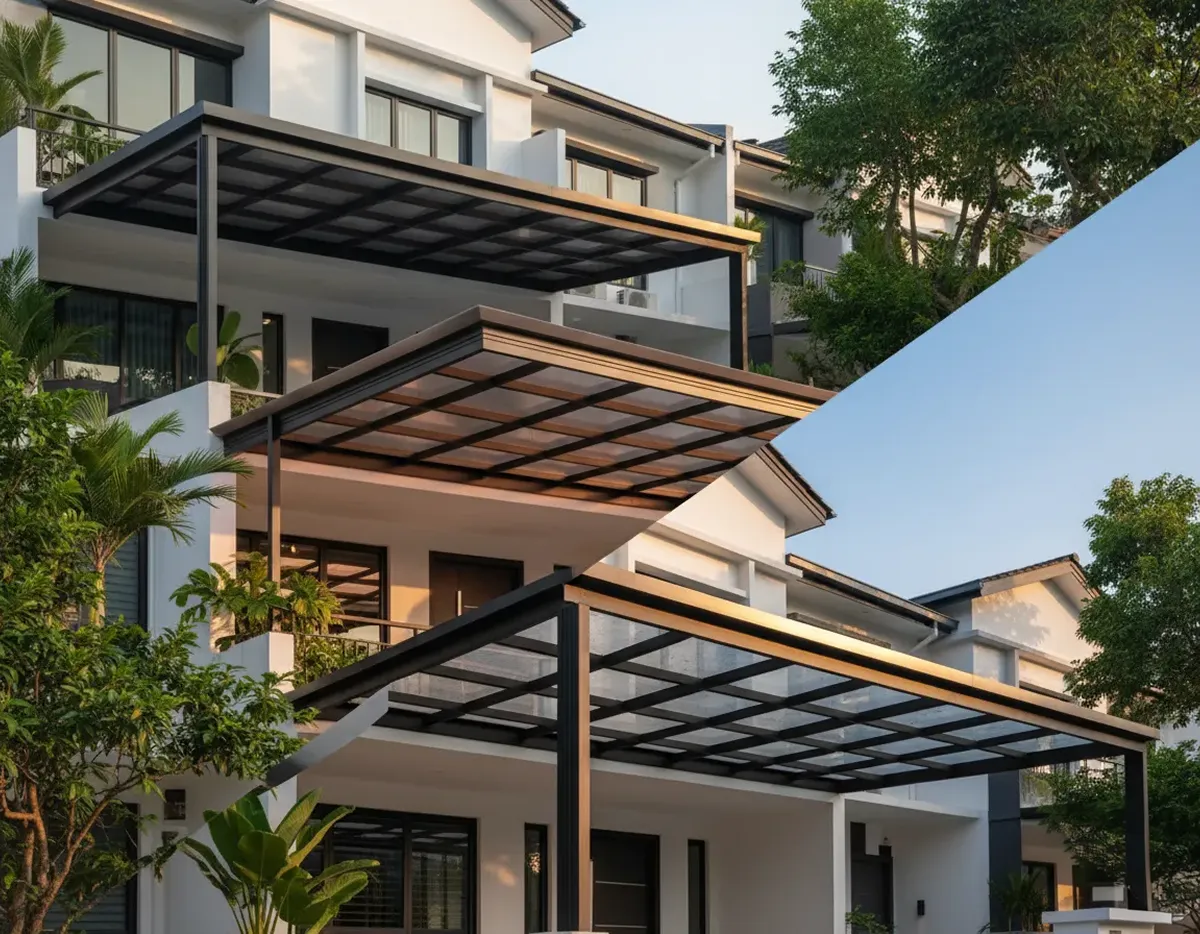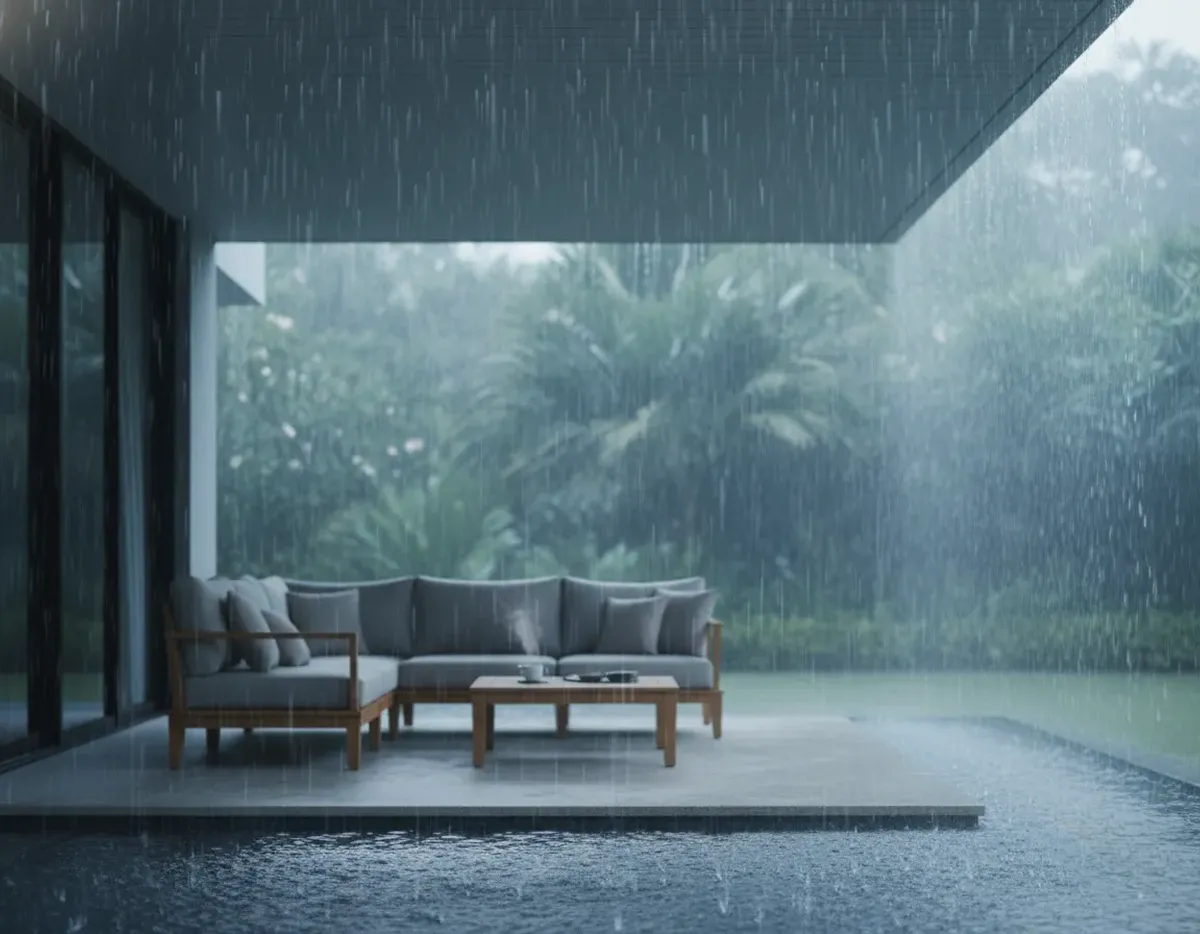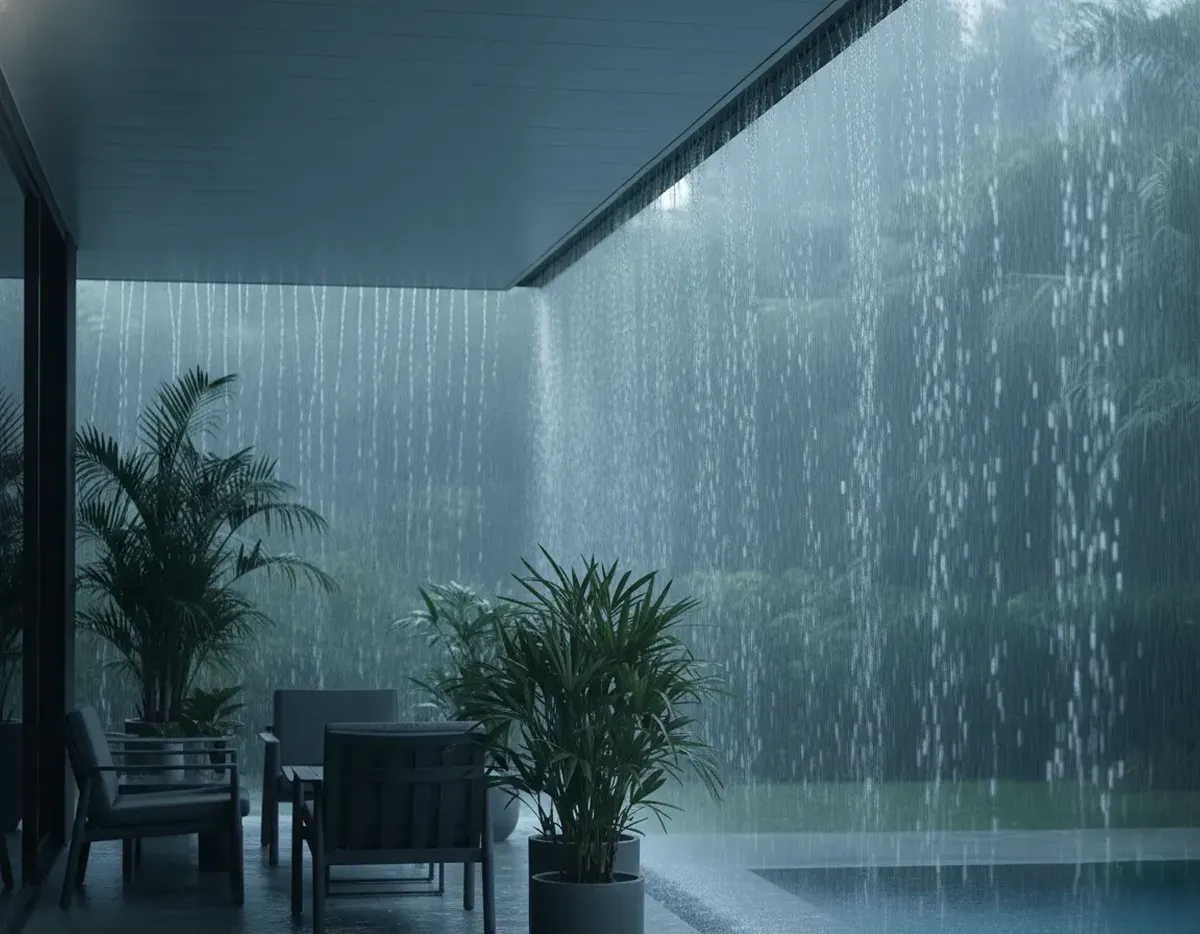
Heavy rain too loud under your awning? Five fixes ranked by impact, cost and effort—from quick sealing tweaks to material upgrades that stay quiet.
When the monsoon hits Singapore, even a great outdoor corner can sound like a drum. Most of that noise isn’t the rain itself—it’s vibration, echo and splash created by the way the roof is built. Thin panels act like speakers, loose fixings rattle, wind sneaks through gaps, and downpipes can dump water where it booms the loudest. The good news: you can make it much quieter without always ripping everything out. Here’s a plain-English guide to the five fixes that work—ranked by impact vs effort—plus when it’s worth changing the roof material altogether.
Why rain gets loud (quick anatomy)
- Panel vibration: Thin, lightly supported sheets vibrate like a drum skin.
- Gaps & edges: Wind and water whistling through small gaps add harsh, high-pitched noise.
- Echo below the roof: Hard floors (tiles, concrete) reflect sound back at you.
- Dump points: Poorly placed outlets create a loud “waterfall” right where you sit or walk.
1) Seal gaps & stop rattles (fastest win)
What to do:
- Tighten or replace loose screws; use rubber washers to cushion contact points.
- Add anti-rattle tape (closed-cell) where sheets meet frames.
- Re-seal joints and flashing so wind can’t whistle through.
- Add edge trims to tidy exposed ends that flutter.
Why it works: Less air and water rushing through gaps = fewer high-frequency “hiss” and “rattle” sounds.
Best for: Any material (polycarbonate, glass, aluminium). Quick, low-cost improvement.
2) Fix slope, gutters & downpipes (control the water)
What to do:
- Ensure a consistent fall toward the gutter; ponding amplifies drumming.
- Fit a continuous gutter with enough capacity; extend downpipes to ground drains.
- Add splash blocks or a short gravel bed where water lands to stop echo on tiles.
- Move noisy outlets away from seating areas.
Why it works: Quieter flow = less booming at edges and less “waterfall” noise where people gather.
Best for: Homes with loud drip lines, splashing near doorways, or obvious ponding.
3) Add a slim acoustic layer (hide it, don’t soak it)
What to do:
- Install a thin insulation layer between panel and sub-frame (closed-cell foam or similar non-absorbent material).
- For metal sub-frames, strategic damping pads at contact points reduce “ring.”
Why it works: Damping interrupts vibration paths, shaving off that fatiguing mid-frequency “thrum.”
Notes: Use materials that don’t absorb water and keep them protected from direct sun/rain.
4) Upgrade thickness or profile (if keeping it clear)
Polycarbonate tips:
- Move from very thin sheets to thicker solid sheets with proper fasteners.
- Use fewer, stronger spans (add a discreet mid-support) to reduce panel flex.
- Choose tints that limit glare (glare can exaggerate the perception of noise).
Glass notes:
- Tempered/laminated glass has a sharper “ping” than plastic, but it doesn’t drum. Requires a robust frame and good flashing to avoid whistles at edges.
Why it works: Heavier, stiffer panels vibrate less—and sound less.
5) Go solid: Aluminium Composite Panel (ACP) for the quietest result
What it is: ACP is a solid aluminium roof (opaque), not see-through. The metal skin and dense core dampen vibration naturally, so rain sounds are notably softer—especially with an optional underlay.
Upside:
- Quieter in storms, cooler at midday, no yellowing, low maintenance.
- Clean, modern lines that hide ceiling clutter.
Trade-off: You lose sky views and some daylight. If shade/quiet/privacy are priorities, ACP is the long-term fix that people tend to stick with.
Cost vs impact (at a glance)
Practical combos we recommend
- Balcony that’s bright but loud: 1 + 2 + 3 (keep clear panels), then consider 4 if you still need more.
- Car porch used for hosting: 1 + 2, then 5 (ACP) with optional underlay.
- Shopfront with drip noise: 2 (move outlets) + 1 (seal) + a small 3 (damping pads) for the frame.
Don’t forget the floor and walls
A hard, echoey floor can double perceived noise. Outdoor rugs, planters, or a short timber strip near the entrance can soak up reflections—cheap fixes that help more than you’d think.
Bottom line
Start with simple sealing and water control, then add damping. If you want to keep daylight, choose thicker clear panels and better supports. If your real goals are shade, quiet and low upkeep, a solid ACP roof is the most reliable solution.
Make your space peaceful again.
Book a Free Site Check and we’ll diagnose the noise on-site, show quick fixes, thicker clear options, and ACP solid roof upgrades—plus a clear price range. Explore next: [ACP Roofing Singapore], [Polycarbonate Roofing Singapore], [Awning Leak & Flashing Repairs].