This article explores the practical advantages and challenges of installing a retractable deck awning. By using data-backed facts and plain language, we will look at how this addition affects your home’s comfort, your bank account, and your property value.
What is a Retractable Deck Awning?
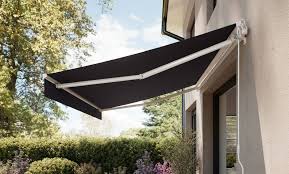
A retractable deck awning is a heavy-duty fabric cover that extends over an outdoor area. It is supported by a metal frame that can be folded back, usually by a manual crank or an electric motor. Unlike a permanent wooden or metal roof, it is a flexible structure. You deploy it when you need protection from the sun or light rain, and you retract it when you want an open-view deck or need to protect the system from heavy storms.
The primary goal of this system is to bridge the gap between an indoor room and an open outdoor space, giving the homeowner total control over their environment.
1. The Pros: Direct Benefits for the Homeowner
A. Significant Energy Savings
One of the most immediate benefits of an awning happens inside the house. Most decks are attached to the home near large glass doors or windows. These glass surfaces allow heat from the sun to enter the home, which forces your air conditioning system to work harder.
According to a study by the Center for Sustainable Building Research at the University of Minnesota, installing an awning over windows can reduce cooling energy use by 25% to 33%.
Because the awning blocks the sun before it even touches the glass, it stops the heat from ever entering your home. This is much more effective than indoor curtains, which only try to trap the heat once it is already inside.
B. High Return on Investment (ROI)
When you spend money on a home improvement, you want to know if that money will come back to you if you sell the house.
According to research by SmartMoney magazine, a professional-grade deck addition or improvement (like a high-quality awning) can provide a return on investment (ROI) of 100% to 110%.
Because an awning creates "effective living space"—meaning an outdoor area that functions like an indoor room—homebuyers view it as a major upgrade. It allows them to imagine using the deck year-round, which increases the price they are willing to pay for the property.
C. Protection of Furniture and Flooring
The sun’s Ultraviolet (UV) rays are powerful enough to break down the chemical bonds in fabrics, wood, and plastic. This leads to "fading" and "brittleness."
- Outdoor Furniture: Your deck chairs and tables will last years longer if they are not sitting in direct sunlight 10 hours a day.
- Indoor Flooring: By shading the windows, the awning also prevents the sun from bleaching your indoor hardwood floors and carpets.
D. On-Demand Flexibility
The "retractable" part of the awning is its greatest strength.
- Seasonal Use: In the winter, you can retract the awning to allow the sun to naturally warm your house (which saves on heating costs).
- Nighttime Views: At night, you can retract the awning to enjoy the stars and a more open atmosphere.
2. The Cons: Challenges and Maintenance
A. Sensitivity to High Winds
Because retractable awnings are "cantilevered" (supported only on the side attached to the house), they are vulnerable to wind.
- The "Sail" Effect: If the wind gets too strong, the fabric acts like a sail. This can put immense pressure on the mounting brackets and the aluminum arms.
- User Responsibility: You must remember to retract the awning when it gets windy or if you are leaving the house for the day.
B. Higher Initial Investment
A high-quality, motorized retractable awning is not a cheap product. While you can buy basic umbrellas for a few hundred dollars, a custom-built awning system can cost several thousand dollars. This covers the engineering of the arms, the high-performance fabric, and the professional labor required to bolt the system into the structural studs of your home.
C. Maintenance Requirements
A retractable awning has moving parts and fabric that lives outdoors. It requires a small amount of regular work:
- Cleaning: You should hose down the fabric occasionally to prevent dirt and bird droppings from staining the material.
- Storage: If you roll up the awning while it is soaking wet and leave it that way for weeks, you may find mold or mildew growing when you next open it. It is important to let the fabric dry before long-term storage.
3. The Value Case: Usable Square Footage
When a real estate appraiser looks at a home, they look at "usable space." A deck that is 100 degrees in the summer is not usable.
According to the Professional Awning Manufacturers Association (PAMA), adding a professional awning increases the "perceived utility" and usable space of a property by an average of 30%.
In layman's terms: If you have a 300-square-foot deck that you currently only use in the evenings, an awning makes that 300 square feet usable all day long. You are essentially increasing the size of your home without the high cost of a foundation, walls, and a permanent roof.
4. Manual vs. Motorized Systems
How you control your awning affects both the price and how much you will actually use it.
FeatureManual AwningsMotorized AwningsControl MethodHand-crank handle.Remote, wall switch, or app.Speed1–2 minutes of manual cranking.30–45 seconds at the push of a button.SensorsNone.Can use Wind and Sun sensors.CostMost affordable.Adds $500–$1,500 to the total.
The Advantage of Sensors: Motorized systems can include an anemometer (a wind sensor). If the wind reaches a speed that could damage the awning, the sensor tells the motor to retract the awning automatically. This solves the "con" of wind sensitivity mentioned earlier.
5. Material Quality: Fabric and Frame
Not all awnings are built the same. For a commercial-grade deck awning, you should look for specific materials.
The Fabric
- Solution-Dyed Acrylic: This is the best material for awnings. Unlike painted canvas, the color is mixed into the liquid fibers before the thread is made. This means the color goes all the way through, so it won't fade in the sun.
- Water Resistance: Most high-end fabrics are treated with a coating that makes water bead off the surface. While not meant for heavy storms, it keeps you dry during light rain.
The Frame
- Extruded Aluminum: This is the industry standard because it is strong but will never rust.
- Powder Coating: The frame should be powder-coated (a type of baked-on paint) to prevent chipping and scratching over time.
6. Calculating the Business Logic (The ROI)
If you are a homeowner, you can calculate your ROI by looking at energy savings and property value.
Example Calculation:
- Investment: $4,000 for a high-quality motorized awning.
- Energy Savings: $30 per month reduction in AC bills (4 months a year) = $120/year.
- Resale Value: According to the SmartMoney 100% ROI fact, that $4,000 investment adds roughly $4,000 to the value of your home.
This means that while the "resale value" covers the cost of the unit, the "energy savings" represent pure profit over the 10-to-15-year life of the awning fabric.
Conclusion
Installing a retractable deck awning is a practical choice for anyone who wants to maximize their home’s footprint. By blocking the sun before it hits your windows, you save money on electricity. By creating a comfortable outdoor "room," you increase the value of your property and your quality of life.
While you must be mindful of the wind and perform basic cleaning, the data proves that the benefits—lower bills, higher home value, and more usable space—far outweigh the costs.