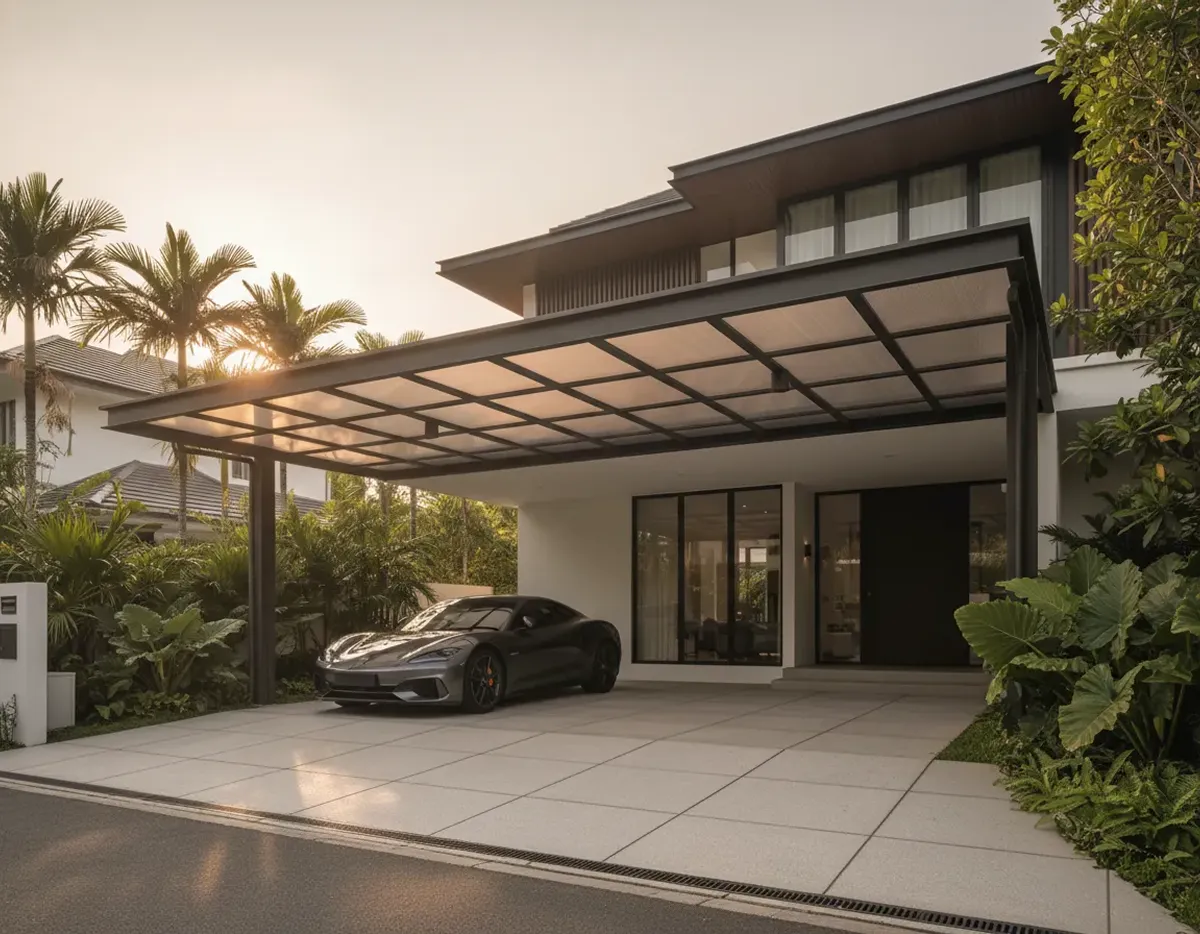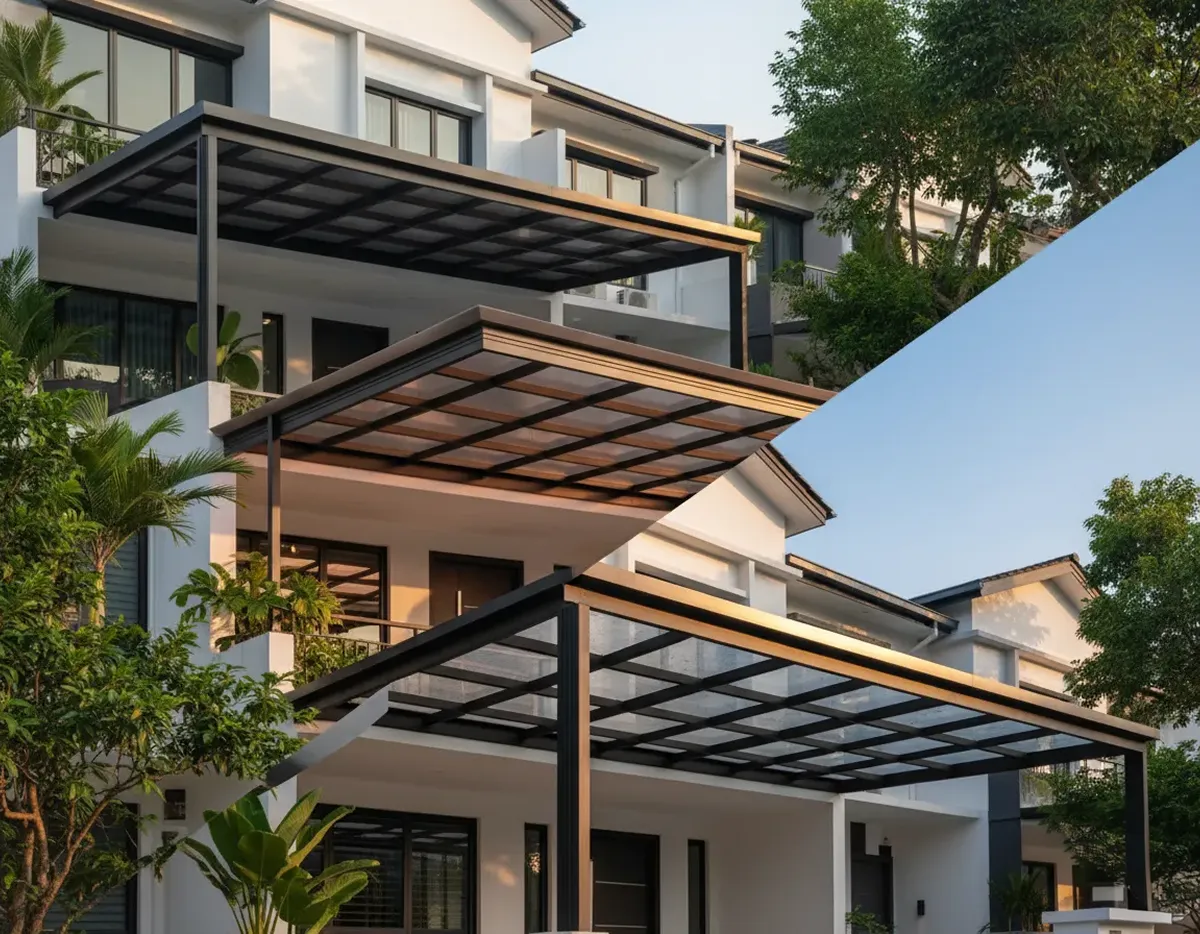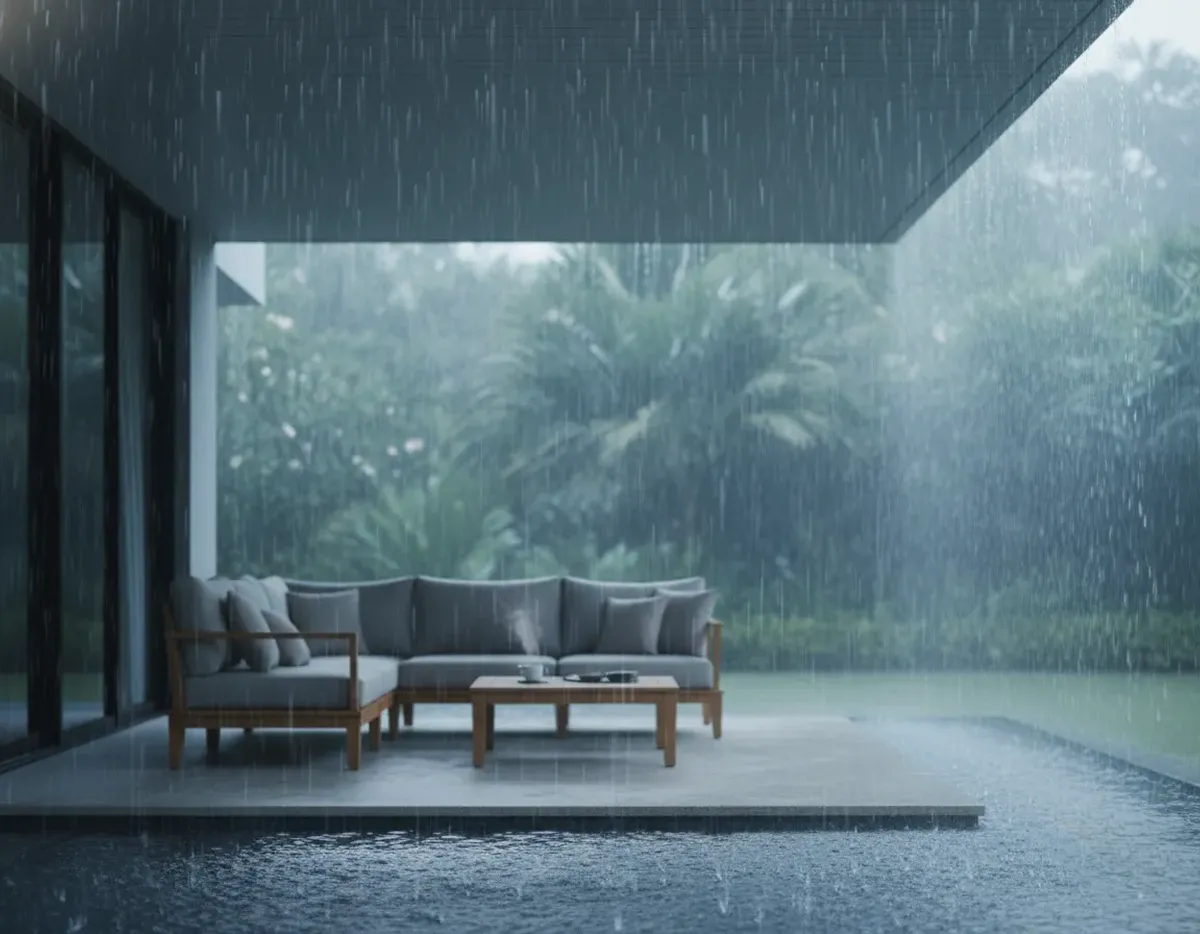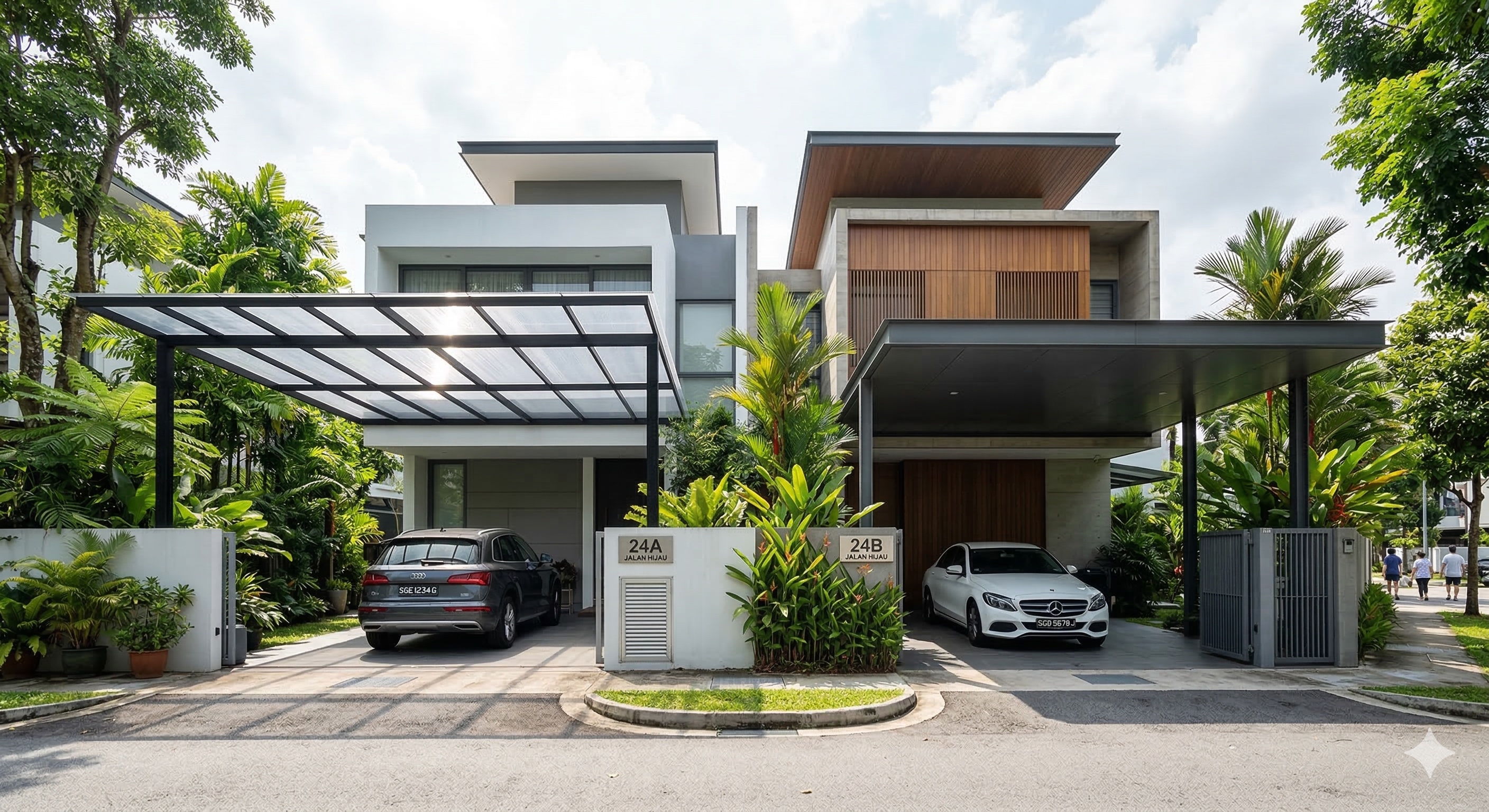
When installing a canopy, car porch roof or outdoor shelter, two materials often come up: polycarbonate panels and ACP (Aluminium Composite Panel) roofing.
Both are widely used in roofing Singapore projects because they provide good rain protection and relatively low maintenance. But what many property owners don’t consider is how these materials perform after several years of exposure to Singapore’s climate.
After 5–10 years of sun, rain and humidity, the differences between polycarbonate and ACP roofing become more noticeable. Understanding how each material ages helps homeowners, MCST managers and commercial property owners choose a roofing system that lasts.
Why Lifespan Matters in Singapore’s Climate
Singapore’s weather is demanding on outdoor roofing structures.
Intense UV Exposure
Roofs receive direct sunlight almost every day. Over time, UV rays can weaken materials, cause colour fading and reduce structural integrity.
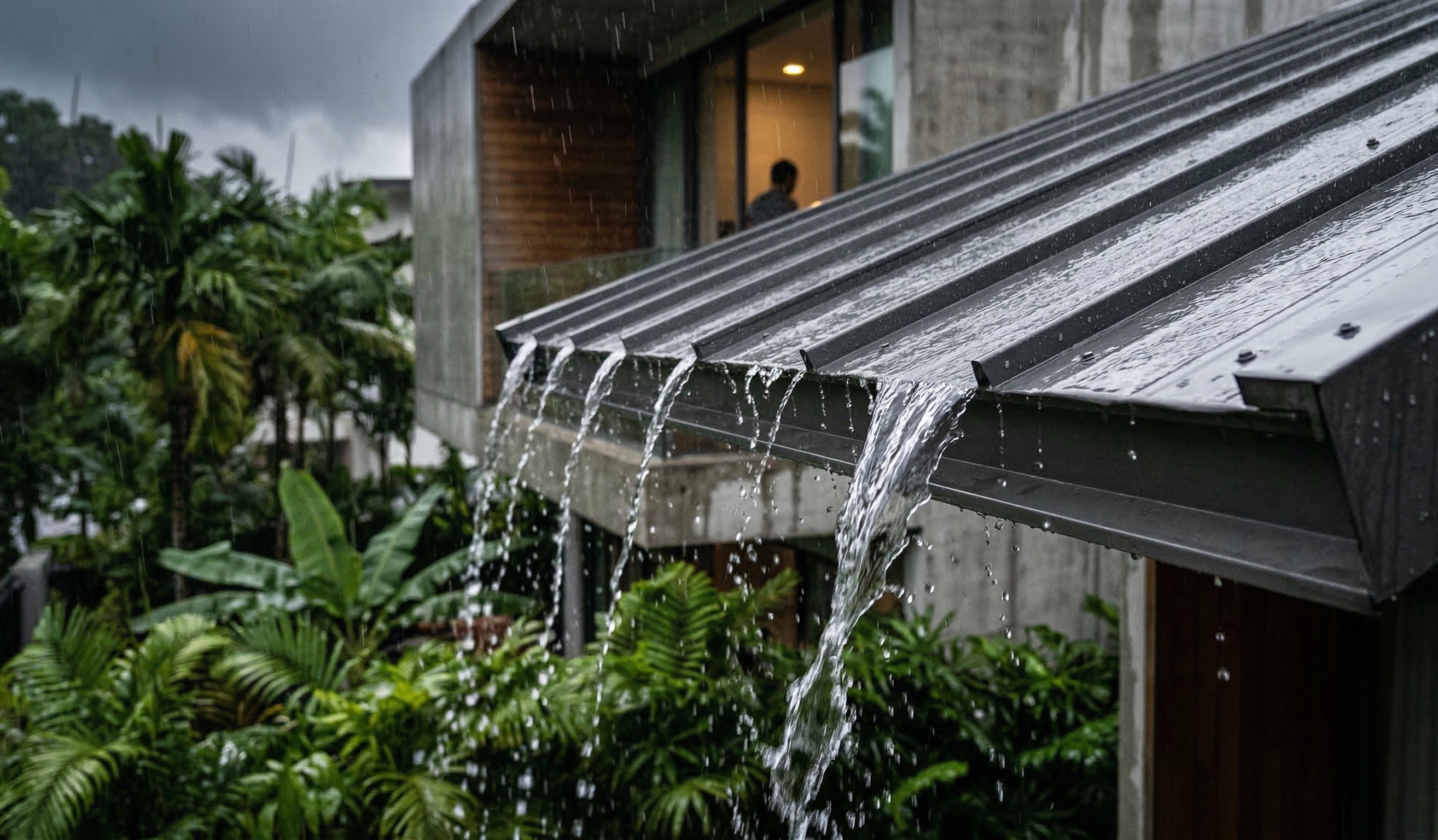
Heavy Tropical Rain
Frequent downpours place constant stress on joints and connections. Poor waterproofing or aging materials can lead to leaks.
High Humidity
Moisture accelerates wear and can cause certain materials to deteriorate faster.
Because of these factors, the long-term performance of canopy materials matters just as much as the initial installation.
Polycarbonate vs ACP: How They Age Over Time
Both materials perform well when new. However, their behaviour changes as they age.
Polycarbonate Roofing (After 5–10 Years)
Polycarbonate panels are lightweight plastic sheets that allow natural light through.
Over time, property owners may notice:
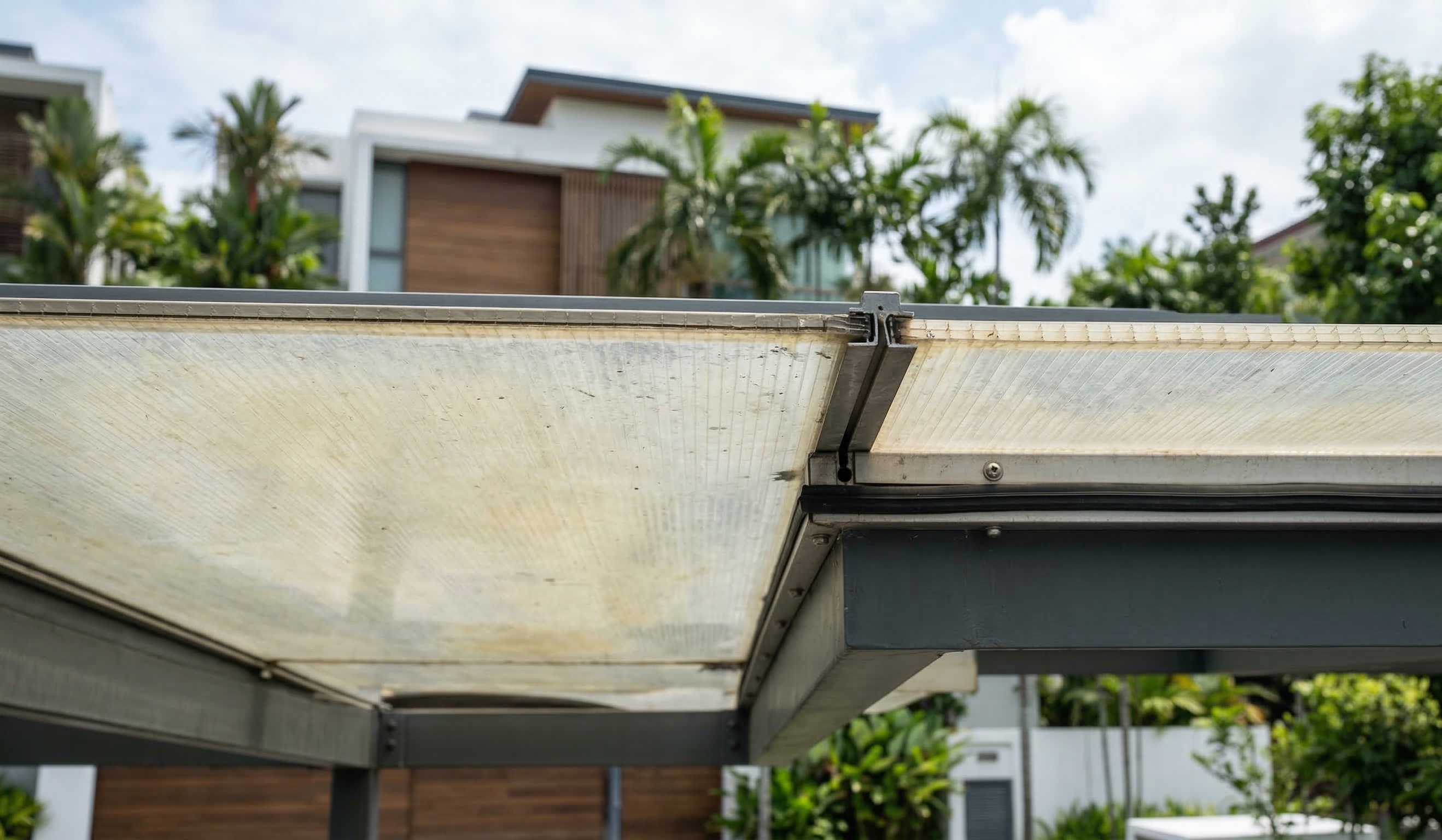
- Surface yellowing or cloudiness from UV exposure
- Reduced transparency as the material ages
- Expansion and contraction due to heat changes
- Occasional panel cracking if exposed to prolonged heat
Despite these issues, polycarbonate roofing can still function well for residential spaces if maintained properly.
Key characteristics after several years:
- Durability: Moderate
- Maintenance: Low to moderate
- Waterproofing performance: Good if seals remain intact
- Heat reduction: Moderate since light passes through
- Best use cases: Balconies, patios, smaller residential canopy areas
ACP Roofing (After 5–10 Years)
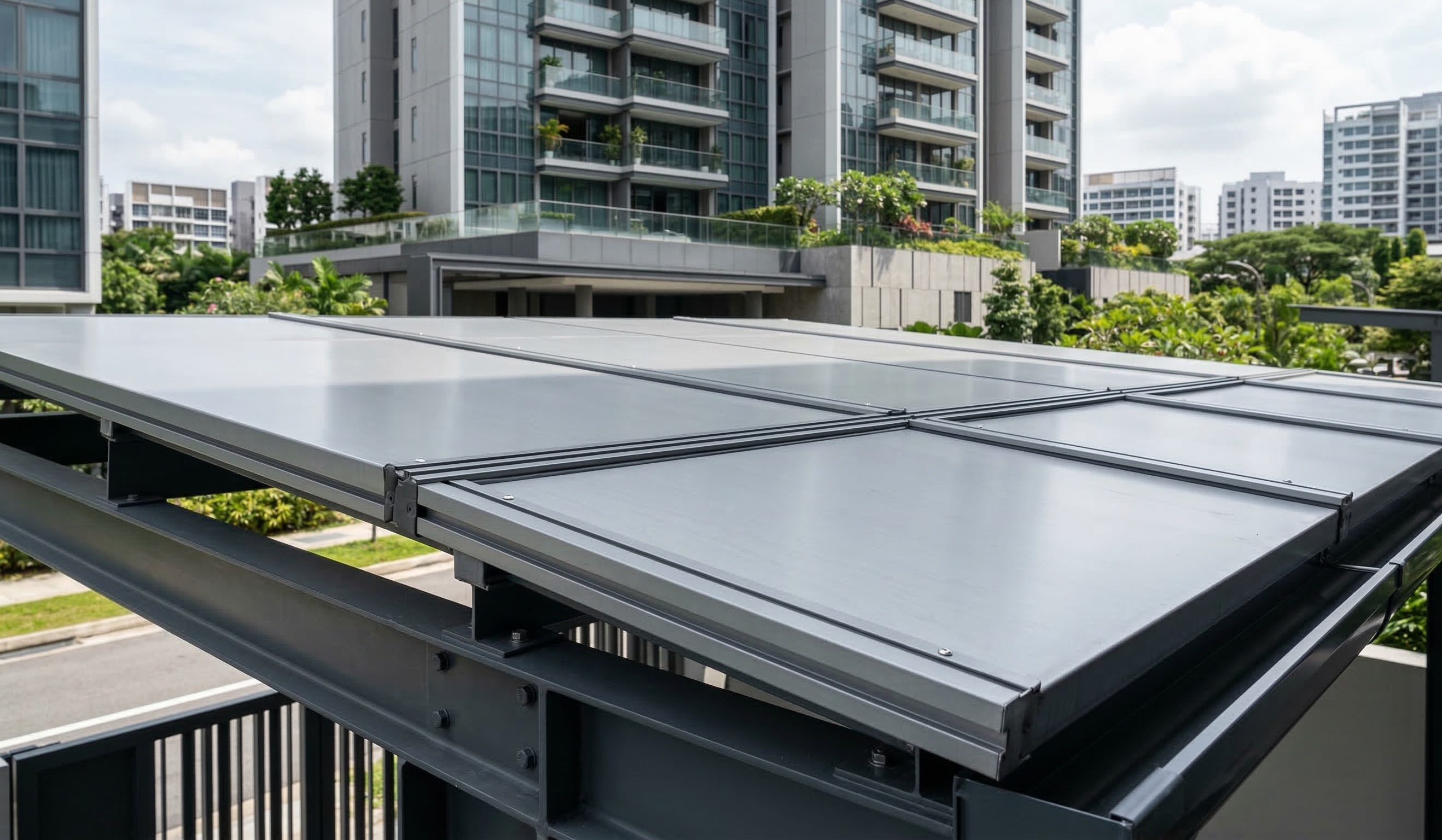
ACP roofing panels consist of aluminium sheets bonded to a core material, creating a rigid and durable panel.
Over time, ACP systems tend to show:
- Minimal colour fading compared to plastic panels
- Stable structure with less expansion or warping
- Strong resistance to weather and UV exposure
Because ACP is metal-based, it generally retains its appearance and structural strength longer.
Key characteristics after several years:
- Durability: High
- Maintenance: Low
- Waterproofing performance: Excellent with proper flashing
- Heat reduction: Good since panels block direct sunlight
- Best use cases: Car porches, shopfront shelters, commercial walkways
Key Solutions for Longer Roofing Lifespan
Material choice is important, but lifespan also depends on design and installation details.
Proper Roof Slope
Canopy roofs should be angled slightly so rainwater drains away quickly. Flat surfaces can cause water pooling.
Quality Waterproofing
Good waterproofing prevents water from entering joints where roofing panels meet walls or beams.
Durable Fasteners
Rust-resistant screws and proper sealing prevent water from entering through installation points.
Periodic Inspection
Even durable roofing systems benefit from occasional checks for loose screws or aging sealant.
These small maintenance steps can significantly extend the lifespan of canopy roofing systems.
Common Roofing Material Mistakes
Some roofing issues that appear after several years are caused by installation or design decisions.
Common problems include:
- Choosing polycarbonate for areas with intense direct sun
- Installing canopies without sufficient roof slope
- Poor sealing at wall connections
- Using low-quality fasteners that rust quickly
- Ignoring drainage design
Over time, these issues may lead to leaks and require roof leak repair.
How Ruufer Builds Roofing Systems Designed to Last
As a specialist in roofing Singapore systems and a trusted awning contractor Singapore, Ruufer focuses on canopy designs that withstand Singapore’s climate over the long term.
Key considerations include:
- Selecting materials suited for high UV exposure
- Ensuring proper waterproofing at critical connection points
- Designing canopy slopes that manage heavy rainfall
- Using durable installation methods that reduce structural stress
- Creating roofing systems that minimise the need for future roof leak repair
By focusing on structural details as well as materials, roofing systems can remain durable and functional even after years of exposure to Singapore’s weather.
Final Thoughts: Choosing a Roofing Material That Ages Well
Polycarbonate and ACP roofing both serve useful purposes, but their long-term performance differs.
Key takeaways:
- Polycarbonate roofing allows natural light, but may yellow or weaken over time.
- ACP roofing offers stronger durability and typically maintains its appearance longer.
- Singapore’s UV exposure and rain accelerate wear, making material selection important.
- Waterproofing, roof slope and installation quality significantly affect lifespan.
Understanding how roofing materials age helps property owners choose canopy systems that remain functional and visually consistent even after many years of exposure to Singapore’s tropical climate.