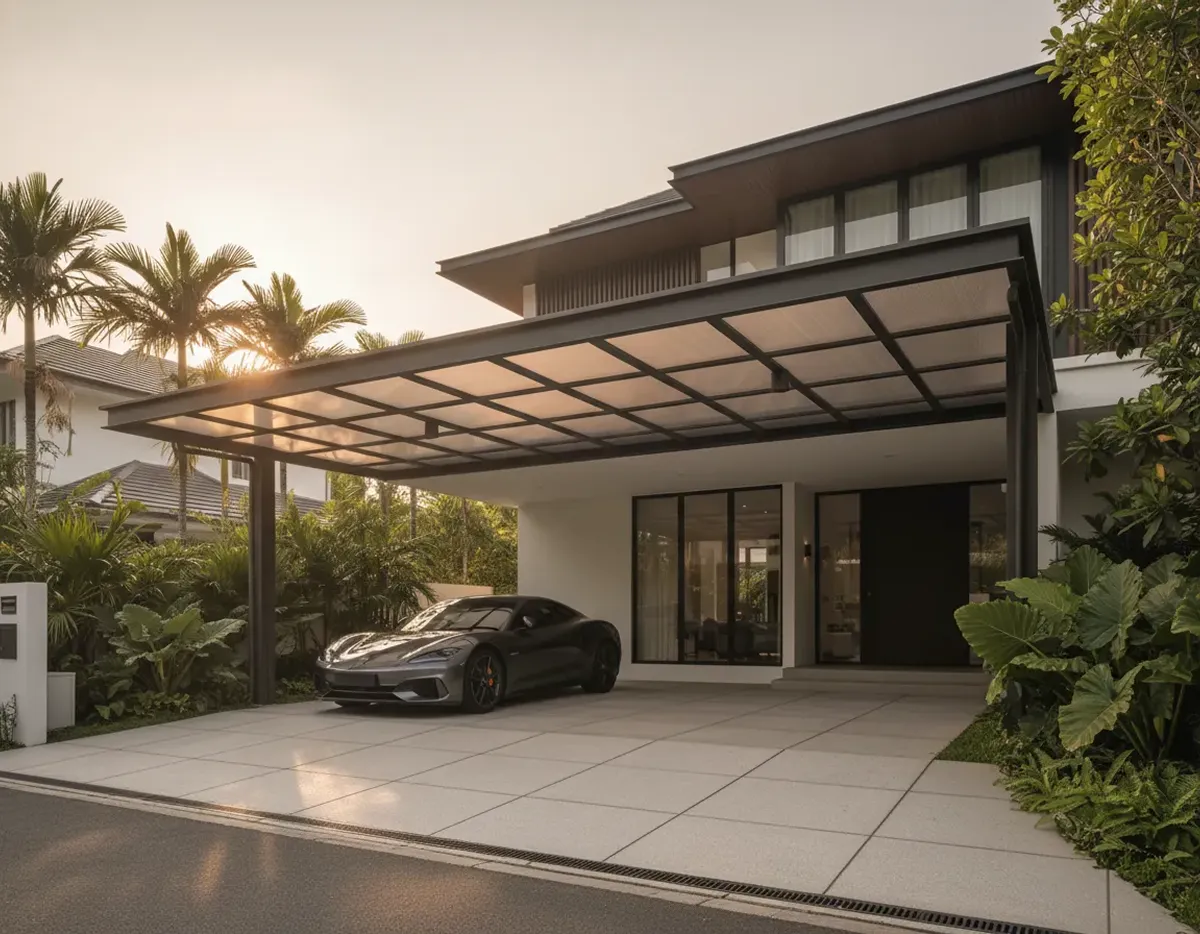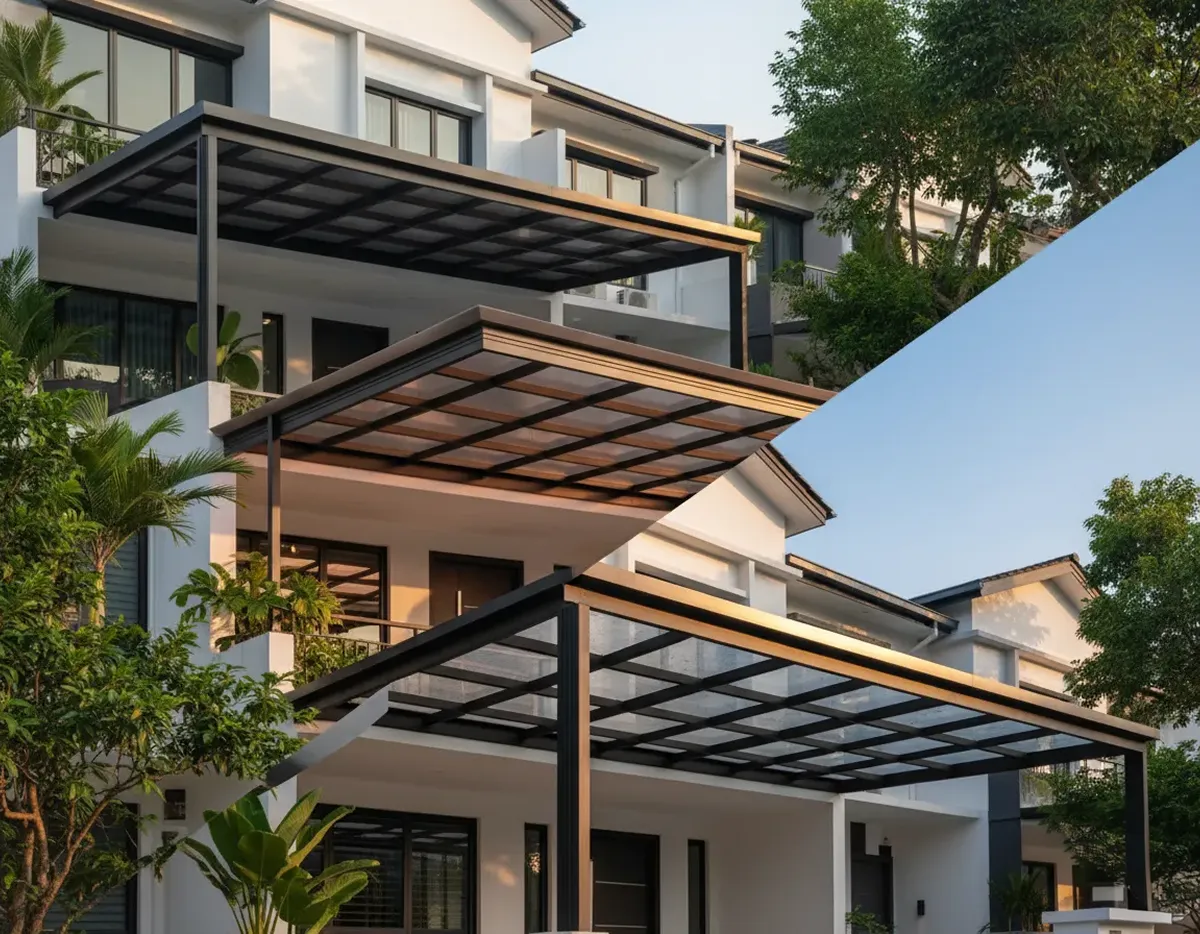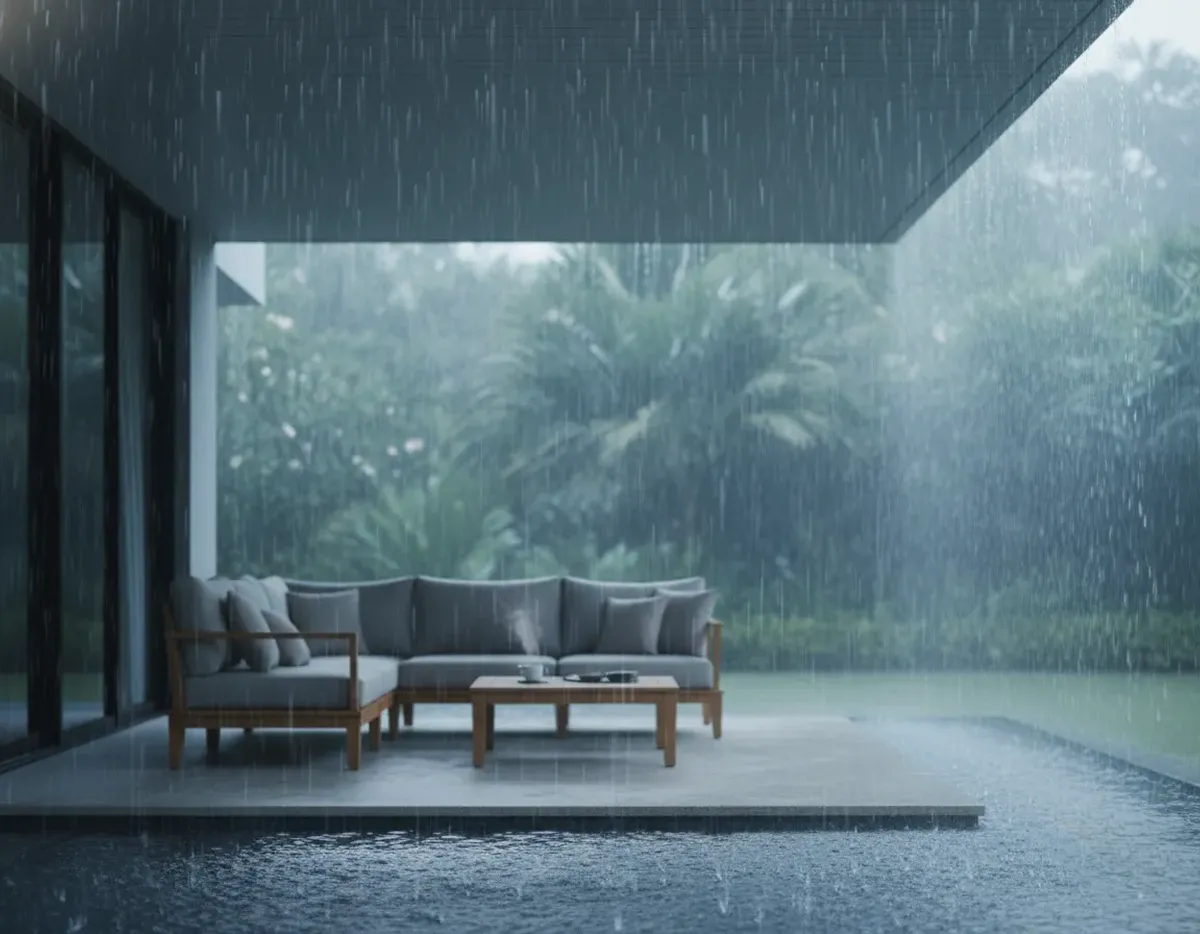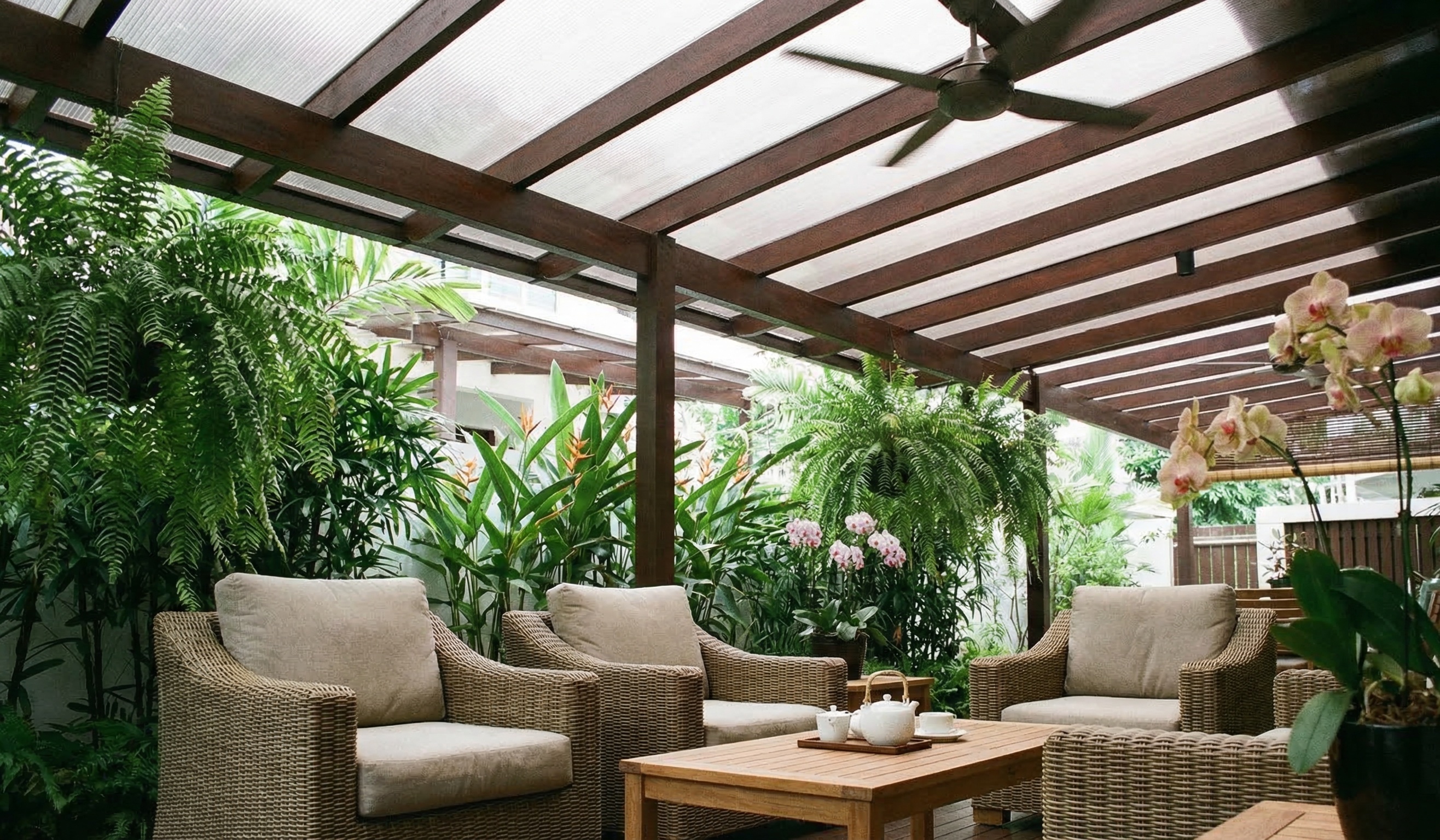
In Singapore, outdoor spaces like balconies, patios, car porches and F&B seating areas often become too hot to use during the day. Even with shade, some areas still feel stuffy, humid and uncomfortable.
The problem is not just the sun — it’s how the roofing is designed. The wrong material, colour or layout can trap heat instead of reducing it.
With the right roofing design, you can significantly lower heat buildup and make outdoor spaces usable again, even in Singapore’s intense climate.
Why Outdoor Spaces Overheat in Singapore
Singapore’s weather creates a perfect combination for heat buildup.
Strong UV and Direct Sunlight
Outdoor areas receive intense sunlight throughout the day. Surfaces like tiles, walls and roofs absorb heat and radiate it back into the space.
Poor Ventilation
Some canopy designs block airflow, trapping warm air underneath and making the space feel stagnant.
Heat Retention from Materials
Certain roofing materials absorb and hold heat, especially darker or poorly ventilated structures.
Because of this, effective roofing Singapore solutions need to consider both shade and airflow, not just coverage.
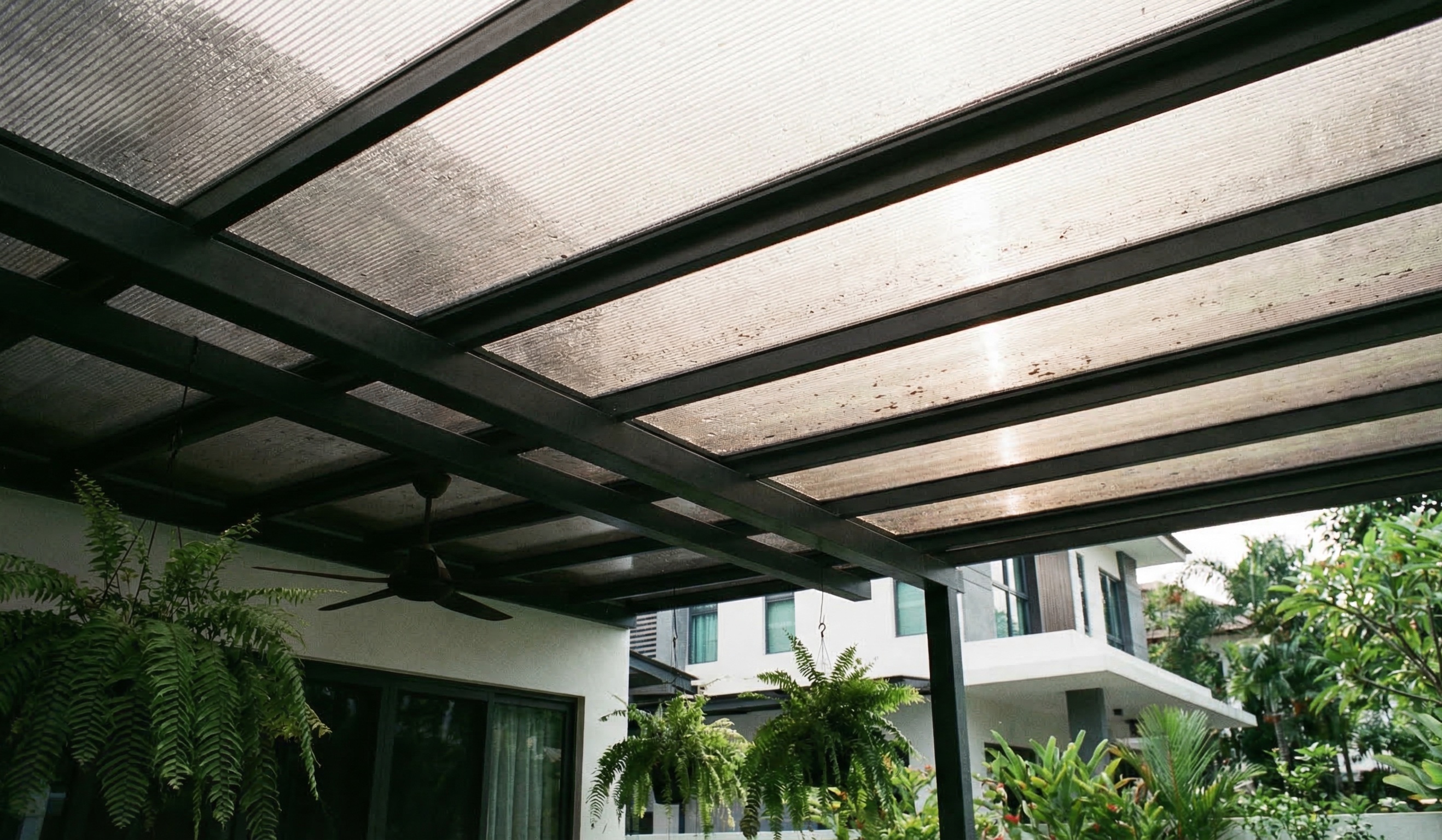
Roofing Options That Reduce Heat Effectively
Different roofing materials handle heat differently. Choosing the right one can make a noticeable difference.
Polycarbonate Roofing
- Durability: Moderate to high
- Maintenance: Low
- Waterproofing: Good with proper sealing
- Heat reduction: Moderate — allows light but reduces direct heat
- Best use case: Balconies and areas where natural light is needed
Polycarbonate provides shade while still letting in light, but may not block heat completely.
Aluminium Composite Panel (ACP)
- Durability: High
- Maintenance: Low
- Waterproofing: Excellent with proper flashing
- Heat reduction: Good — blocks direct sunlight effectively
- Best use case: Car porches, patios, commercial outdoor seating
ACP is one of the most effective materials for reducing heat in outdoor spaces.
Metal Roofing Systems
- Durability: Very high
- Maintenance: Moderate
- Waterproofing: Excellent
- Heat reduction: Moderate unless insulated
- Best use case: Larger or industrial-style structures
Metal roofing can be durable, but without insulation, it may still radiate heat.
Key Roofing Design Solutions That Improve Comfort
Material alone isn’t enough — design plays a big role in heat reduction.
Increase Roof Height
Higher canopy placement allows hot air to rise and escape, improving ventilation underneath.
Allow Airflow Through Open Sides
Avoid fully enclosing outdoor areas. Open sides help maintain natural wind flow.
Use Lighter Roofing Colours
Lighter colours reflect more sunlight and reduce heat absorption.
Incorporate Proper Roof Slope
A sloped roof not only improves drainage but also reduces heat buildup compared to flat surfaces.
Apply Proper Waterproofing
Good waterproofing ensures the system remains sealed without compromising airflow or structure.

Common Roofing Design Mistakes That Trap Heat
Many outdoor areas remain hot because of avoidable design choices.
Common issues include:
- Installing low, enclosed canopies that trap hot air
- Using dark roofing materials in direct sun areas
- Choosing materials that absorb heat without ventilation
- Designing flat roofs that collect heat and water
- Ignoring airflow when planning shelter layout
Over time, poor design may also lead to moisture issues or the need for roof leak repair.
How Ruufer Designs Cooler Outdoor Spaces That Stay Comfortable
As a specialist in roofing Singapore systems and an experienced awning contractor Singapore, Ruufer focuses on roofing designs that reduce heat while maintaining durability.
Key design considerations include:
- Selecting materials that minimise heat absorption
- Designing canopy structures that allow airflow and ventilation
- Using lighter colour finishes to reflect sunlight
- Incorporating proper waterproofing at all structural joints
- Ensuring roof slope and layout reduce long-term maintenance and roof leak repair risks
By combining material selection with smart structural design, outdoor areas can remain significantly cooler and more comfortable.
Final Thoughts: Making Outdoor Spaces Usable Again
If your outdoor area feels too hot, the issue is often in the roofing design — not just the weather.
Key takeaways:
- Heat buildup comes from both material and design choices
- ACP roofing provides strong shade, while polycarbonate balances light and protection
- Ventilation is just as important as coverage
- Lighter colours and proper roof height reduce heat significantly
- Good waterproofing and slope improve both comfort and durability
With the right roofing approach, outdoor spaces can become cooler, more comfortable and usable throughout the day — even in Singapore’s hot and humid climate.