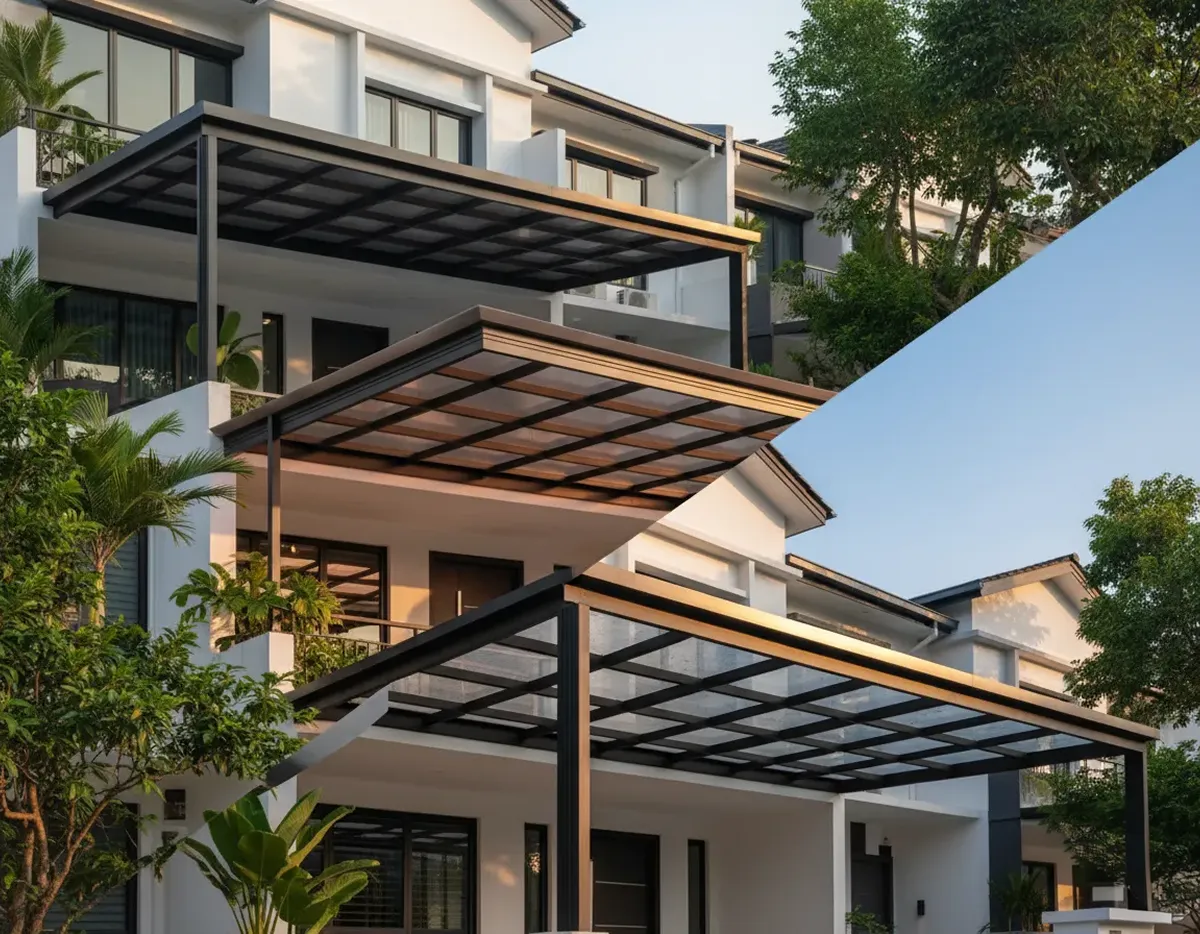
In Singapore, “winterising” really means getting your retractable roof ready for the monsoon onslaught — the relentless heavy rain, gusty winds and sky-high humidity that define the Northeast Monsoon (roughly November to March) and the Southwest Monsoon (June to September). A well-maintained system will not only keep you dry but also prevent expensive damage to motors, fabrics and frames. Here’s how to monsoon-proof your retractable roof step by step.
1. Deep Clean and Inspect Everything
Before the rains hit hard, give every component a good look-over.
- Fabric canopies: Gently scrub with a soft brush, mild soap and water to remove dirt, bird droppings and that stubborn green algae that loves our tropical climate. Let it dry fully before retracting.
- Louvered or polycarbonate roofs: Wash off accumulated dust and leaves. Check for hairline cracks in polycarbonate panels, which can spread during heavy downpours.
- Frames and tracks: Wipe down aluminium or steel frames. Inspect track rails for debris—a tiny pebble can cause a motor burnout when the roof jams.
2. Reinforce Waterproofing
Even “waterproof” roofs develop leaks at seams, stitching and end caps over time.
- Fabric roofs: Apply a high-quality waterproofing spray or reproofing solution designed for outdoor acrylic/polyester fabrics (e.g., 303 Fabric Guard or Nikwax). Pay special attention to the thread lines—needle holes are the number one leak point. Re-treat at least once a year.
- Seam sealing: If you spot any gaps in stitching, use a seam sealer. For PVC fabrics, specialised PVC patch kits can handle small tears.
- Louvered roofs: Check the rubber gaskets and seals between louvres. If they’re cracked or flattened, replace them—otherwise wind-driven rain will sneak through.
3. Clear the Drainage Path
Your roof’s drainage system has to cope with tropical downpours that can dump 100 mm of rain in a few hours.
- Gutters and downpipes: Remove leaves, silt and clogged debris. Pour a bucket of water down the spout to verify free flow.
- Integrated drainage channels: Many retractable roofs channel water into the side rails. Make sure weep holes are clear—use a small brush or compressed air.
- Slope check: If your roof can adjust its pitch, set it to the manufacturer’s recommended drainage angle during the monsoon (usually a steeper slope) so water doesn’t pool.
4. Protect Motors and Electricals
Humidity plus rain equals a short circuit waiting to happen.
- Weatherproof enclosures: Ensure the motor housing and any external electrical connections are sealed with IP65-rated (or higher) junction boxes. Replace brittle or cracked cable glands.
- Safety switch: Confirm that your roof is connected to an Earth Leakage Circuit Breaker (ELCB/RCCB). In Singapore, this is mandatory, but test it by pressing the “Test” button.
- Sensor function: If your roof has a rain or wind sensor, test it. Spray water directly onto the rain sensor to see if the roof closes automatically. Calibrate the wind sensor so it retracts at safe gust thresholds (typically 30–40 km/h). Clean sensor heads of dirt and spider webs.
5. Wind-Proofing Strategy
Monsoon gusts can turn a retractable roof into a sail.
- Fabric roofs: Never leave a fabric canopy fully extended when you’re away during the monsoon season—it can catch wind and tear or damage the arms. Retract it when not in use or during storms.
- Semi-retracted “vent” mode: Some systems allow a slightly open position for ventilation while reducing wind load. This is fine for light rain, but not for a squall.
- Secure louvres: If your roof has rotating blades, close them fully during heavy wind. Loose or partially open louvres vibrate and can snap linkages.
- Anchor points: For large installations, check that the posts are firmly bolted to the floor or wall. Tighten any loose fasteners.
6. Rust and Corrosion Control
Salt-laden air (if you’re near the coast) and endless dampness accelerate rust.
- Inspect metal parts: Look for bubbling paint, white powdery oxidation (on aluminium) or red rust (on steel). Sand down and repaint with a rust-inhibiting paint.
- Lubrication: Apply a dry PTFE or silicone lubricant to moving parts—hinges, track rollers, louvre mechanisms—not grease, which attracts dirt. Avoid oil-based sprays that can stain fabric.
- Stainless steel hardware: If you find rusting bolts, replace them with 316 marine-grade stainless steel, which withstands Singapore’s humidity far better.
7. Stop Mould and Algae Before They Start
Monsoon = mould’s favourite season.
- Fabric: After cleaning, let the canopy dry completely before retracting. If you must close it while damp, re-open it at the first dry window to air out.
- Anti-mould treatment: Mix a mild solution of white vinegar and water (1:4) and wipe down frames and tracks. For stubborn mildew on fabric, use a specialised canvas cleaner (like Star brite) that kills spores.
- Ventilation gap: If the roof has a rain-sheltered vent position, use it on drizzly days to promote airflow and discourage mould underneath.
8. Schedule a Professional Check-Up
Some tasks are best left to the experts, especially for motorised systems.
- Arrange an annual service before the monsoon peak (October/November is ideal). Technicians will tension cables, recalibrate motors, replace worn brushes and fully test automation sequences.
- If your roof is under warranty, a professional service is often required to keep it valid.
Monsoon-Ready Quick Checklist
- Clean and dry canopy/louvres; re-waterproof fabric
- Clear gutters, weep holes and downpipes
- Test rain/wind sensor; verify safety circuit
- Tighten all bolts; touch up rust spots
- Lubricate moving parts with dry lube
- Retract roof fully when storms are forecast
By treating your retractable roof to this pre-monsoon routine, you’ll ride out Singapore’s heaviest downpours in dry comfort—and extend your roof’s life for years of year-round alfresco living.