Understanding Awning Lifespan as a System
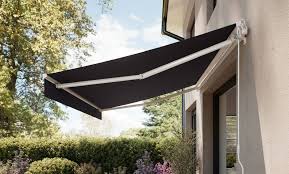
A retractable awning is not a single component with a single lifespan — it is a mechanical system comprising five distinct subsystems, each with its own degradation rate and failure mode: the fabric, the frame and arms, the roller tube and spring mechanism, the drive system, and the surface treatment and fixings. The weakest subsystem determines the effective lifespan of the awning as a whole, which is why two awnings from the same manufacturer installed on the same day can have dramatically different service lives depending on usage patterns, maintenance frequency, and environmental exposure.
In temperate European climates where most awning lifespan data originates, a quality retractable awning is typically rated for 10 to 15 years of service. In Singapore's tropical climate — characterised by year-round UV radiation at intensity levels significantly higher than European latitudes, daily humidity cycling between 65% and 95%, salt-laden air in coastal areas, and frequent heavy rainfall — every degradation mechanism operates faster. A realistic service life expectation for a quality retractable awning in Singapore, properly maintained, is 8 to 12 years for the fabric and 12 to 20 years for the frame and mechanical components.
Fabric Lifespan
Fabric is consistently the first subsystem to reach end of life in a retractable awning, and its degradation is driven primarily by ultraviolet radiation rather than mechanical wear.
UV Degradation Mechanism
Awning fabrics are manufactured from one of three base materials: solution-dyed acrylic, polyester with PVC coating, or woven polyester with acrylic coating. Solution-dyed acrylic — used in premium brands such as Sunbrella and Dickson — has pigment infused directly into the fibre during manufacture rather than applied as a surface dye. This gives it superior colourfastness under UV exposure, with the American Association of Textile Chemists and Colorists rating solution-dyed acrylic at 2,000 hours of accelerated UV exposure before significant colour shift — equivalent to approximately 10 years of Singapore outdoor exposure.
PVC-coated polyester degrades differently — the PVC plasticiser migrates out of the coating over time under UV and heat exposure, causing the fabric to stiffen, crack at fold lines, and lose its waterproof integrity. In Singapore's climate this plasticiser migration is accelerated by the combination of high UV intensity and the daily thermal cycling the fabric undergoes as it extends into direct sun and retracts into the cooler cassette housing. A PVC-coated polyester fabric that would last 10 years in northern Europe may reach end of life in 5 to 7 years in Singapore.
Mechanical Fatigue at Fold Lines
Every retraction cycle folds the fabric at the same points along its length — at the arm attachment points and at the roller tube where the fabric begins to wind. Over thousands of cycles, the fibre structure at these fold lines experiences repeated bending stress that progressively weakens the weave. A quality awning fabric is rated by its manufacturer for a specific number of operating cycles — typically 10,000 to 20,000 cycles for premium solution-dyed acrylic. At an average of two cycles per day in Singapore's climate, 10,000 cycles represents approximately 13 years of operation, but this rating assumes the fabric is not already weakened by UV degradation, mould damage, or chemical cleaning residue at the fold lines.
Mould and Biological Growth
Singapore's permanently high humidity creates ideal conditions for mould and mildew colonisation of awning fabric, particularly on fabrics that are regularly wetted by rain and then retracted before fully drying. Mould does not merely stain the fabric surface — the mycelium physically penetrates the fibre structure and produces enzymes that break down the polymer chains of both the fabric and its waterproof coating. A fabric with established mould colonisation has measurably reduced tensile strength at the affected areas and will tear under wind load at stresses well below its original design rating.
Frame and Arm Lifespan
The aluminium frame and articulated arms of a quality retractable awning are the most durable subsystem, with a potential service life of 20 to 25 years under normal conditions. In practice, the limiting factors in Singapore are corrosion at the arm elbow pivot joints and fatigue cracking at stress concentration points.
Arm Elbow Joint Corrosion
The elbow joint at the centre of each retractable arm contains a steel pivot pin running through an aluminium casting. Steel and aluminium in direct contact in the presence of moisture form a galvanic couple — the steel corrodes preferentially as the anode in the galvanic cell, producing iron oxide that expands within the joint and eventually seizes the pivot completely. In Singapore's humidity this galvanic corrosion can progress from imperceptible to complete seizure within three to five years in the absence of regular lubrication. Stainless steel grade 316 pivot pins eliminate this problem entirely — the alloy composition of 316 stainless places it sufficiently close to aluminium in the galvanic series that the corrosion driving voltage is too low to sustain meaningful corrosion rates.
Fatigue at Stress Concentrations
The arm-to-wall bracket connection and the arm-to-fabric bar connection are the highest stress points in the arm system. Each extension and retraction cycle loads these connections in bending, and the stress concentration at the bolt holes and section changes within the casting accumulates fatigue damage over time. Premium arm castings are manufactured from 6061-T6 aluminium alloy with a fatigue endurance limit of approximately 95 MPa — well above the stresses induced by normal awning operation — meaning fatigue cracking is not a concern under correct loading conditions. However, an awning that has been repeatedly operated in wind speeds above its design limit — common in Singapore during Sumatra squalls where wind speeds can reach 60 to 80 km/h with minimal warning — accumulates stress cycles far above the design assumption, significantly reducing the time to fatigue crack initiation at these stress concentration points.
Roller Tube and Spring Mechanism Lifespan
The roller tube and its internal spring mechanism are the most maintenance-sensitive components in the awning system and the most common source of mid-life mechanical failure.
Spring Fatigue and Tension Loss
The constant-force spring inside the roller tube provides the return tension that assists fabric retraction. This spring is a coiled steel strip wound around a central shaft, and its force output is determined by its material properties, cross-section dimensions, and the number of active coils. Over time, the spring steel undergoes stress relaxation — a permanent reduction in elastic modulus under sustained stress — that reduces the spring force output without any visible change in the spring's physical condition. A spring that has lost 20% of its original tension will cause the awning to retract sluggishly, place additional load on the motor in motorised systems, and in manual systems may no longer retract the fabric fully without manual assistance.
Spring fatigue rate is temperature-dependent — higher operating temperatures accelerate stress relaxation in spring steel. A roller tube in direct sun on a Singapore afternoon reaches surface temperatures of 60 to 70°C, and the spring inside operates at these elevated temperatures for hours daily. Premium awning manufacturers specify higher-grade spring steel alloys with better elevated-temperature stress relaxation resistance, but even these will show measurable tension loss after 8 to 10 years of Singapore service.
Roller Tube Deflection
Wide awnings — those spanning 4 metres or more — subject the roller tube to significant bending under the weight of the fabric and the spring tension. Over time, permanent deflection of the roller tube at mid-span causes the fabric to wind unevenly, producing a thicker fabric roll at the centre than at the ends. This uneven winding progressively worsens with each cycle and eventually causes the fabric to jam in the cassette housing or wind so tightly at the centre that the spring cannot overcome the increased resistance. Roller tubes specified at insufficient wall thickness for the awning span are the primary cause of this failure mode — a 60mm diameter tube with 2mm wall thickness that is adequate for a 3 metre span is significantly underspecified for a 5 metre span under the same fabric weight.
Drive System Lifespan
Manual Crank Systems
The worm gear gearbox in a manual crank system is the primary wear component. Quality gearboxes use hardened steel worm shafts meshing with bronze worm wheels — bronze is specified for the wheel because its lower hardness causes it to wear preferentially over the steel shaft, concentrating wear on the replaceable wheel rather than the shaft. Under normal use, a quality gearbox will deliver 15,000 to 20,000 operating cycles before gear wear produces noticeable backlash. At two cycles per day, this represents 20 to 27 years of service — longer than most other awning subsystems.
Motorised Systems
Tubular motors have a rated operating life specified by the manufacturer in operating hours — typically 500 to 1,500 hours for motors in the residential awning market. At an average cycle time of 30 seconds for a 4 metre awning and two cycles per day, annual motor operating time is approximately 6 hours. A motor rated at 1,000 hours therefore has a theoretical mechanical life of over 160 years under this usage pattern — motor failure in practice is almost never caused by mechanical wear but by electronic component failure, capacitor degradation, thermal overload damage from operating in wind, or water ingress into the motor housing from inadequate weatherproofing.
Capacitor degradation is the most common cause of premature motor failure in Singapore. The run capacitor that provides the phase shift for single-phase motor starting degrades gradually with temperature — electrolytic capacitors lose capacitance at a rate of approximately 1 to 2% per year at 40°C ambient, and Singapore's temperatures accelerate this degradation. A motor whose capacitor has lost 20% of its rated capacitance will draw higher current on startup, run hotter, trip its thermal overload more frequently, and eventually fail to start under load entirely. Capacitor replacement is a straightforward and inexpensive repair that extends motor life by 5 to 10 years and is the first intervention that should be attempted on any motor showing startup difficulty.
Surface Treatment and Fixing Lifespan
Powder coat finishes on aluminium frames degrade through a combination of UV chalking and mechanical wear at contact points. A quality 60-micron powder coat applied over a chromate conversion primer will maintain its gloss and colour integrity for 8 to 12 years in Singapore's UV environment before visible chalking and colour fade require recoating.
Wall fixings are the most safety-critical component with respect to lifespan. Chemical anchors in concrete have an assessed design life of 50 years under normal conditions, but the bracket-to-anchor bolt connection — typically a galvanised or stainless steel bolt threading into the anchor — must be inspected every 3 to 5 years for corrosion. In Singapore's coastal areas where salt-laden air accelerates steel corrosion, standard galvanised fixings may show significant corrosion within 5 years, while stainless steel grade 316 fixings remain serviceable for 20 years or more under equivalent exposure.
Maximising Lifespan: Key Maintenance Intervals
A retractable awning in Singapore achieves its maximum service life only with structured preventive maintenance. Fabric should be cleaned every three months and inspected for mould, UV degradation, and fold-line wear annually. Arm elbow joints and all pivot points should be lubricated with a PTFE or silicone-based lubricant every six months — petroleum-based lubricants attract dust and accelerate wear at pivot surfaces. The roller tube spring tension should be assessed annually by a qualified technician and adjusted if retraction force has noticeably reduced. Motor capacitors should be tested every five years and replaced proactively at the first sign of startup hesitation. Wall fixing bolts should be inspected and torque-checked every three years, with stainless steel replacements specified at the first sign of corrosion on any fixing component.