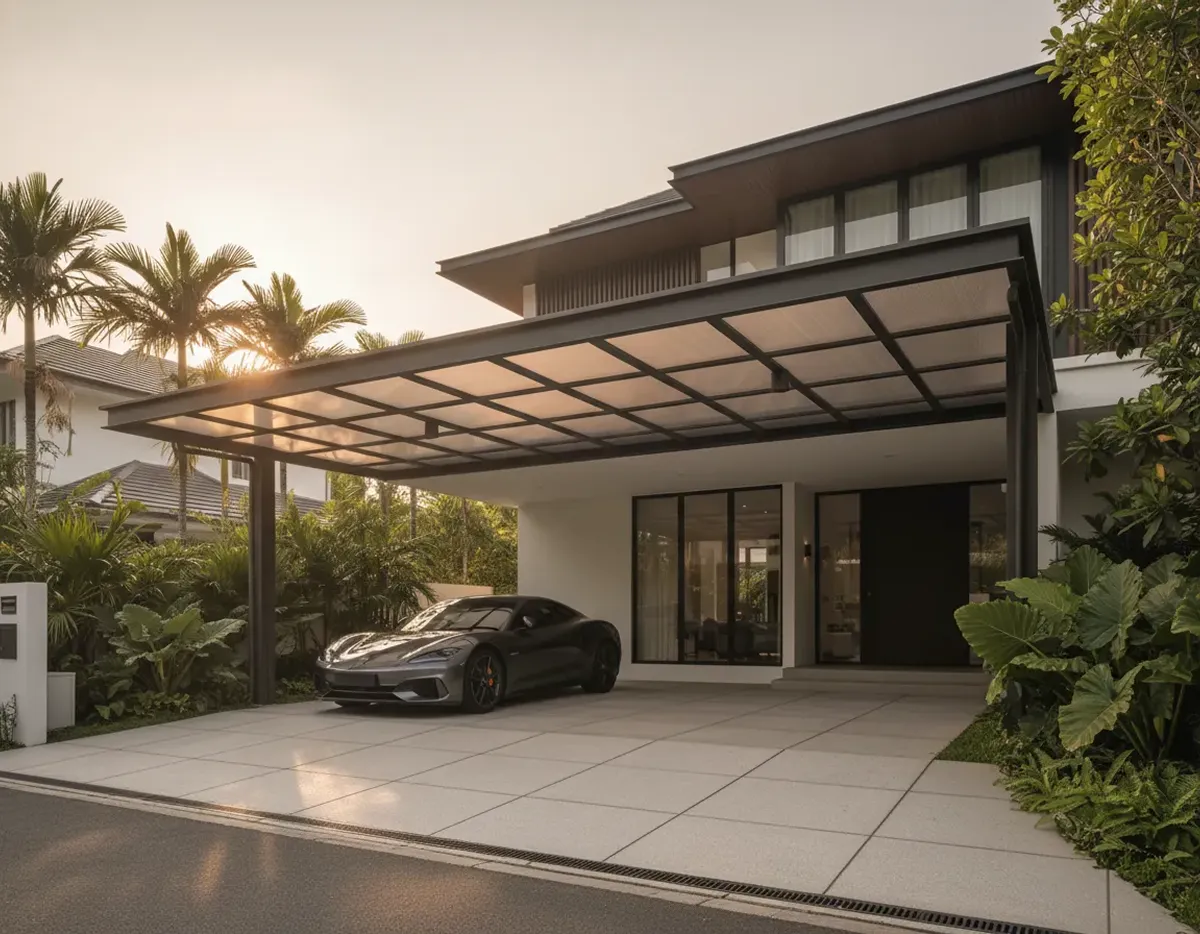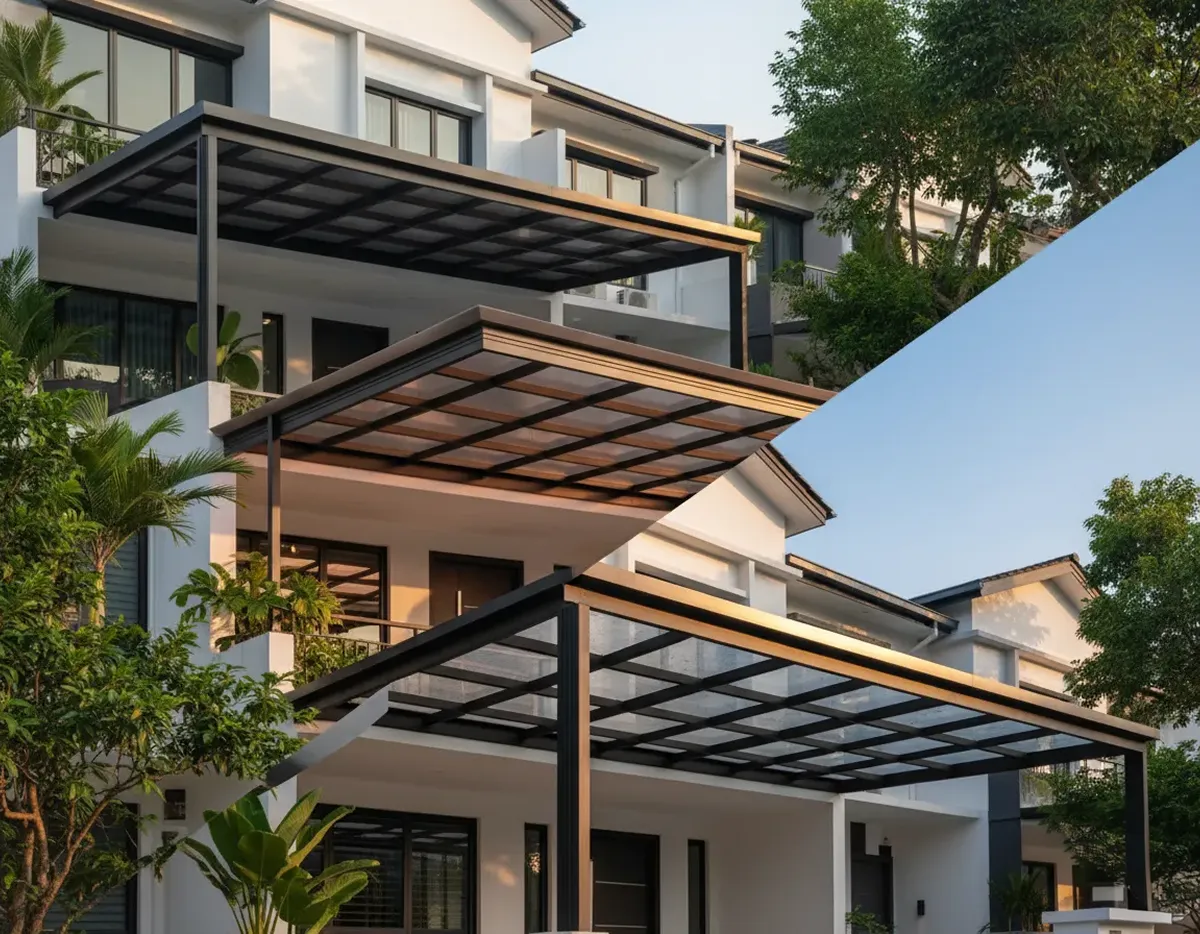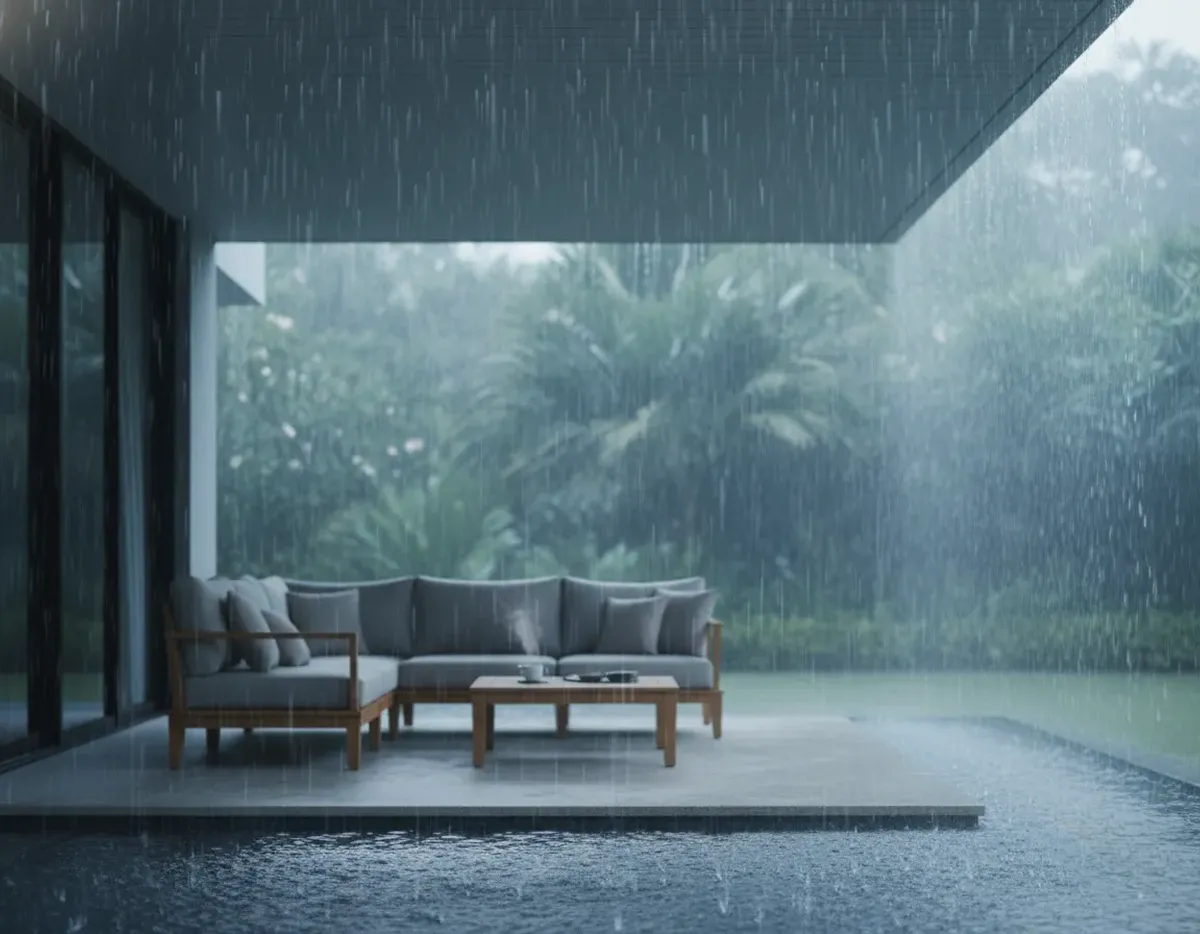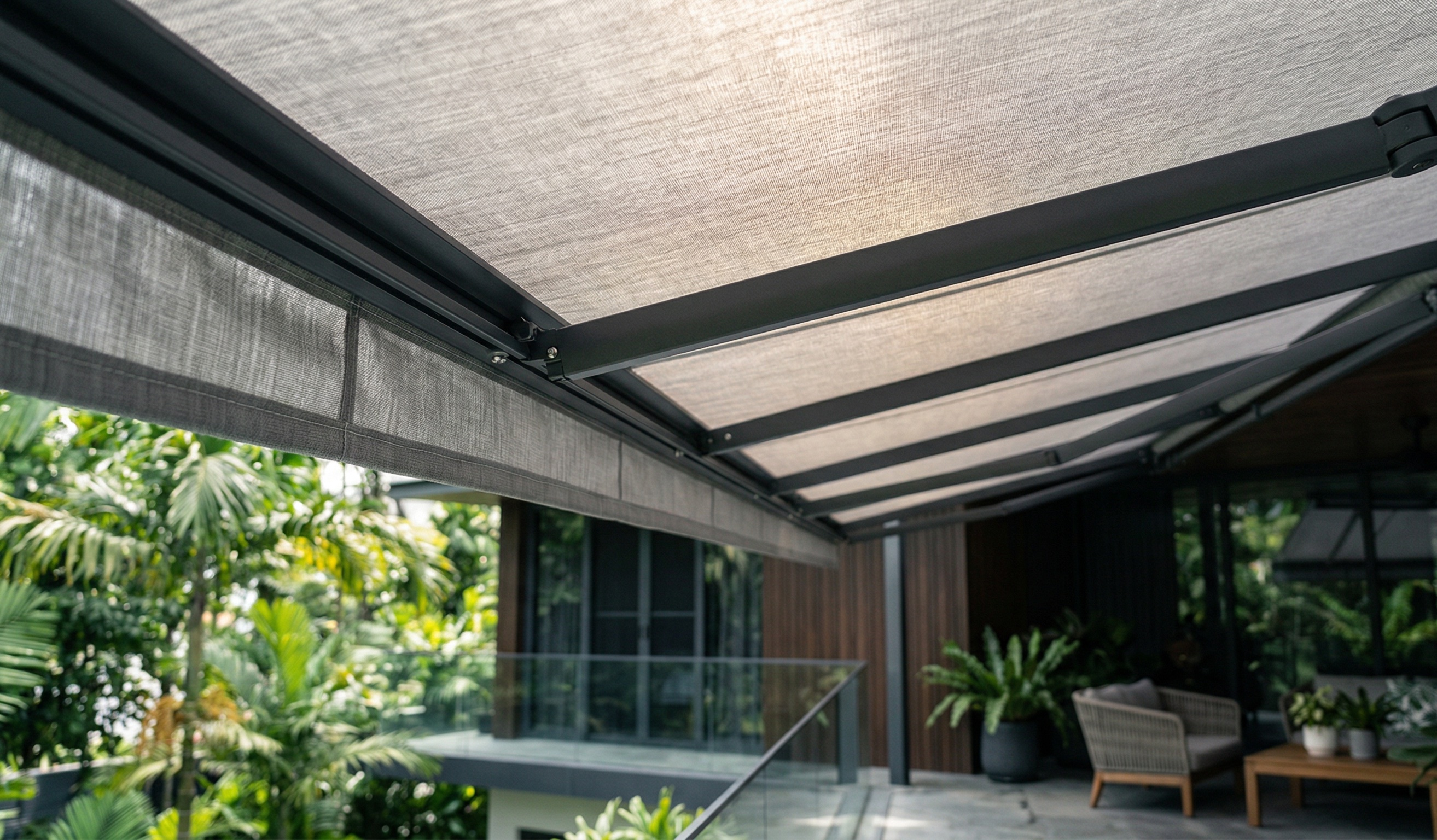
Outdoor awnings are a common upgrade for homes, cafés and shopfronts in Singapore. They provide shade, protect against rain and make outdoor spaces more usable.
But are they actually worth it in the long run?
The answer depends on how they are designed, installed and used. In Singapore’s climate, the right awning can improve comfort and usability — while the wrong one can trap heat, fade quickly or require frequent maintenance.
This guide breaks down the real pros, cons and practical considerations before installing an awning.
Why This Matters in Singapore
Singapore’s weather plays a big role in how well an awning performs.
Heavy Rain
Frequent downpours mean awnings must handle water flow properly. Poor slope or weak installation can lead to leaks and future roof leak repair.
Strong Sun and Heat
Awnings reduce direct sunlight, but certain materials can still trap heat underneath if not designed well.
High Humidity
Moisture affects fabric, joints and brackets over time, making proper waterproofing and material choice important.
That’s why awning design in roofing Singapore projects needs to balance shade, airflow and durability.
The Real Benefits of Outdoor Awnings
When done right, awnings offer clear advantages.
1. Better Shade and Comfort
Awnings reduce direct sunlight, making outdoor spaces cooler and more usable.
2. Rain Protection
They allow balconies, patios and walkways to stay usable even during rain.
3. More Usable Space
Outdoor areas become functional for:
- Dining
- Relaxing
- Business seating (for F&B)
4. Flexible Options Available
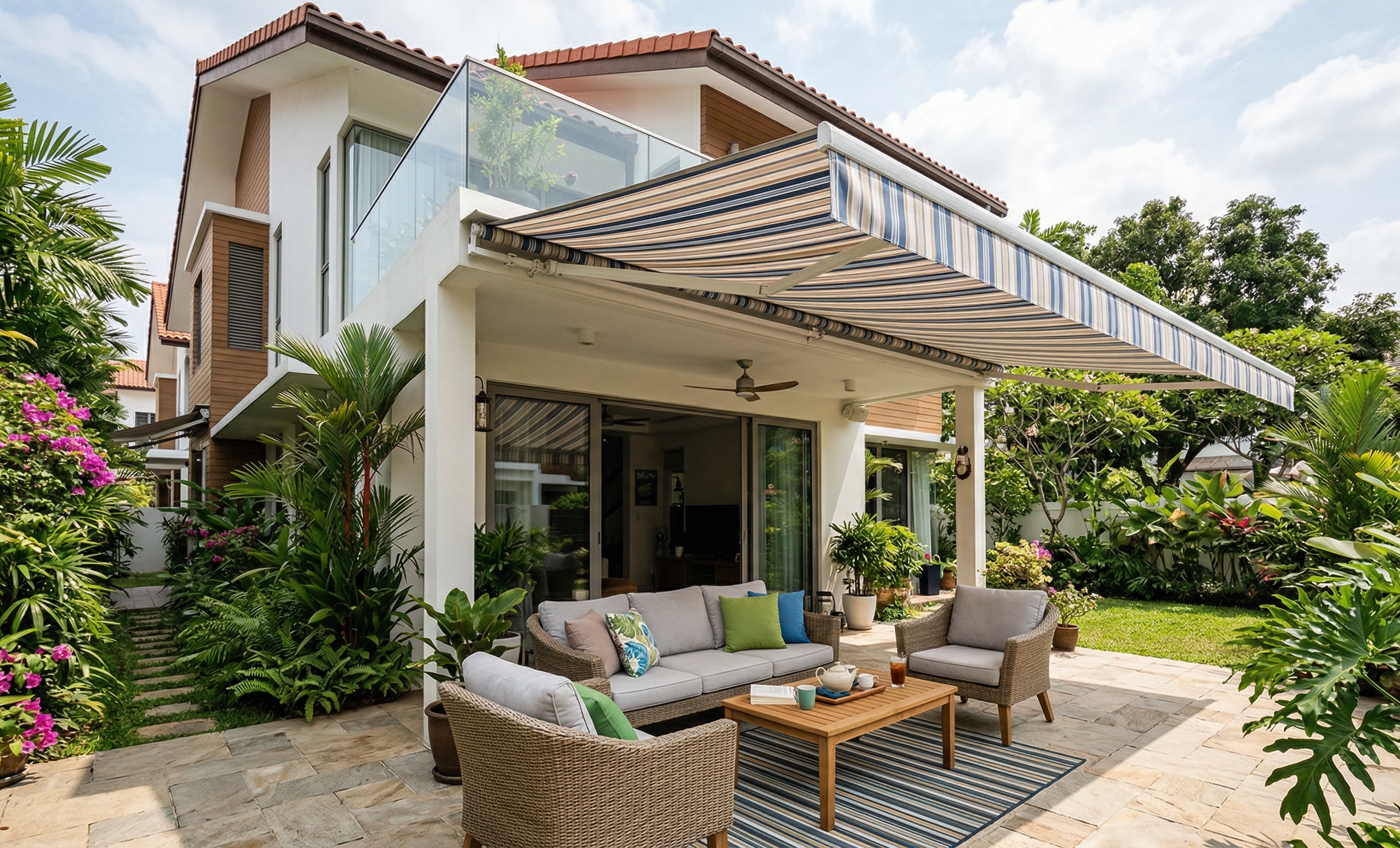
Retractable awnings can be extended or retracted depending on weather conditions.
The Trade-Offs to Consider
Awnings are useful, but they are not perfect.
1. Heat Can Still Build Up
If airflow is blocked or the material absorbs heat, the space underneath may still feel warm.
2. Fabric Maintenance
Fabric awnings can fade, sag or develop mold if not maintained properly.
3. Structural Limitations
Not all spaces are suitable for large awnings without additional support.
4. Installation Quality Matters
Poor installation can lead to:
- Water seepage
- Weak mounting
- Uneven appearance
This often results in maintenance issues or the need for roof leak repair.
Awning Options and What Works Best
Choosing the right awning depends on your space and usage.
Fabric Awnings (Retractable or Fixed)
- Durability: Moderate
- Maintenance: Moderate
- Waterproofing: Good (depends on fabric quality)
- Heat reduction: Moderate
- Best use case: Balconies, patios, café-style seating
Fabric awnings are flexible and visually softer, but require more upkeep.
Aluminium / ACP Awnings (Solid Panels)
- Durability: High
- Maintenance: Low
- Waterproofing: Excellent with proper installation
- Heat reduction: Good
- Best use case: Car porches, patios, long-term installations
Solid awnings provide stronger protection and a more permanent solution.
Metal Frame Awnings
- Durability: Very high
- Maintenance: Moderate
- Waterproofing: Excellent
- Heat reduction: Moderate
- Best use case: Larger areas, commercial spaces
These are more structural and suited for larger coverage.
Key Tips Before Installing an Awning
A few design decisions can make a big difference.
Ensure Proper Slope
A slight angle helps rainwater drain off quickly and prevents pooling.
Plan for Airflow
Avoid fully enclosing the space — ventilation keeps the area cooler.
Choose the Right Material
Match the material to your needs:
- Light and flexible vs solid and durable
- Short-term vs long-term use
Consider Sun Direction
West-facing areas may require better heat control solutions.
Keep Waterproofing in Mind
Proper sealing at mounting points prevents long-term leakage issues.
Common Mistakes to Avoid
Many problems come from poor planning.
Common issues include:
- Choosing based on looks instead of function
- Installing awnings without proper slope
- Blocking airflow and trapping heat
- Poor waterproofing at wall connections
- Using unsuitable materials for the location
These can lead to discomfort, faster wear and eventual roof leak repair.
How Ruufer Designs Awnings That Work in Singapore
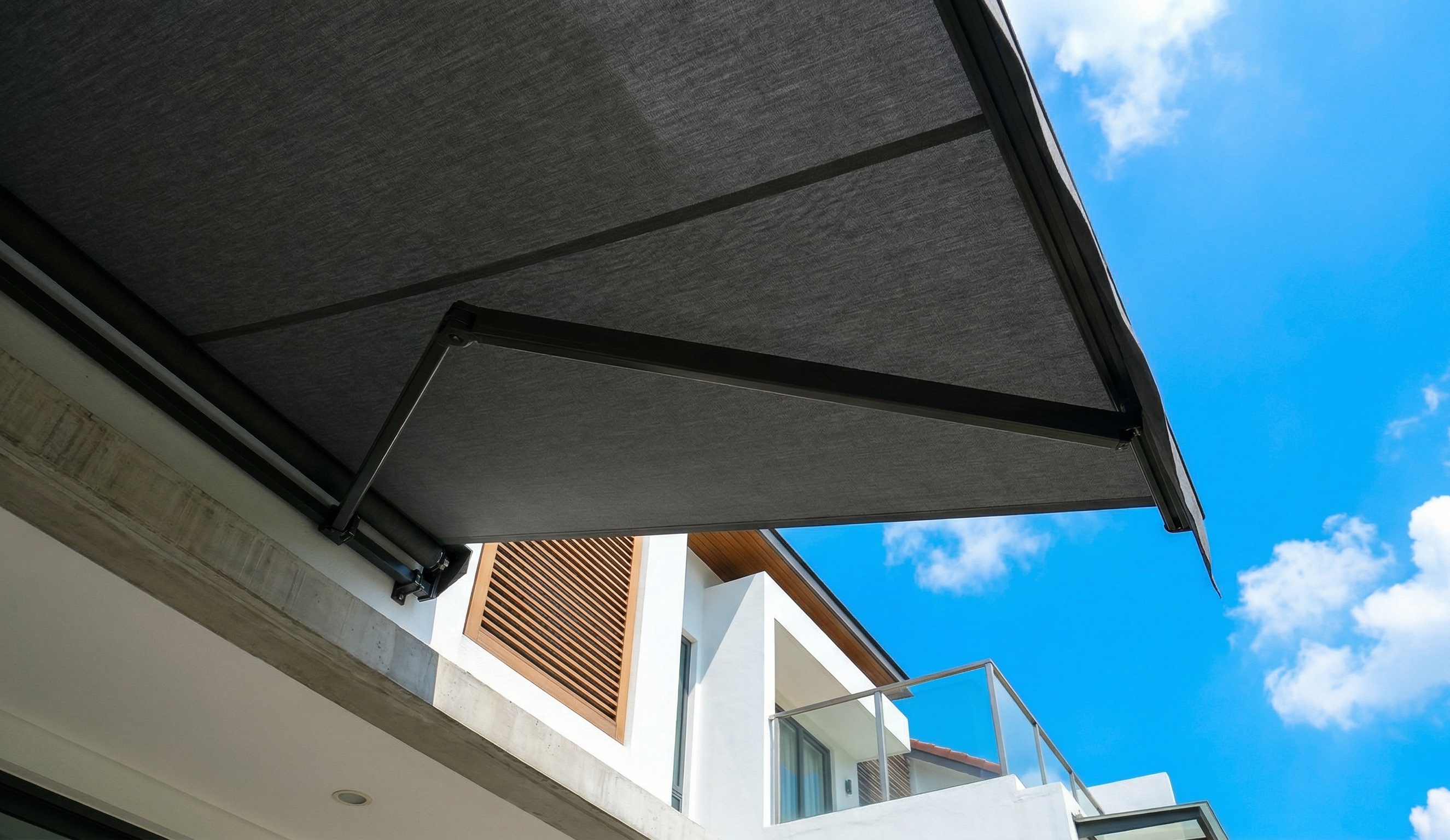
As a specialist in roofing Singapore and an experienced awning contractor Singapore, Ruufer focuses on practical, climate-suited awning solutions.
This includes:
- Assessing sun, rain and airflow conditions
- Recommending suitable awning types for each space
- Designing proper slope for drainage
- Applying proper waterproofing at all joints
- Ensuring clean, stable installation
- Reducing long-term maintenance and roof leak repair risks
The focus is on making awnings usable, durable and visually clean over time.
Final Thoughts: Are Outdoor Awnings Worth It?
Outdoor awnings can be worth it — if designed and installed properly.
Key takeaways:
- Awnings improve comfort by providing shade and rain protection
- Material choice affects heat, durability and maintenance
- Proper slope and drainage are essential in Singapore
- Airflow should not be compromised
- Waterproofing determines long-term performance
With the right setup, an awning can turn outdoor spaces into practical, comfortable areas that hold up well in Singapore’s heat and rain.