Deciding between a manual and motorized awning involves more than just convenience; it is about how the system handles the specific environmental demands of Singapore. Search engines exist to help people find helpful, relevant, and reliable information. When you ask about manual overrides or smart sensors, your intent is to ensure that your investment is safe and functional even during unexpected events like power outages or sudden storms.
A high-quality shading system should achieve its purpose of providing consistent protection without becoming a liability. This guide explores the technical components that make an awning reliable, from the motor brands used to the automation features that protect the structure.
Manual vs. Motorized: The Power Failure Question
The most common concern for homeowners considering a motorized system is what happens during a blackout. If a sudden storm hits and the power goes out, a deployed motorized awning can act like a sail, catching wind and potentially damaging the frame or the building wall.
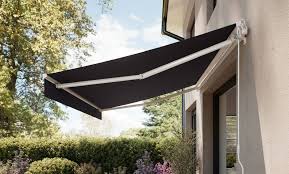
To satisfy the user's need for safety, many motorized awnings are available with a manual override feature. This is often referred to as a "Crank Override" motor. It includes a small integrated gearbox that allows you to hook a manual hand crank into the motor head. Even without electricity, you can manually wind the awning back into its cassette.
While manual awnings are purely gear-driven and always reliable in a blackout, they require significant physical effort to operate, especially for larger spans. A motorized system with a manual override provides the best experience by combining daily ease of use with a reliable fail-safe for emergencies.
Smart Sensors: Automatic Protection from Wind and Rain
In Singapore, weather changes rapidly. A "Highest" quality rating for an awning system often depends on its ability to protect itself when the owner is not around. This is achieved through smart sensors.
- Wind Sensors: These sensors measure vibrations or wind speed. If the wind exceeds a safe limit (such as those in Wind Class 2 or 3), the sensor sends a signal to the motor to retract the awning automatically. This prevents the structural stress that leads to the frame pulling away from the wall.
- Rain Sensors: These detect moisture on a sensitive pad. When it starts to rain, the awning can either deploy to protect your outdoor furniture or retract to prevent water from pooling on the fabric.
For these sensors to work effectively, the system must be calibrated correctly by a professional retractable awning contrator. Proper calibration ensures that the sensor's "signal" is accurate and that the awning responds in time to prevent damage.
App Integration and Smart Home Control
The modern standard for "helpful" technology includes the ability to control home features via a smartphone or voice assistant. Most high-quality motorized systems now support integration with Google Home, Amazon Alexa, or Apple HomeKit.
This is typically achieved through a "Smart Bridge" or "Link Box" that connects your home Wi-Fi to the radio frequency used by the awning motor. Once integrated, you can:
- Set schedules for the awning to deploy during the hottest parts of the day.
- Control the awning remotely if you realize you left it open while at work.
- Use voice commands to adjust the shade without needing to find a remote control.
Providing this level of control ensures that the product meets the user's intent for a modern, automated home.
Motor Brands: Somfy vs. Dooya
The motor is the heart of the system, and its brand is a major indicator of the product's overall reliability and reputation.
- Somfy: This is a premium French brand widely considered the industry leader. Somfy motors are known for their quiet operation, long lifespans, and extensive ecosystem of sensors and smart home hubs (like the TaHoma). They are highly reliable and offer extensive warranties, which aligns with the standards for high-quality, trustworthy products.
- Dooya: As a subsidiary of the Somfy Group, Dooya provides a more budget-friendly but still very reliable alternative. They are robust, widely used in Singapore, and compatible with most smart home bridges. Dooya motors represent a "Medium to High" quality choice that achieves its purpose well for many residential applications.
Using reputable brands like these ensures that the motor has the torque required to move heavy Phifer fabric without straining or burning out.
Structural Integrity and Professional Oversight
No matter how advanced the motor or sensors are, the system is only as safe as its mounting points. A motorized awning exerts significant force on the building's facade.
It is necessary to have a professional roofing contractor or specialized installer evaluate the mounting surface. In many Singaporean homes, awnings are fixed to the roof's fascia or concrete beams. Roofing contractors ensure your roof stays leak-proof while maximizing solar energy savings, and they can confirm that the installation won't cause leaks or structural cracks during high winds.
Ensuring that the installation is handled by someone with the expertise and authoritativeness to do the job correctly prevents the system from becoming harmful to the property.
Conclusion
A motorized awning with a manual override is the most reliable choice for the Singapore market. By integrating wind and rain sensors and choosing a reputable motor brand like Somfy or Dooya, you ensure that your shading system is not just convenient, but also safe and durable. These features ensure the product achieves its purpose very well and satisfies the user's long-term needs.