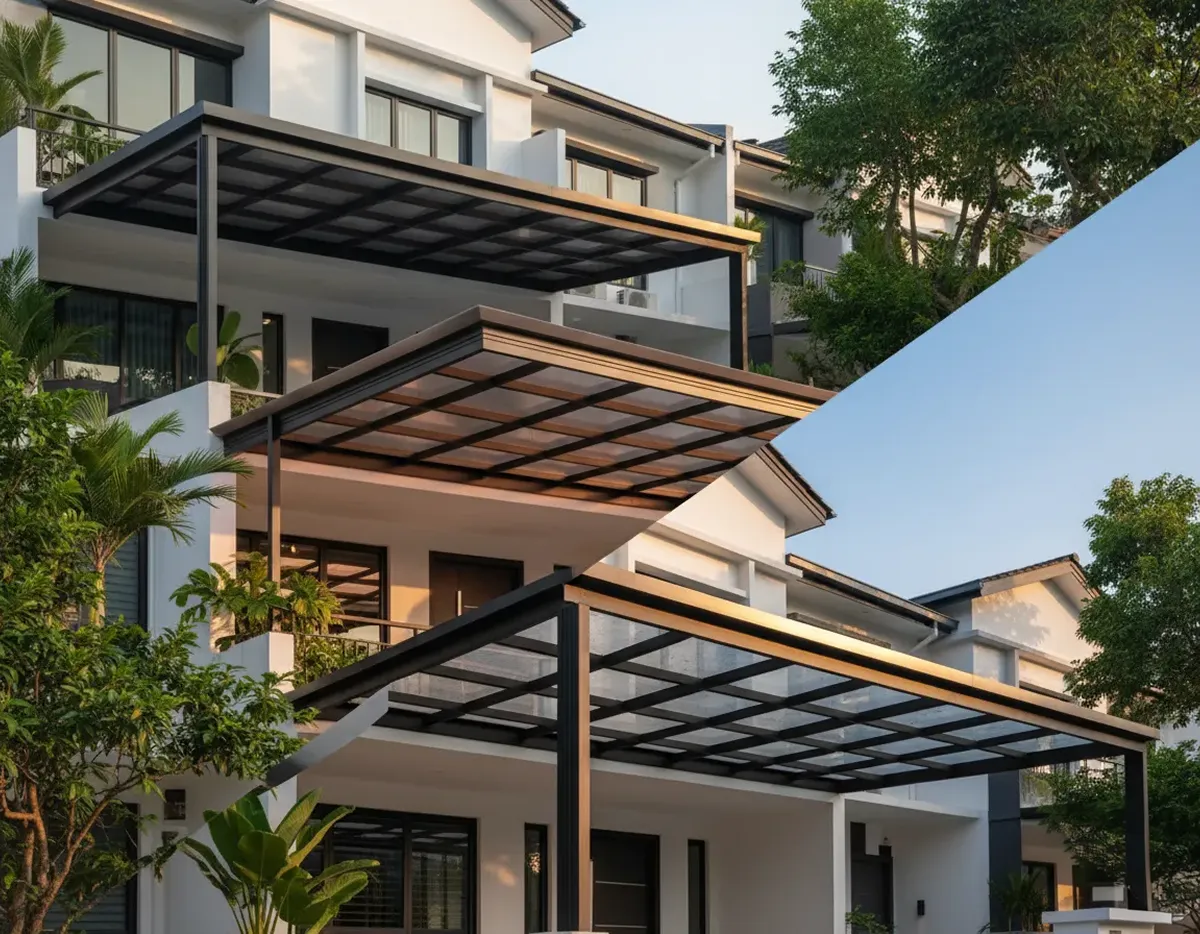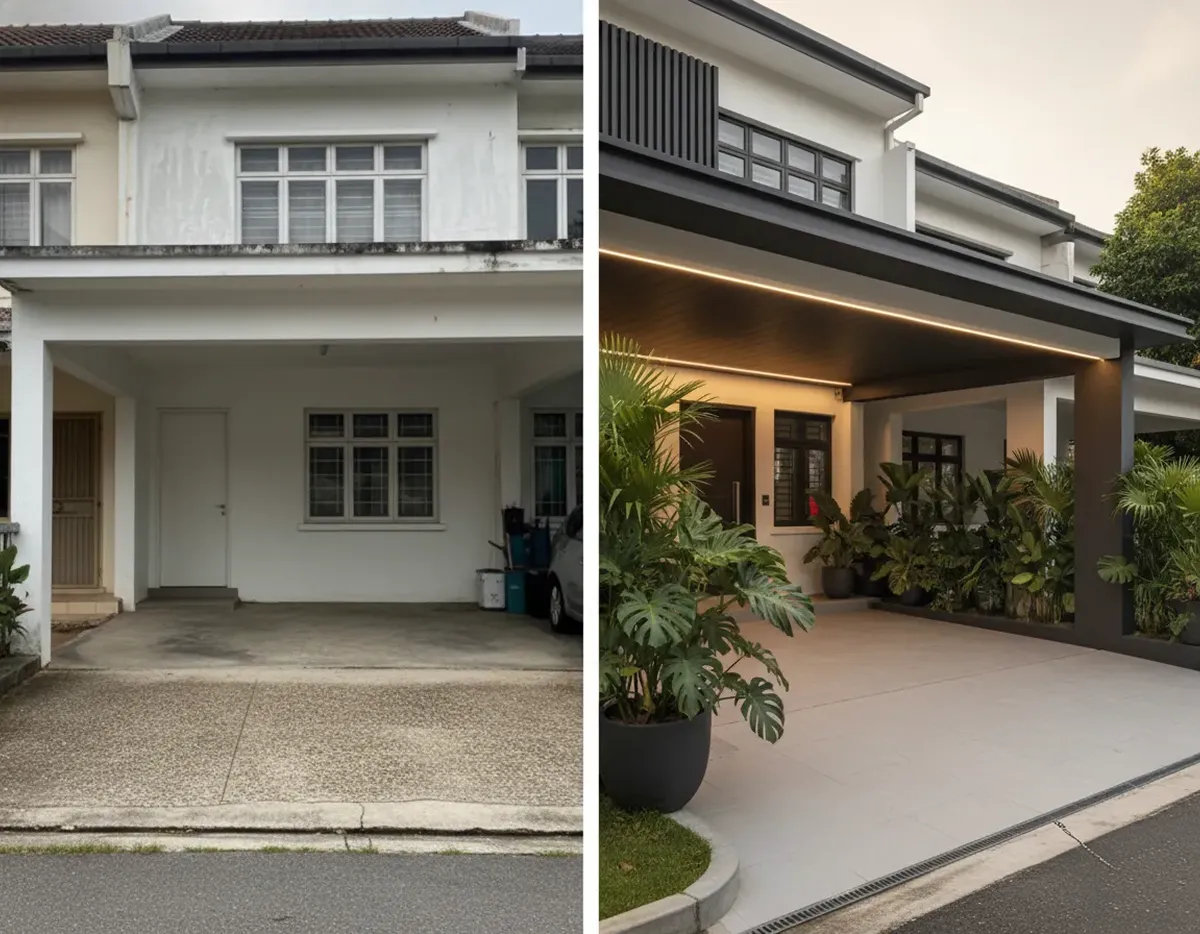
Car porch shelter ideas for Singapore homes. See before/after transformations with ACP solid roofs, polycarbonate, glass, lighting, gutters and trims.
A well-designed car porch shelter does more than keep rain off your driveway—it sets the tone for your whole façade. In Singapore’s hot, wet climate, the right design controls heat, glare and rain noise, looks tidy from the street, and makes nightly arrivals feel safe and well lit. Below are practical, buildable ideas you can copy, with notes on materials and details to capture in your before/after gallery.
1) Solid shade with ACP (the “cool & quiet” upgrade)
What it is: An ACP (Aluminium Composite Panel) solid roof that blocks sun and glare, stays quieter in heavy rain, and doesn’t yellow.
Why it works: Afternoon parking is bearable, the porch reads clean and modern, and you spend less time on upkeep.
Gallery tip:
- Before: exposed driveway with glare.
- After: ACP canopy with neat edge trims; caption: “ACP solid roof, matte grey, tidy flashing; quieter in rain.”
2) Daylight-friendly polycarbonate (bright without getting soaked)
What it is: Polycarbonate roofing in bronze/grey tints for driveways that still want daylight.
Why it works: Keeps the porch bright, reduces UV, and costs less upfront than many solid options.
Gallery tip:
- Before: dark entry, wet during storms.
- After: tinted sheet with new guttering; caption: “Polycarbonate canopy, bronze tint; improved drainage and visibility.”
3) Premium glass canopy (modern, airy frontage)
What it is: Tempered/laminated glass on a robust frame.
Why it works: Clean, upscale look; perfect for contemporary façades. Accept periodic cleaning for water spots.
Gallery tip:
- Before: plain porch with no definition.
- After: glass canopy with concealed brackets; caption: “Tempered glass with tidy flashing; premium frontage.”
4) Hidden gutters & proper downpipes (good looks, dry entrance)
What it is: Integrated gutters that disappear into the fascia and downpipes routed to existing drains.
Why it works: No more splash-back where you step out; fewer dirty streaks on walls and cars.
Gallery tip:
- Before: waterfalls at the gate.
- After: edge-to-edge gutter with downpipe to floor trap; caption: “Monsoon-ready drainage, no splash zone.”
5) Edge trims & fascia alignment (the “built-in” look)
What it is: Edge trims that align with your gate, columns or window frames so the canopy looks original—not tacked on.
Why it works: Small geometry choices make the whole home look designed.
Gallery tip:
- Before: irregular edges, exposed fixings.
- After: crisp fascia line; caption: “Fascia aligned to frame lines; concealed fixings for a calm elevation.”
6) Side screens for rain drift (stay dry, keep airflow)
What it is: Discreet side screens or partial returns that block cross-winds and sideways rain.
Why it works: Keeps the porch usable during storms without boxing it in.
Gallery tip:
- Before: puddles on scooter/entry.
- After: slim side return; caption: “Wind/rain control panel; dry landing by the door.”
Materials at a glance
Design checklist before you build
- Span & support: Add a discreet mid-support if spans are wide to cut vibration and drumming.
- Slope: Ensure consistent fall to the gutter; ponding = noise and leaks.
- Flashing & sealing: This is where most leaks start—get it right.
- Colour match: Echo your window frames/gate colour for that “built-in” feel.
- Neighbour & boundary: Keep downpipes on your side; avoid runoff across boundaries.
- Noise plan: If storms bother you, specify ACP or a thin acoustic underlay for plastics/metal frames.
Ready to refresh your driveway?
Book a Free Site Check. We’ll measure spans, map drainage, and show ACP solid roofs, polycarbonate tints, and glass canopy options with real before/after photos from nearby projects—plus a clear price range so you can decide with confidence. Explore next: [ACP Roofing Singapore], [Polycarbonate Roofing Singapore], [Awning Leak & Flashing Repairs].