One of the biggest concerns homeowners and MCSTs have when installing a canopy or awning is this: “Will I need to hack my walls?”
In many cases, the answer is no. Modern canopy systems can be installed using different mounting methods — some of which minimise or completely avoid major wall hacking.
Understanding how these systems work can help you make a more confident decision, especially if you’re worried about approvals, structural impact or long-term maintenance in Singapore’s climate.
Why This Matters in Singapore
In Singapore, shelter installations are not just about function — they also involve building regulations, façade integrity and long-term durability.
Approval Concerns (MCST / Landed Homes)
Many property owners worry that hacking into walls may affect approvals or violate façade guidelines.
Waterproofing Risks
Improper wall penetration can create weak points where water enters, leading to leaks and future roof leak repair.
Weather Exposure
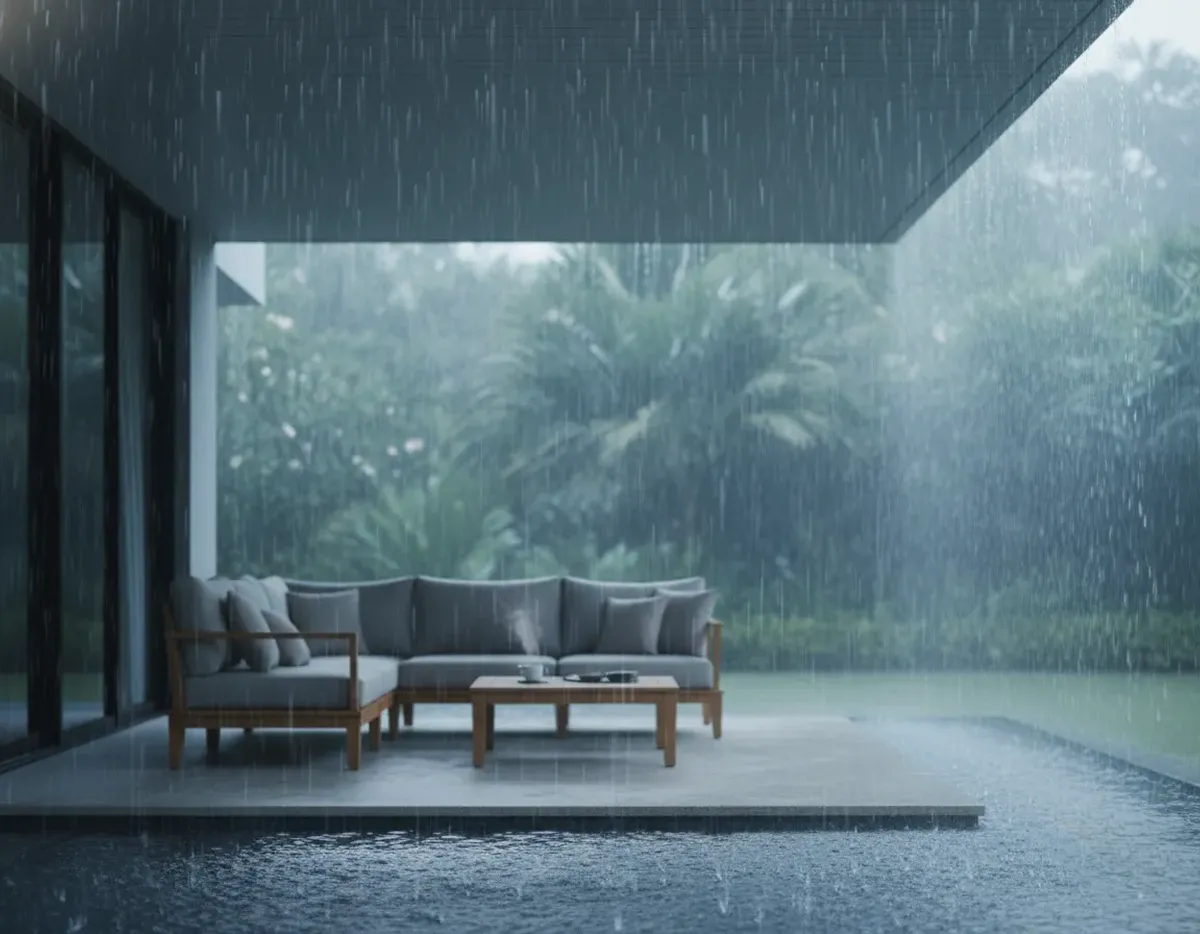
With heavy rain, strong UV and humidity, poorly installed mounting points can deteriorate quickly.
Because of this, mounting method selection is just as important as choosing materials in roofing Singapore projects.
Common Shelter Mounting Methods Explained
There are several ways canopy systems can be installed — each with different levels of wall impact.
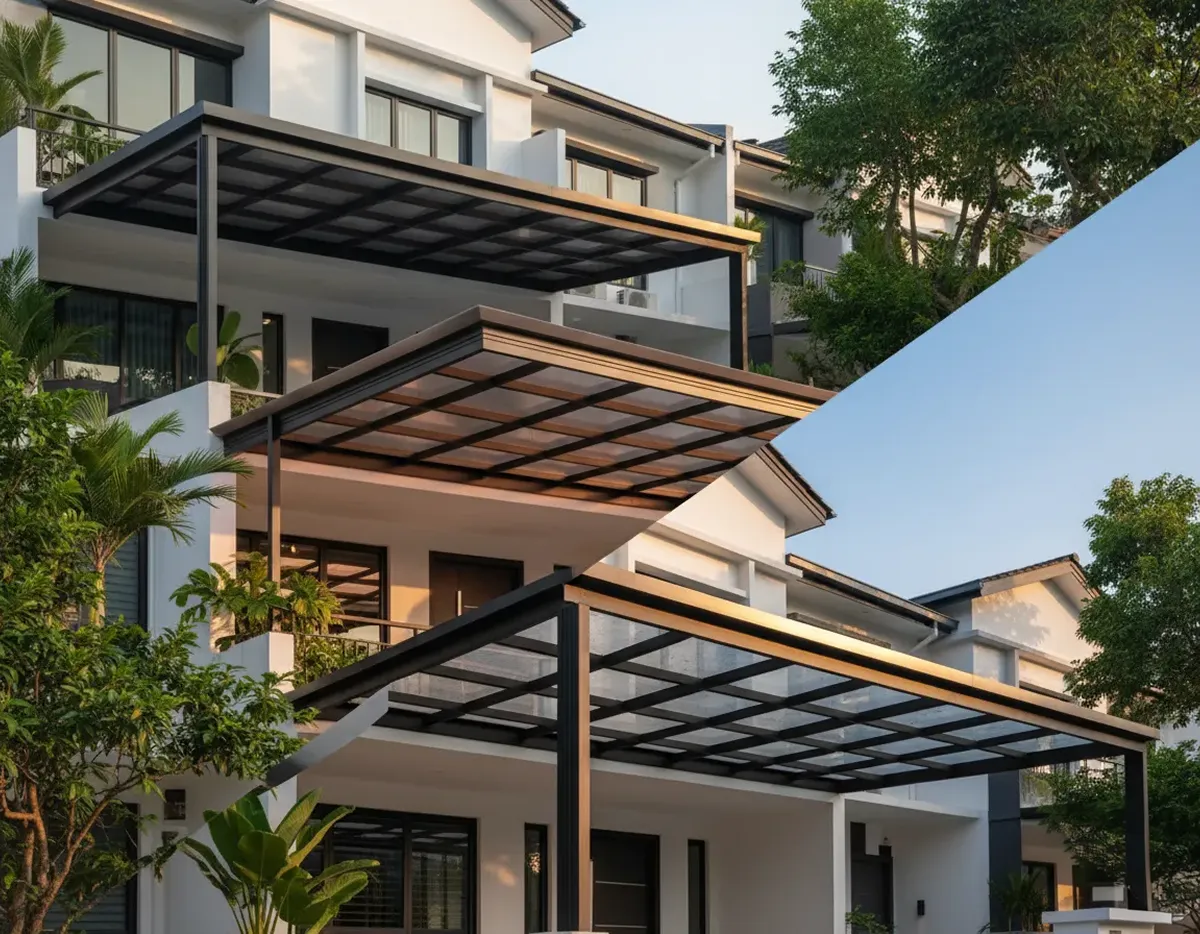
1. Wall-Mounted Canopy (Direct Fixing)
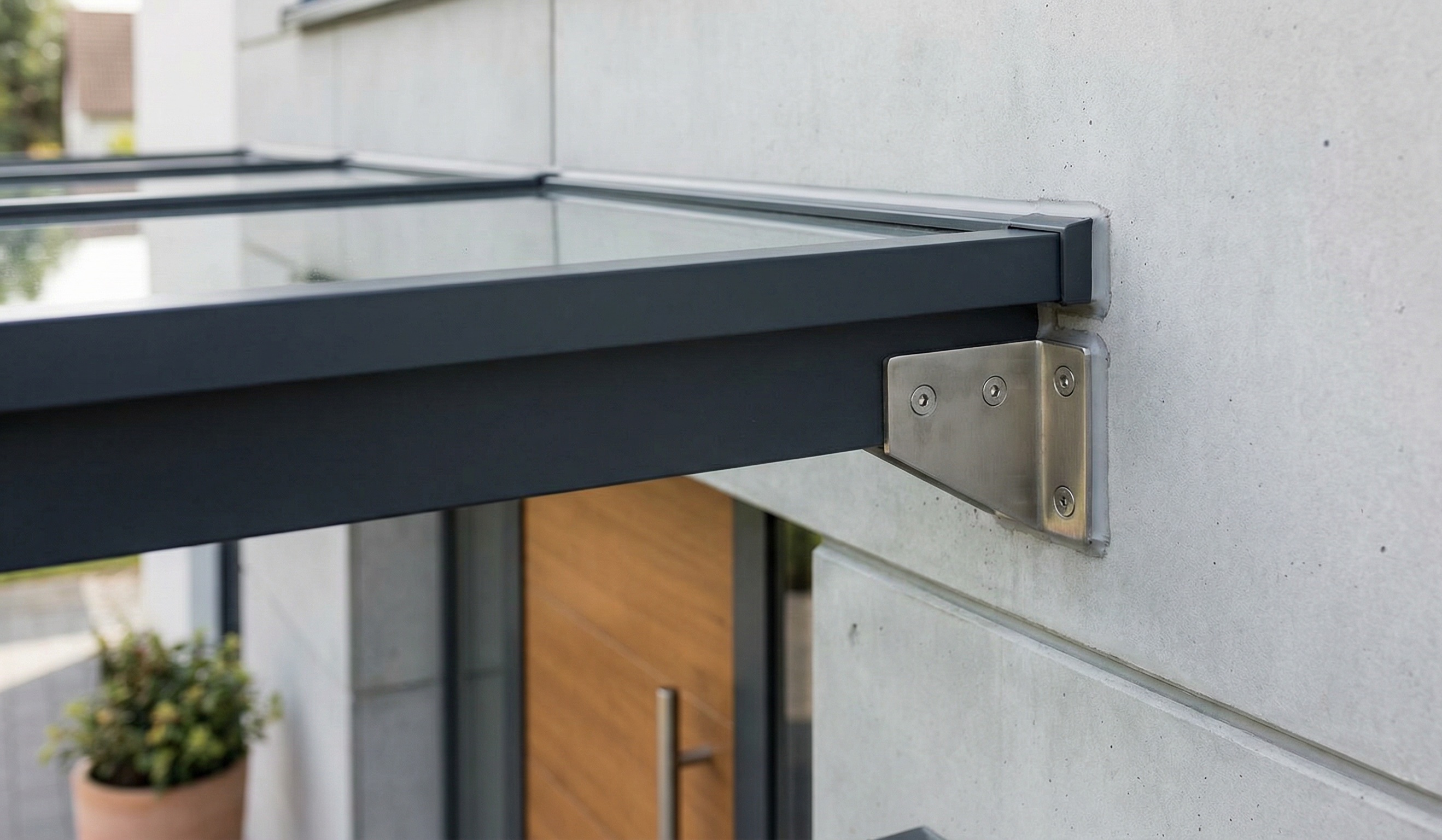
This is the most common method, where the canopy is fixed directly onto the building wall.
Key characteristics:
- Durability: High when properly installed
- Maintenance: Low
- Waterproofing: Requires proper sealing at wall connection
- Heat reduction: Depends on roofing material used
- Best use case: Balconies, car porches, tight spaces
Important note:
This method involves drilling into the wall, but not necessarily heavy hacking. Proper waterproofing is critical to prevent leaks.
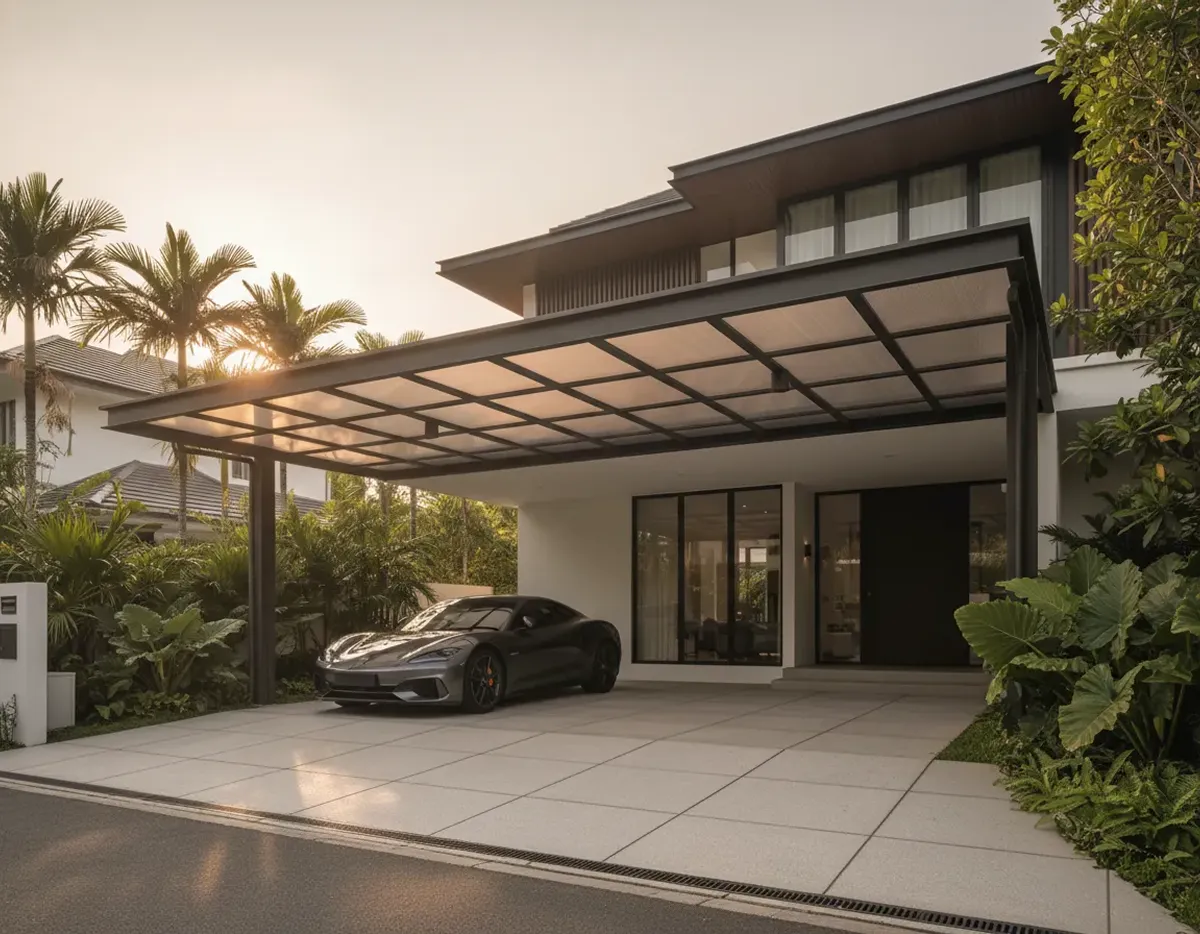
2. Freestanding Canopy (No Wall Mount)
A freestanding structure is supported entirely by its own columns or frame.
Key characteristics:
- Durability: High with proper structural support
- Maintenance: Moderate
- Waterproofing: Minimal wall-related risk
- Heat reduction: Depends on roofing material
- Best use case: Landed house patios, gardens, car porches
Advantage:
No wall hacking required — ideal for homeowners concerned about structural impact or approvals.
3. Hybrid Mounting (Wall + Support Columns)
This approach combines wall fixing with additional support posts.
Key characteristics:
- Durability: Very high
- Maintenance: Low to moderate
- Waterproofing: Requires proper wall sealing
- Heat reduction: Good depending on design
- Best use case: Larger canopies or areas needing extra support
Advantage:
Reduces load on the wall while maintaining a clean, space-efficient design.

Key Design Solutions to Minimise Wall Impact
If avoiding wall hacking is a priority, design choices can make a big difference.
Use Freestanding Structures Where Possible
For larger spaces, freestanding canopies eliminate the need for wall penetration entirely.
Minimise Penetration Points
For wall-mounted systems, fewer and well-sealed fixing points reduce risk.
Proper Waterproofing at All Connections
High-quality waterproofing prevents water from entering drilled areas.
Plan for Structural Support
Ensuring the canopy is properly supported reduces stress on mounting points over time.
These solutions help balance structural integrity with minimal wall impact.
Common Installation Mistakes to Avoid
Poor mounting decisions can lead to long-term problems.
Common issues include:
- Excessive drilling without proper sealing
- Weak anchoring that cannot withstand heavy rain or wind
- Poor waterproofing at wall joints
- Choosing wall-mounted systems where freestanding options are more suitable
- Ignoring drainage and roof slope design
Over time, these mistakes can result in leaks and repeated roof leak repair.

How Ruufer Designs Shelter Systems Without Unnecessary Wall Impact
As a specialist in roofing Singapore systems and an experienced awning contractor Singapore, Ruufer focuses on canopy designs that minimise structural disruption while maintaining durability.
Key considerations include:
- Recommending freestanding or hybrid systems where suitable
- Reducing unnecessary wall penetration points
- Applying proper waterproofing at all mounting areas
- Designing canopy structures that handle Singapore’s heavy rain and wind
- Using installation methods that reduce long-term maintenance and roof leak repair risks
This approach allows shelters to be installed efficiently while maintaining both structural safety and aesthetic quality.
Final Thoughts: Choosing the Right Mounting Method
Installing a shelter doesn’t always require major wall hacking — it depends on the system used.
Key takeaways:
- Freestanding canopies avoid wall hacking completely
- Wall-mounted systems are common, but require proper sealing
- Hybrid designs balance strength and flexibility
- Waterproofing is critical at all mounting points
- Mounting method affects long-term durability and maintenance
With the right design approach, shelters can be installed in a way that protects your space without unnecessary structural impact — while still performing well in Singapore’s heat, rain and humidity.