The short answer is: Yes, absolutely — but only if you choose the right system, and it’s properly designed, installed, and maintained. Not all retractable roofs are created equal, and Singapore’s monsoon rains are a serious engineering challenge. Let’s break down what works, what doesn’t, and why.
Understanding Singapore’s Monsoon Rain
During the Northeast (Dec–Mar) and Southwest (Jun–Sep) monsoons, you’re often dealing with:
- Intense tropical downpours – Rainfall intensity can easily exceed 150–200 mm per hour in a heavy burst.
- Strong, gusty winds – Sumatras squalls can bring sudden wind gusts of 40–80 km/h, driving rain almost horizontally.
- High humidity and UV exposure year-round – Materials degrade faster.
Any retractable roof must cope with all three: water volume, wind-driven rain, and material resilience.
Which Types of Retractable Roof Can Handle It?
Here’s how the main options stack up in a monsoon:
1. Motorised Louvered Roofs (Bioclimatic Pergolas) – ✅ Best All-Rounder
This is the go-to choice for Singapore patios, decks, and outdoor dining areas.
- When closed, the aluminium louvers interlock with EPDM rubber gaskets, forming a near-continuous sloping surface. Rainwater flows into integrated side gutters and down through the posts (or out to drainage points).
- Drainage is engineered in – The channels are sized to handle high volumes, provided they aren’t clogged with leaves. Some systems can drain through discreet internal downpipes within the posts.
- Wind resistance – High-quality systems (e.g., Renson, Brustor, Sunshield, Gibus) are tested to withstand driving rain and strong gusts. Many include automated wind sensors that close the roof when gusts exceed a safe threshold, preventing damage and keeping rain out.
- Key caveats: Cheap, poorly sealed copies will leak at the louver joints. Installation must ensure a consistent minimum slope (usually 5–15°) for water runoff. You also need UV-stabilised, heat-resistant seals that won’t harden or crack in Singapore’s tropical heat.
2. Sliding Glass or Solid Panel Roofs – ✅ Highly Waterproof
Think of a retractable skylight over a courtyard or an enclosed patio. When closed, these panels overlap and lock down with compression seals, behaving almost exactly like a fixed roof. They can easily handle monsoon rain and wind, provided the perimeter drainage is properly integrated into the building. The main trade-off is higher cost, heavier structure, and the need for a more substantial supporting framework.
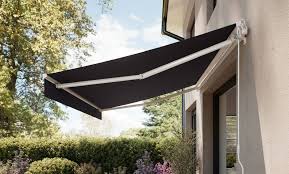
3. Retractable Fabric Canopies/Awnings – ❌ Not Reliably Monsoon-Proof
Fabric roofs (even high-end outdoor canvas) are generally water-resistant, not fully waterproof. In a Singapore monsoon:
- Pooling is a major risk – even a slight dip allows water to collect, stretch the fabric, and eventually drip through or cause sagging.
- Wind-driven rain will often blow underneath, especially if the sides are open. Seams, stitching holes, and edges are common leak points.
- Mould and mildew thrive on damp fabric in our humidity.
These systems are fine for light rain or shade, but I would never recommend them as the sole rain cover during a heavy downpour.
The Non-Negotiable Engineering Details
To actually “handle” the monsoon, these factors are critical:
- Drainage capacity – Gutters and downpipes must be sized for peak rainfall (a quick calculation based on roof area and PUB’s design storm intensity). Insufficient drainage means water overflows into your seating area.
- Slope and no standing water – The closed roof must shed water fast. Any recess or flat area becomes a leak point under sustained, heavy rain.
- Wind-load anchoring – The structure must be fixed to a solid foundation per Singapore’s wind code (SS EN 1991-1-4). Freestanding lightweight models can become dangerous in a squall.
- Electrics and motors – Motors, control boxes, and connections must be rated at least IP65 (dust-tight and protected against water jets) and properly earthed. Lightning strikes are common in Singapore storms, so surge protection is wise.
- Maintenance is non-negotiable – Monsoons clog gutters with leaves and debris fast. Without regular cleaning, even the best roof will overflow. Seals and gaskets should be inspected annually for tropical wear and tear.
So, Will It Keep You Dry?
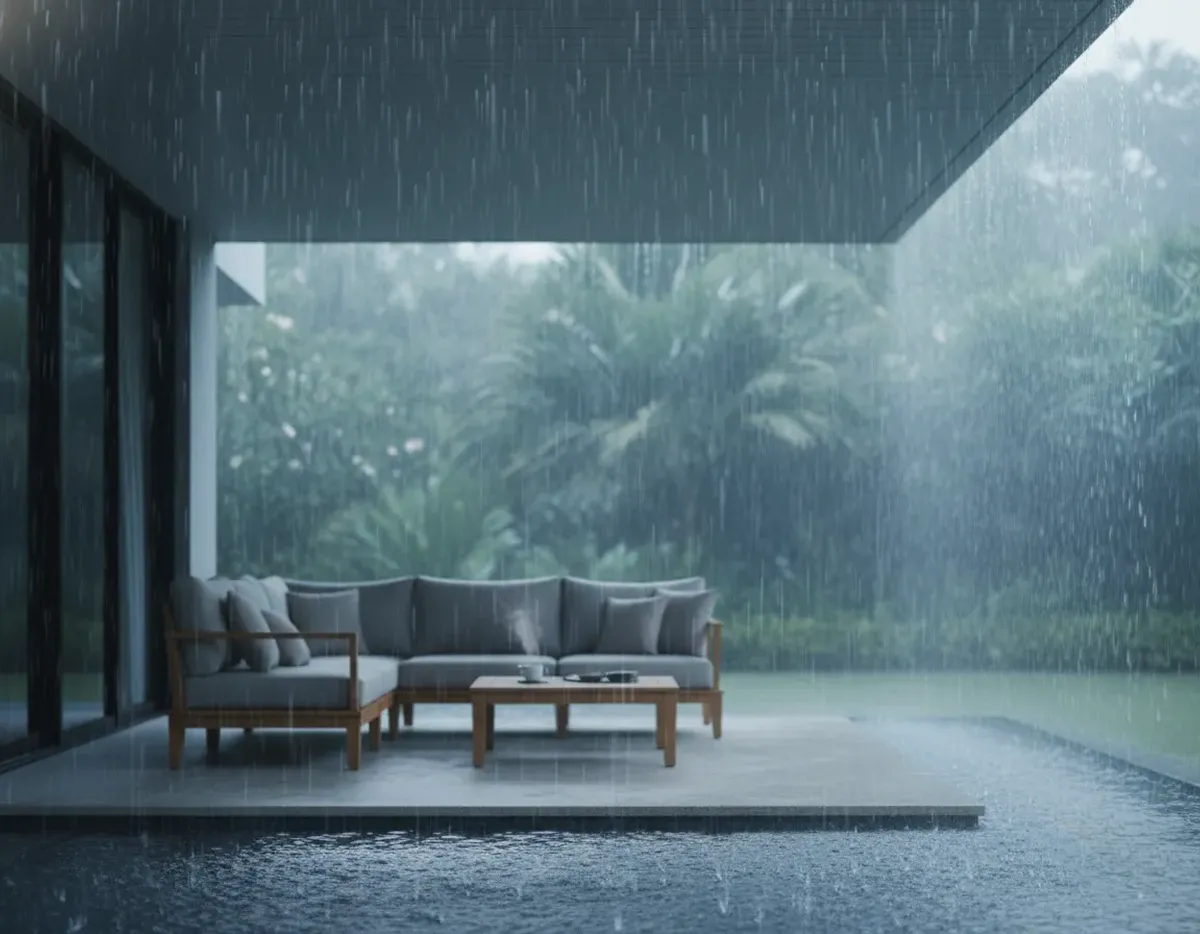
Yes – a properly specified motorised louvered or sliding glass roof will keep an outdoor space dry in the heaviest monsoon downpour. Think of it as transforming an exposed area into a weather-protected verandah at the push of a button.
Just don’t skimp on quality, insist on a drainage design review, and plan for maintenance. With the right system, you can absolutely sit outside and enjoy the storm, rather than run from it.