In Singapore’s tropical environment, the outdoor living experience is often dictated by two extremes: the blistering midday sun and sudden, high-velocity monsoon rain. For homeowners and business operators alike, an awning is not merely a "luxury" addition—it is a critical architectural component that manages heat, protects assets, and expands usable square footage.
With the Urban Heat Island (UHI) effect making Singapore’s built environment significantly warmer than its rural counterparts, the strategic selection of an awning can lead to substantial energy savings and enhanced lifestyle comfort. This 1200-word guide explores the technical specifications, regulatory frameworks, and material sciences of the Singaporean awning market.
1. Categorization of Awning Systems
A. Retractable Awnings (The Flexible Choice)
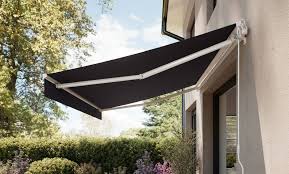
Retractable systems are the gold standard for Singaporean residential balconies and commercial patios. They provide shade when necessary while allowing for an "open-air" feeling during the evening.
- Folding Arm Awnings: These utilize heavy-duty spring-loaded arms to extend the fabric. In high-wind areas (like East Coast or coastal Sentosa), look for arms tested to Beaufort Scale Class 2 or 3.
- Pivot Arm Awnings: Ideal for windows. Unlike folding arms, these pivot in a semi-circular motion, allowing you to "angle" the shade to block the low-hanging afternoon sun (the notorious "West Sun").
- Motorization & Automation: While manual cranks exist, most Singaporean installations now use Tubular Motors (e.g., Somfy or Dooya). Smart sensors—specifically Wind and Rain Sensors—are highly recommended. These automatically retract the awning when they detect vibrations or heavy rainfall, preventing the "pooling" effect that can snap the frame.
B. Fixed Awnings (The Permanent Solution)
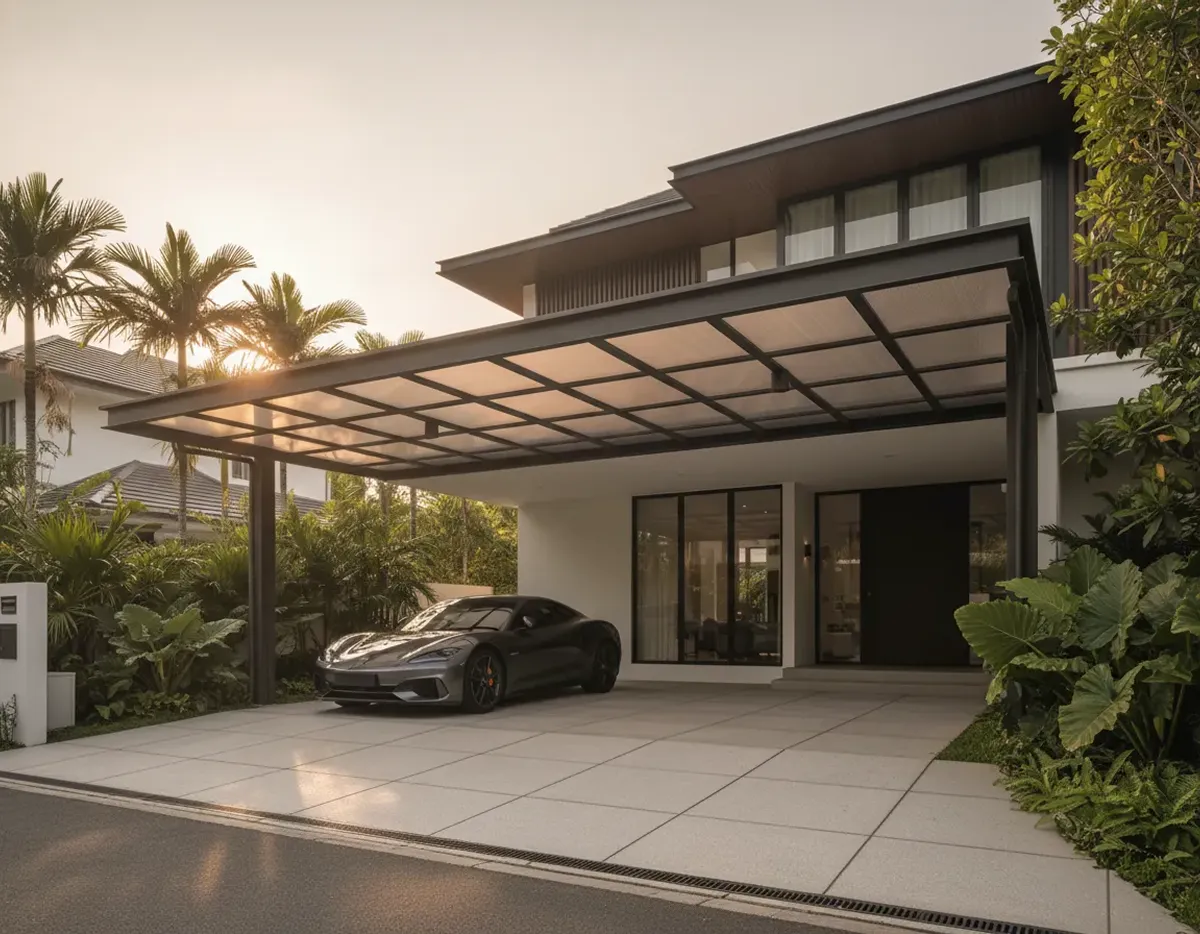
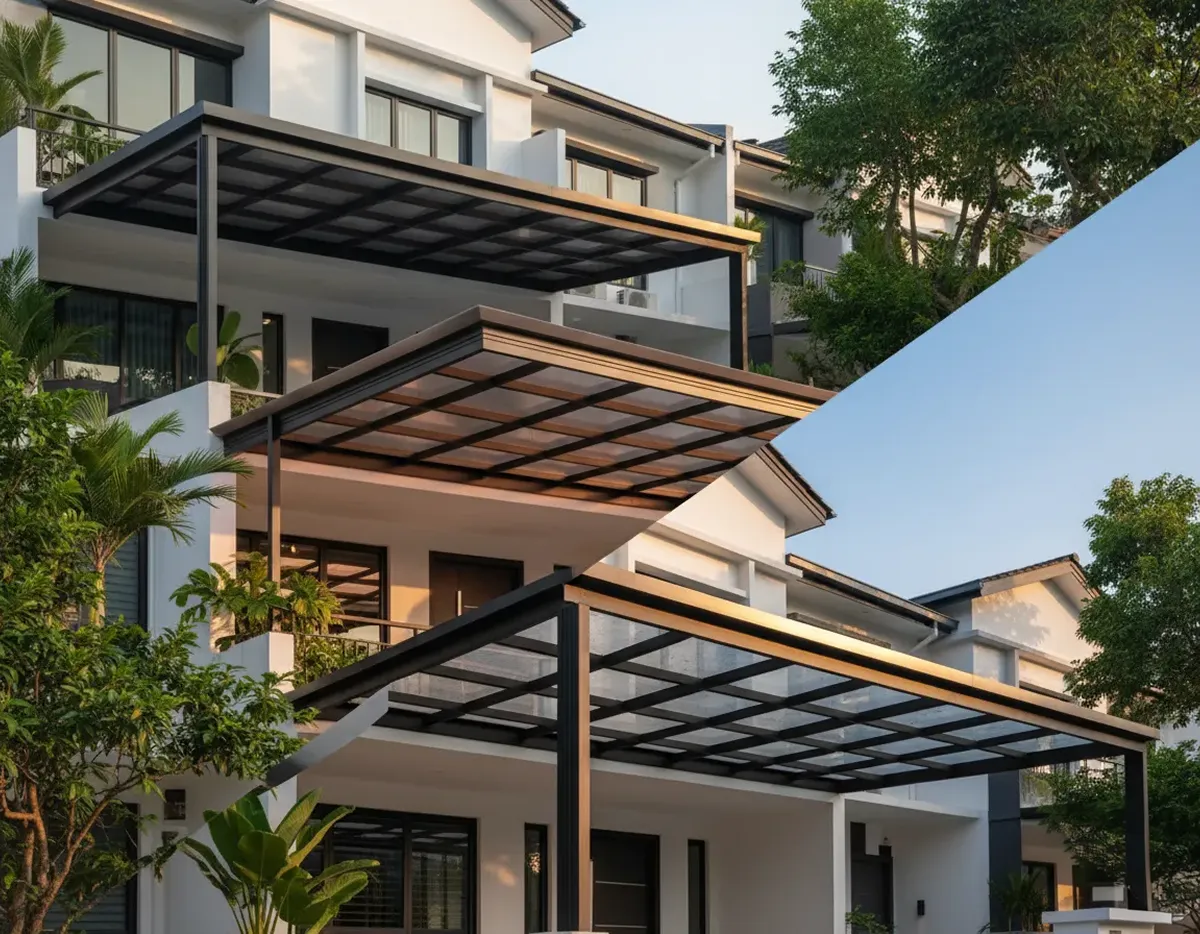
Fixed awnings are static structures designed for 24/7 protection. They are commonly used over entrance ways, walkways, and air-con ledges.
- Polycarbonate Awnings: These are lightweight and impact-resistant. They come in "Solid" or "Multi-wall" formats. Multi-wall polycarbonate is superior for Singapore because the air gaps act as a thermal barrier, significantly reducing the "radiant heat" felt underneath.
- Aluminum Composite Panels (ACP): Often used in commercial settings, ACP is durable and provides 100% shade. It is the best option for those wanting zero light transmission.
- Glass Awnings: Constructed using 10.76mm or 12.76mm Laminated Tempered Glass. While aesthetically superior for modern landed properties, they require regular cleaning due to visible water spots and debris.
C. Vertical Awnings & Zip Systems
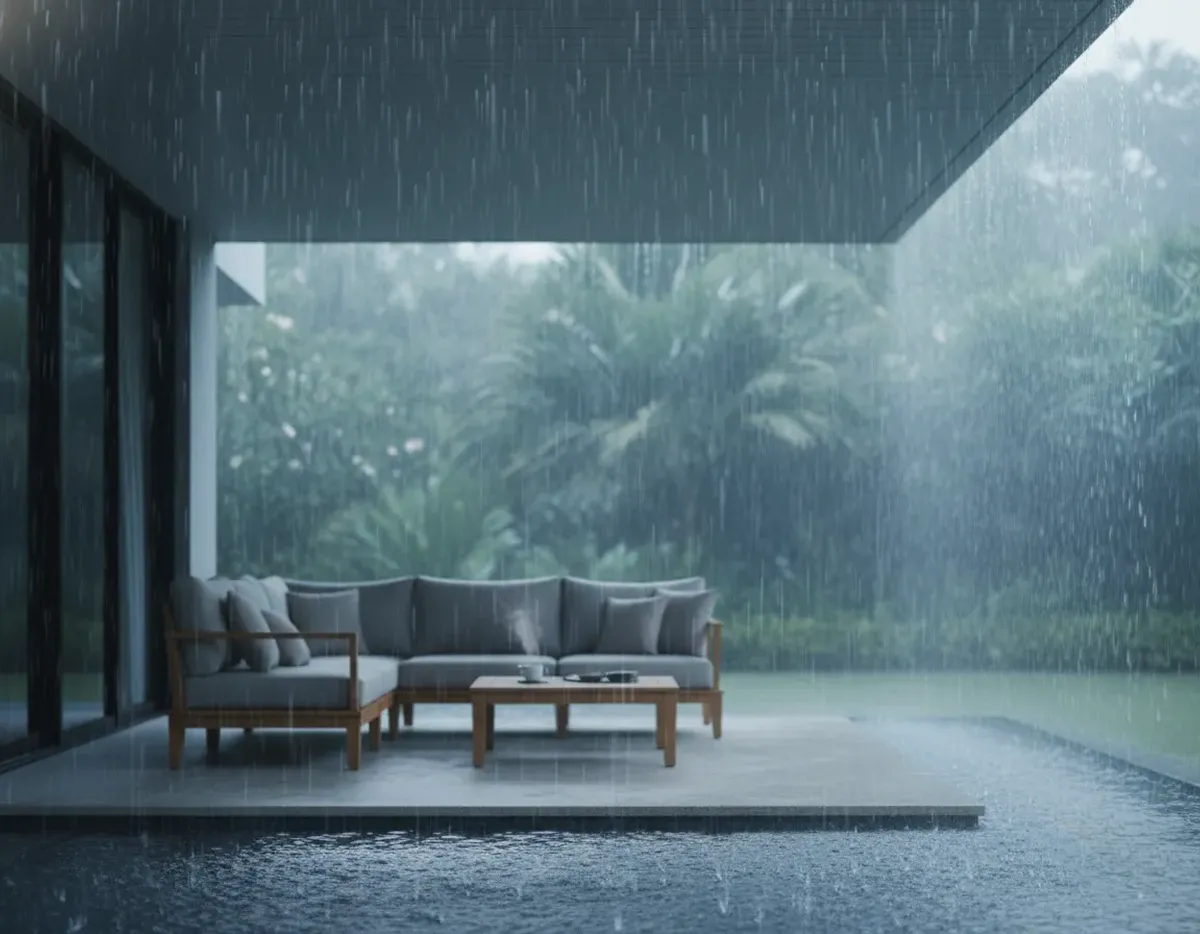
Often referred to as outdoor blinds, these are essentially vertical awnings. Given Singapore’s "driving rain" during monsoon seasons, vertical protection is often more critical than overhead protection.
- Zip-Track Technology: These systems use a side-track "zipper" mechanism that locks the fabric in place. This prevents the fabric from flapping and creates a water-tight seal, effectively turning a balcony into an enclosed, air-conditionable space.
- Perforated Mesh: Unlike solid canvas, perforated meshes (like the Phifer SheerWeave series) allow for "one-way" visibility and airflow while blocking up to 95% of UV rays.
2. Advanced Material Science: Choosing the Right Fabric
In Singapore’s 90% humidity, the choice of fabric determines whether your awning lasts 2 years or 10 years.
Solution-Dyed Acrylic (SDA)
Brands like Dickson (France) or Sunbrella (USA) are the industry leaders. Unlike piece-dyed fabrics where only the surface is colored, SDA fibers are saturated with UV-stable pigments before the yarn is even spun.
- Benefits: Color-fastness (won't fade for 5-8 years), breathability (prevents hot air from being trapped), and inherent rot/mildew resistance.
High-Performance Mesh (Screen Fabrics)
For vertical awnings, mesh is preferred over solid fabric.
- Phifer SheerWeave / Serge Ferrari: These utilize a glass-thread or polyester core coated with PVC. They are "dimensionally stable," meaning they won't stretch or sag under the weight of rainwater or high winds. They are also Microban-treated, preventing the growth of black mold—a common sight in Singapore’s older estates.
Fire Retardancy (SCDF Compliance)
For commercial properties (F&B outlets, malls), the Singapore Civil Defence Force (SCDF) requires fabrics to meet specific fire safety standards (e.g., BS 7837 or NFPA 701). Always ensure your supplier provides a valid Certificate of Conformity (CoC).
3. The "Benefits" Matrix: Beyond Just Shade
Thermal Insulation and Energy Efficiency
The "Green Mark" building movement in Singapore emphasizes lowering the OTTV (Overall Thermal Transfer Value) of a building. An awning acts as a "passive cooling" device.
- The Math: By blocking solar radiation before it hits the glass, you can reduce the heat gain of a room by up to 77%. This translates to a potential 15-20% reduction in air-conditioning energy consumption.
Asset Protection
- Interior Assets: UV rays cause "photodegradation," which breaks down the chemical bonds in wood floor sealants, leather sofas, and expensive artwork.
- Outdoor Assets: For landed properties, awnings protect expensive outdoor kitchens, granite countertops, and teak decking from the "sun-rain-sun" cycle that causes warping and cracking.
Health and Wellbeing
The UV Index (UVI) in Singapore frequently hits "Extreme" levels (11+). An awning provides a safe environment for children to play outdoors or for residents to enjoy "Al Fresco" dining without the risk of skin damage or heat exhaustion.
4. Regulatory Environment: BCA, URA, and MCST
Installing an awning in Singapore isn't just a matter of hiring a contractor; it involves navigating a web of regulations.
Building and Construction Authority (BCA)
Any awning that protrudes more than a certain distance or is constructed of heavy materials may be classified as a "temporary structure" or a "permanent addition."
- PE Endorsement: If the awning frame is exceptionally large, a Professional Engineer (PE) must certify that the building’s structure can handle the "dead load" (weight of the awning) and "wind load."
Urban Redevelopment Authority (URA)
The URA monitors GFA (Gross Floor Area).
- The 2-Meter Rule: Generally, awnings that protrude less than 2 meters from the external wall are not counted as GFA. However, if you "enclose" the space (e.g., using a Zip-blind in conjunction with an awning), it might be considered additional GFA, which is strictly regulated in both private and commercial sites.
MCST (Management Corporation Strata Title)
For Condominium dwellers, the MCST is the ultimate gatekeeper.
- Design Uniformity: To maintain the building’s facade, MCSTs usually mandate a specific color code and model type. Deviating from this can result in a legal notice to dismantle the structure at your own cost.
5. Cost-Benefit Analysis and ROI
When evaluating an awning, consider the Total Cost of Ownership (TCO).
ComponentEntry-Level (Approx. SGD)Premium (Approx. SGD)Expected LifespanRetractable (3m x 2m)$1,200 - $1,800$3,500 - $5,50010+ Years (Premium)Zip Blind (Per M2)$150 - $250$350 - $5008-12 YearsPolycarbonate Fixed$60 - $90 (psf)$120 - $180 (psf)5-7 Years (Sheet only)
ROI Calculation: While the upfront cost of a premium motorized awning ($4,000) seems high, when amortized over 10 years, it costs roughly $1.10 per day. Compare this to the increased utility of your balcony and the savings on your SP Group electricity bill.
6. Maintenance Checklist for the Tropics
To maximize the lifespan of your awning in Singapore, a proactive maintenance schedule is required:
- Bi-Monthly Rinse: Use a garden hose to wash away airborne pollutants and salt (especially critical if you are within 5km of the coastline).
- Avoid Detergents: Never use harsh chemical cleaners or power washers on acrylic fabrics; this strips the "fluorocarbon" water-repellent coating. Use only mild, pH-neutral soap.
- Gutter Clearing: For fixed awnings, ensure the perimeter gutters are clear of leaves. Stagnant water is not only a weight risk but a Dengue (NEA compliance) risk.
- Hardware Check: Every 6 months, inspect the "mounting bolts." Singapore’s high humidity can cause galvanic corrosion between different metal types.
7. Conclusion
Choosing an awning in Singapore is a strategic decision that impacts the thermal performance and aesthetic value of a property. While a basic fixed polycarbonate sheet might suffice for a service yard, a high-performance Retractable Acrylic Awning or a Zip-track system using premium mesh (like Phifer) offers a vastly superior experience in terms of heat rejection and durability.
By prioritizing BCA-compliant installations, solution-dyed fabrics, and motorized safety features, owners can ensure their outdoor spaces remain functional and comfortable for years to come, regardless of the unpredictable Singaporean weather.