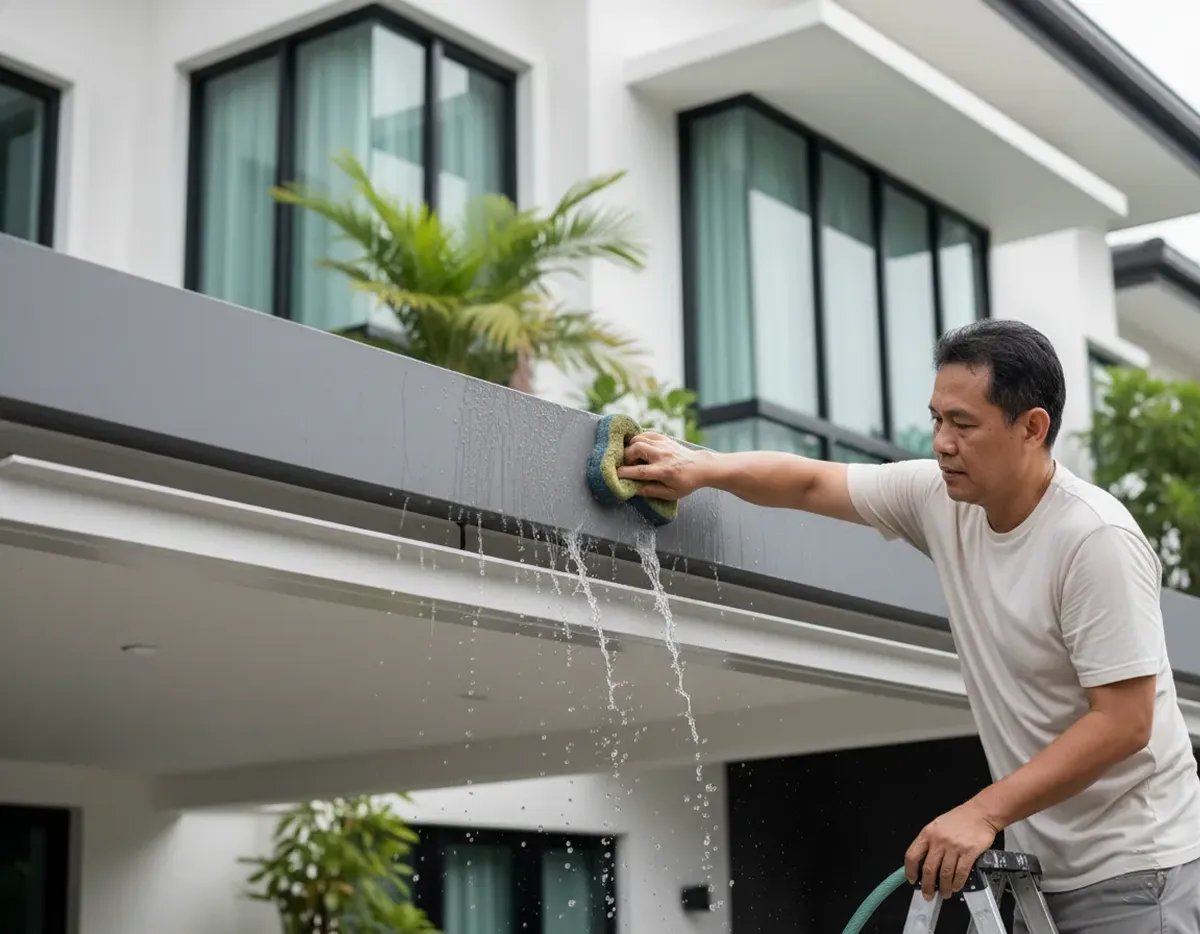
Easy awning maintenance for Singapore homes and shopfronts. Cleaning, safe products, gutters, sealants and checks to keep poly, ACP and glass roofs looking new.
Singapore’s sun, haze and monsoon rain can age any awning fast—clear plastics turn dull, gutters stain walls, and tiny seal failures become big leaks. The good news: a few simple habits keep polycarbonate, ACP (solid aluminium) and glass canopies looking new for years. Here’s a plain-English care plan you can actually follow.
Your seasonal schedule (what to do and when)
- Monthly (rainy months):
Quick gutter rinse to clear leaves, seeds and dust; wipe the front drip edge to prevent brown streaks.
- Quarterly (all year):
Gentle wash of the roof surface; fastener visual check; hose test the gutter/downpipe for smooth flow.
- Annually:
Sealant inspection at wall flashing and overlaps; tighten/replace perished screw washers; check slope/ponding after a heavy storm.
- Before monsoon:
Clear gutters and floor traps; add a splash block or small gravel patch where downpipes hit tile to stop bounce-back.
Safe cleaning that won’t void warranties
Tools: soft microfiber cloths/sponges, soft-bristle brush for frames, bucket, hose with low-pressure spray.
Solution: mild dish soap in clean water (neutral pH).
Method (all materials):
- Rinse first to float off grit (never scrub dry dust).
- Wash with soapy water using light pressure and long strokes.
- Rinse thoroughly; let it drip-dry or wipe with a clean microfiber.
Never use: solvents (thinners, acetone), abrasive creams/powders, high-pressure jets on seams, or stiff scouring pads—these scratch clear sheets, strip protective layers, and force water under flashing.
Material-specific tips
Polycarbonate (clear/tinted)
- UV layer direction: If you ever replace panels, ensure the UV-treated side faces the sun. The wrong way up speeds yellowing.
- Tint helps: Bronze/grey tints hide minor haze and reduce glare.
- Anti-scratch care: Micro-scratches make panels look “dirty” even when clean—be gentle, rinse first, and avoid gritty cloths.
ACP (solid aluminium, opaque)
- Low effort: Usually just a rinse and mild soap. No yellowing to fight.
- Keep it flat & quiet: If you hear new rattles, check fastener torque and add closed-cell tape at frame contact points.
- Streak control: Wipe fascia edges and downpipe outlets; most stains come from splash-back, not the panel.
Glass (tempered/laminated)
- Spots & films: Use glass cleaner after the soap wash; squeegee to prevent water marks.
- Edge care: Keep silicone edges clean; avoid razor blades near the lamination line.
Drainage: the difference between “clean” and “constantly dirty”
- Gutter capacity: If water routinely overruns in storms, you don’t have a cleaning problem—you have a capacity problem. Add a wider gutter or a second outlet.
- Downpipe routing: Always to a legal floor trap. Avoid splashing onto tiles that bounce water back under the roof.
- Slope matters: Flat patches pond and drum. If you see standing water after rain, ask for a quick slope/deflection check.
Sealants, flashing & fasteners (small parts, big impact)
- Flashing first: Most leaks start where roof meets wall. Look for hairline gaps, lifted edges or blackened sealant. Reseal only on clean, dry surfaces.
- The right sealant: Use neutral-cure silicones compatible with your materials (some chemicals attack plastics).
- Fastener health: Replace perished rubber washers and corroded screws. Tighten only to snug—overtightening crushes plastics and distorts metal panels.
Quick fixes for common complaints
- “Brown streaks on the wall” → Clean gutters/drip edge; route downpipe properly; consider a hidden gutter with fascia trim.
- “Loud rain on the porch” → Add de-rattle tape at contact points; step up sheet thickness (for clear roofs); or consider ACP for quieter storms.
- “Water at the front edge” → Increase slope to gutter; enlarge outlet; add a second downpipe away from seating/entry.
- “Hazy look after cleaning” → Likely micro-scratches on polycarbonate; switch to softer cloths and rinse first. For glass, squeegee and finish with glass cleaner.
What to watch after renovation or nearby works
Fresh paint dust and concrete splashes are abrasive and alkaline. Rinse more often for a few weeks; never scrub dry dust. If cement film hits glass, soak and soften—don’t scrape.
When to call for a service visit (and what we do)
- Persistent drips near the wall line (flashing issue)
- Overflow despite clear gutters (capacity/slope issue)
- New rattles or visible panel flex after storms (support spacing/fasteners)
- Clear sheets looking milky despite gentle cleaning (ageing—consider upgrade options)
Our visit includes: a photo audit, hose test, slope and gutter check, and a simple report with must-do fixes (flashing/sealing/drainage) and optional upgrades (thicker polycarbonate, ACP quiet pack, or glass), with clear price ranges.
Bottom line
Keep it gentle, keep water moving, and keep junctions sealed. Do that, and your awning—polycarbonate, ACP or glass—stays cleaner, quieter and leak-free through the monsoon.
Want a fuss-free maintenance plan?
Book a Free Site Check. We’ll clean-test your awning, tune flashing, sealants and drainage, and advise on polycarbonate care, ACP low-maintenance upgrades, or glass options—with photos from nearby projects and a clear price range. Explore next: [ACP Roofing Singapore], [Polycarbonate Roofing Singapore], [Awning Leak & Flashing Repairs].