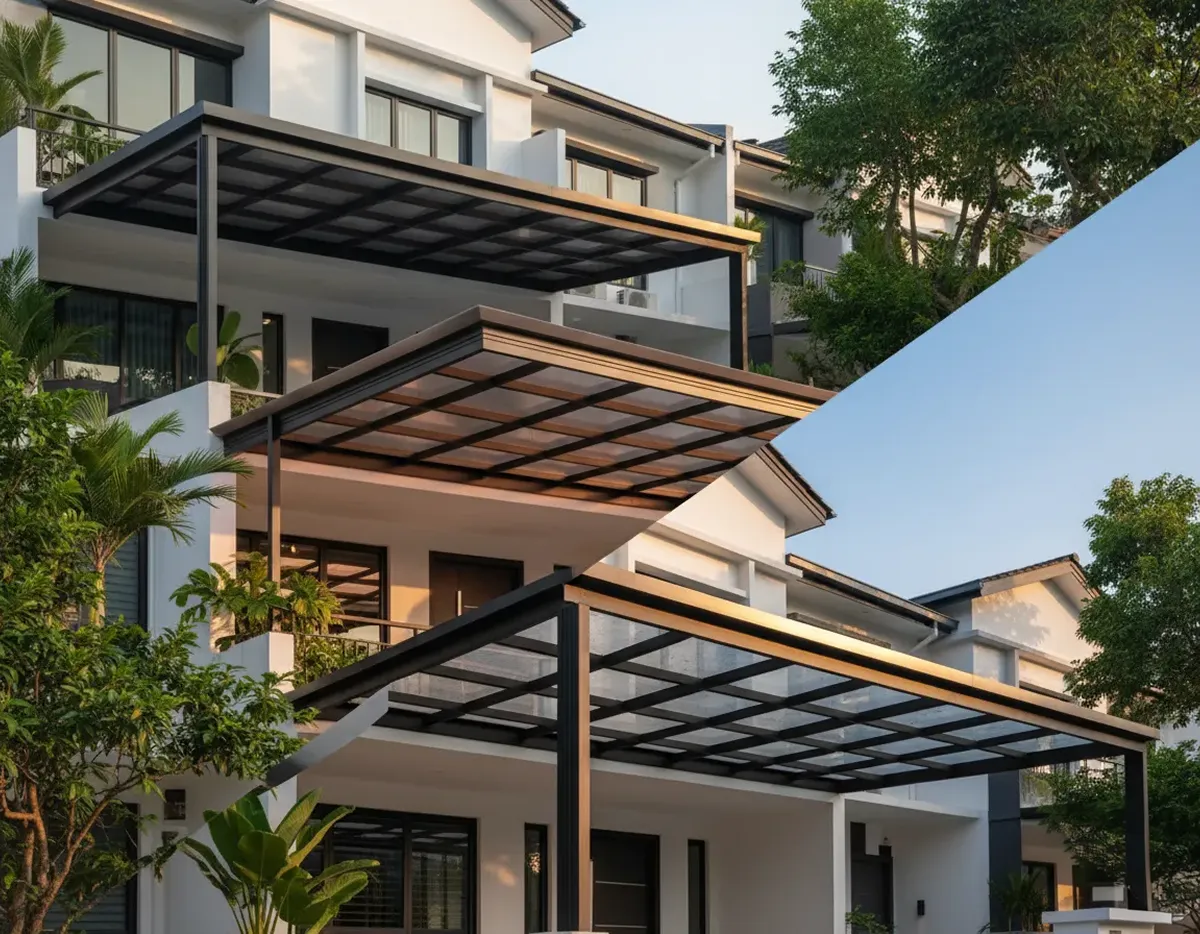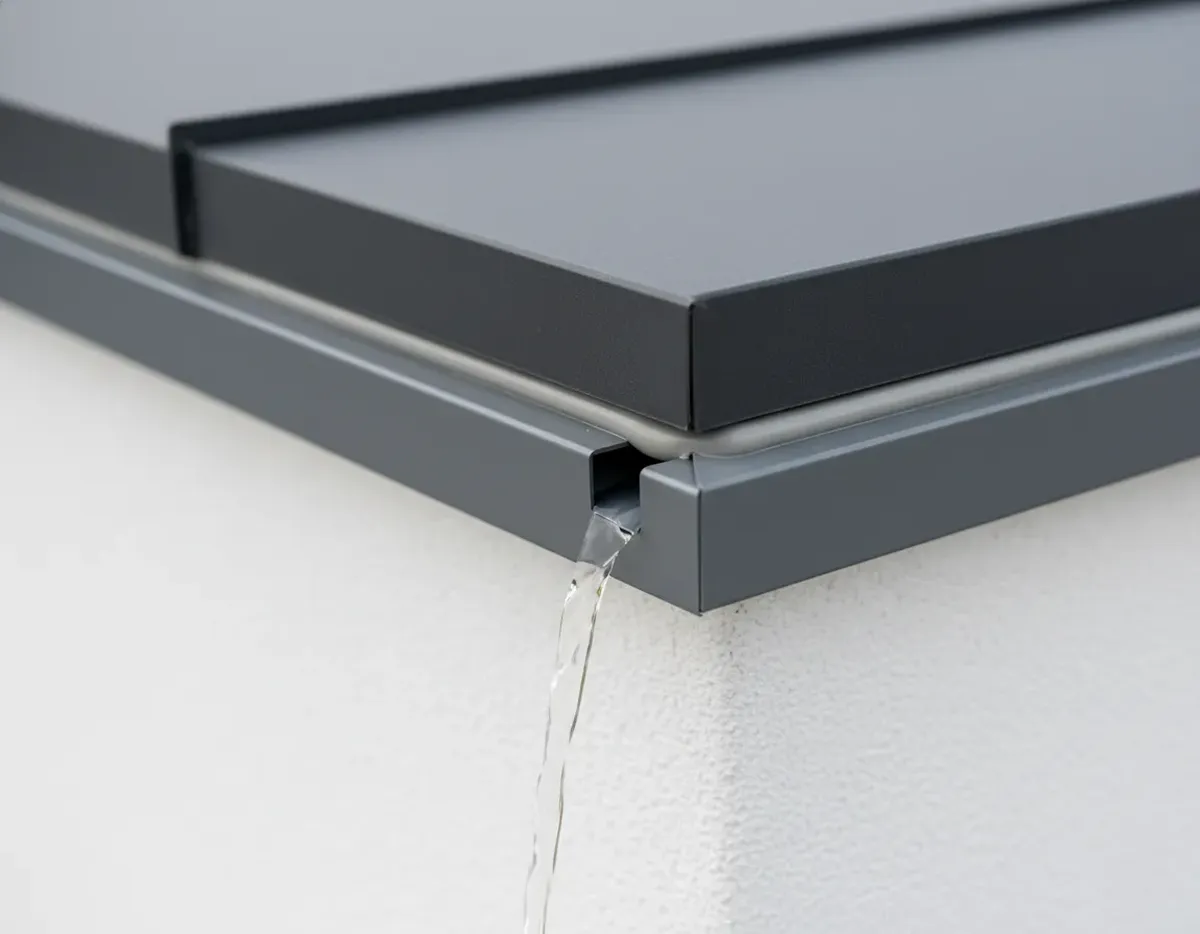
Leaks under your awning? Learn how flashing, sealants and drainage cause drips—and the fixes that stop them fast for Singapore homes and shopfronts.
When rain blows sideways in Singapore, even a good awning can leak. Most “leaky roof” complaints aren’t about the panel material—they’re about details: the flashing where roof meets wall, the sealants at fixings and overlaps, and the drainage (slope, gutters, downpipes). This guide breaks down how leaks start, how we diagnose them, and the fixes that actually last.
How leaks really happen (plain English)
- Wall junction (flashing) failure
The most common culprit. If the metal flashing at the wall line is too shallow, poorly sealed, or missing a counter-flash under the wall finish, water sneaks behind and shows up far from the entry point.
- Fasteners & overlaps
Loose screws, perished rubber washers, or poorly sealed sheet overlaps let water wick in and drip through the frame.
- Slope, ponding & backflow
Flat patches “drum” with ponded water. In hard rain, water can backflow under laps if the slope is wrong.
- Gutters & downpipes
Undersized gutters or outlets that dump onto tiles cause splash-back into the covered area—and dirty streaks that look like leaks.
- Wind-driven rain
Open sides allow cross-wind and spray. Without side returns or a small lip, you’ll get “leaks” that are really rain drift.
Spot the problem fast (symptom → likely cause)
- Line of drips along the wall: flashing/counter-flashing issue
- Random dotted drips: fasteners or tiny holes in sheet
- Waterfall at front edge: gutter overflow or wrong slope
- Wet only during strong wind: open sides; add side return or improve sealing
- Brown streaks on wall/soffit: poor drainage and splash-back
Our repair playbook (what we do on-site)
- Photo audit & hose test
We map stain lines, check fixings, and run a controlled hose test from top to bottom to see exactly where water enters.
- Measure slope & gutter capacity
We use a digital level to confirm fall to gutter and calculate whether your gutter/outlet can handle monsoon flow.
- Detail check
We inspect flashing depth, sealant condition, screw washers, overlaps, downpipe routing, and side exposure.
- Fix plan
You’ll get a clear list: must-do, nice-to-have, and preventative upgrades—with photos and prices.
Fixes that work (ranked by impact & durability)
Materials note: These fixes apply whether the roof is polycarbonate, ACP (solid aluminium) or glass. The detail, not the panel, leaks first.
Sealants: where quality matters
- Use neutral-cure sealants compatible with your materials (some solvents attack plastics).
- Apply to clean, dry surfaces; reseal over grime fails quickly.
- Don’t over-rely on sealant where flashing should be doing the heavy lifting—sealant is the belt, not the suspenders.
Should you repair—or replace the roof?
- Repair if the panels are sound and the leak is from detail failure (flashings, fixings, drainage).
- Replace when sheets are degraded (yellowing, brittle, cracked) or the frame is under-designed (chronic ponding, over-spanning).
- Upgrade path: many owners move from old polycarbonate to ACP for quieter storms, no yellowing, and lower maintenance—especially at car porches and alfresco fronts. Keep polycarbonate or glass where daylight is essential (service yards, bright shopfronts), and fix the details around them.
Prevention: small habits that stop big leaks
- Rinse gutters at change of season; clear leaves, seeds and construction dust.
- Look up after storms: if you see ponding marks, call for a slope check.
- Gentle washes for clear plastics (no harsh chemicals or stiff brushes).
- Annual fastener check—tighten torque, replace perished washers.
- Watch the splash zone: if downpipes discharge onto tile, add a short gravel bed/splash block.
What you get with Ruufer
- Diagnosis first: hose test + photos, not guesswork.
- Detail drawings: flashing, slope, gutter capacity, and downpipe route.
- Right fix, right order: we prioritise flashing, sealing, drainage before suggesting panel swaps.
- Options, not pressure: keep material, or upgrade to ACP (solid, quiet) / polycarbonate (daylight) / glass (premium) with clear trade-offs and price ranges.
- Tidy handover: clean lines, straight trims, documented warranty and care tips.
Bottom line
Most leaks are solvable without replacing your whole awning. Fix the junctions (flashing), restore seals, and correct drainage—then decide if a material upgrade will improve comfort and upkeep. Do the details right and your space stays dry, cool and calm through monsoon season.
Ready to stop the drips?
Book a Free Site Check. We’ll run a hose test, show you the exact entry points, and quote the right repair—plus optional upgrades in ACP, Polycarbonate, or Glass with clear price ranges. Explore next: [ACP Roofing Singapore], [Polycarbonate Roofing Singapore], [Awning Leak & Flashing Repairs].