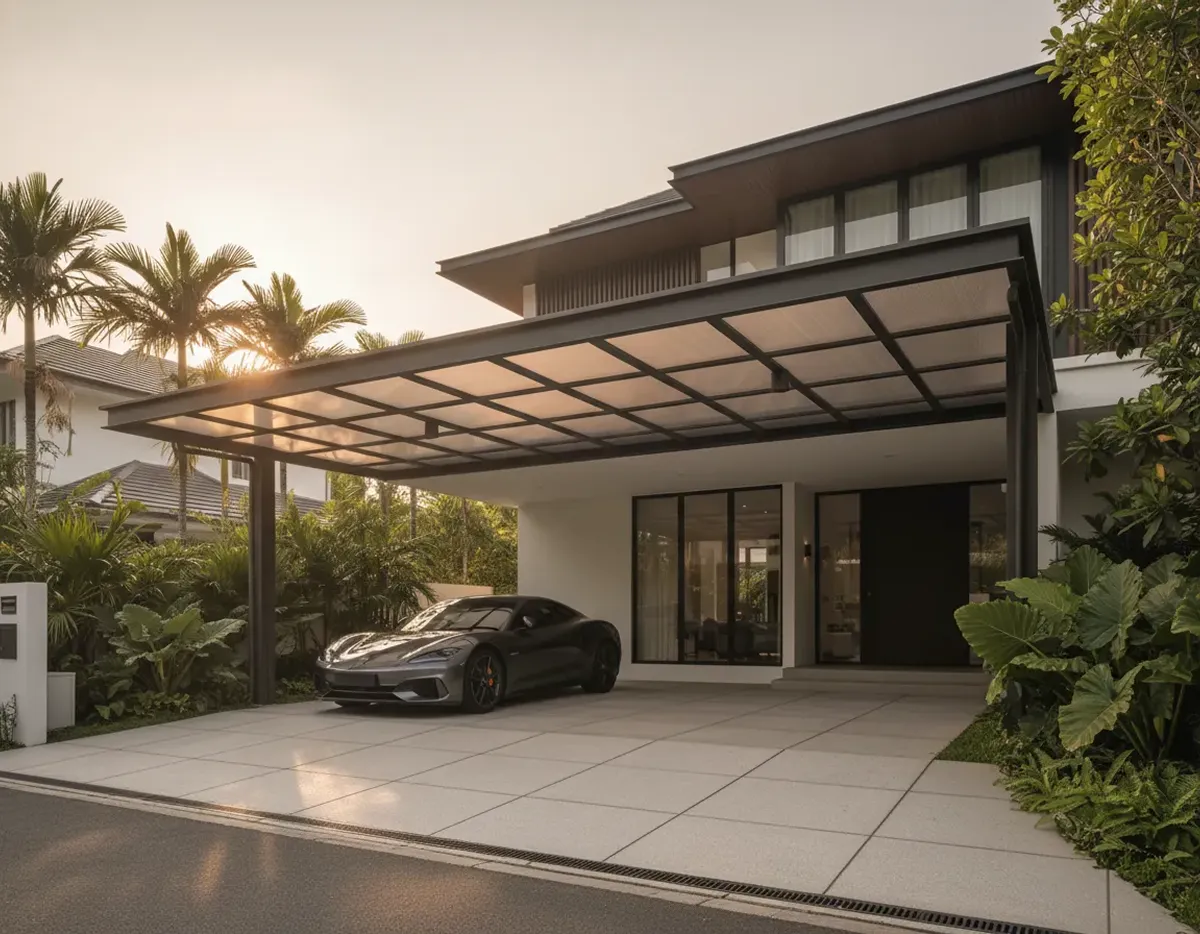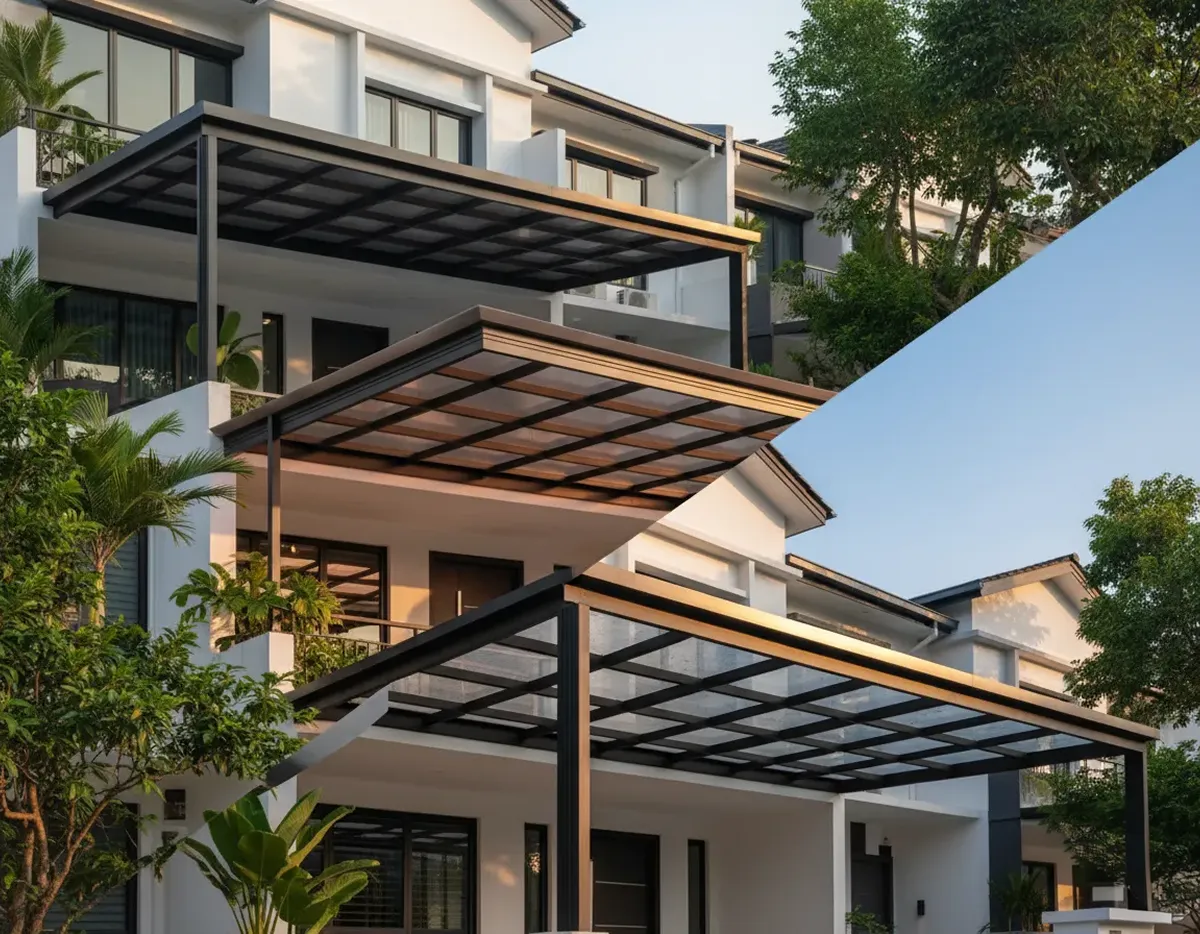
For shophouse owners, especially in a city like Singapore, the space outside your entrance is just as valuable as the space inside. Whether you are running a boutique, a cafe, or an office, the narrow frontages and "five-foot ways" characteristic of shophouses present unique challenges.
A retractable or fixed awning is a practical architectural addition designed to manage the tropical climate, protect the building's heritage facade, and increase the usable area of your business.
1. Protecting the Shophouse Entrance
Shophouses often feature large timber doors and windows that are susceptible to damage from constant exposure to the sun and heavy tropical rain.
- Preservation of Materials: Constant rain can cause wooden frames to rot, while intense UV rays cause paint to peel and fade. An awning acts as a primary shield, extending the life of your building’s exterior.
- The Five-Foot Way: In many regions, the "five-foot way" is a public walkway that must remain clear. An awning provides a service to the community by keeping this path dry and shaded, which naturally draws more foot traffic toward your storefront.
- Customer Attraction: A shaded entrance is much more inviting than one baked in the sun. If people feel a drop in temperature as they walk past your shop, they are more likely to stop and look at your window display.
2. Increasing Business Revenue
Installing an awning is a financial strategy as much as a construction one. It directly impacts how much money your business can make.
According to the Professional Awning Manufacturers Association (PAMA), adding a professional awning to a commercial space can increase total business revenue by an average of 30%.
This happens because you are essentially expanding your "sales floor" to the outdoors. For a shophouse cafe, this might mean adding two or three more tables. For a retail shop, it means you can display certain items outside without worrying about them getting ruined by a sudden downpour. When you have more space to serve more people, your daily transactions increase.
3. Managing Indoor and Outdoor Temperatures
The tropical heat can make the interior of a shophouse feel like an oven, especially those with large glass fronts or those facing the afternoon sun.
Blocking Heat Before It Enters
Unlike indoor curtains or blinds, which stop light after it has already passed through the glass, an awning blocks the sun before it hits the window.
According to a study by the Center for Sustainable Building Research at the University of Minnesota, an awning can reduce the energy used for air conditioning by 25% to 33%.
Because the glass isn't getting hot, your air conditioning system doesn't have to work nearly as hard to maintain a comfortable temperature inside. This leads to immediate and permanent savings on your monthly electricity bills.
Creating a Cooling Microclimate
By shading the pavement in front of your shop, you prevent the ground from absorbing heat and radiating it back up. This creates a "microclimate" that is significantly cooler than the surrounding street, making your outdoor seating area a preferred spot for customers.
4. Understanding Shophouse Regulations
Because many shophouses are heritage or conservation buildings, you cannot simply install any awning you like. You must follow specific guidelines (such as those from the URA or LTA in Singapore).
- Height Clearances: Most regulations require the bottom of the awning to be at least 2.2 to 2.5 meters above the ground to ensure pedestrians can walk safely.
- Projection Limits: There are strict rules on how far an awning can extend over the public walkway. Usually, this is limited to a certain percentage of the walkway width.
- Aesthetic Approval: For conservation shophouses, the color and material often need to match the historical period of the building. Standard colors like charcoal, forest green, or terracotta are common choices that meet these requirements.
5. Technical Specifications: Fabric and Frames
A shophouse awning needs to be industrial-grade because it is exposed to high humidity and heavy winds.
The Best Fabrics for the Tropics
- Solution-Dyed Acrylic: This is the gold standard. The color is part of the fiber itself, meaning it won't fade into a dull grey after six months of sun exposure.
- PVC-Coated Polyester: If your main goal is 100% rain protection, PVC-coated fabrics are completely waterproof and can be easily hosed down to remove city dust and grime.
- Phifer SheerWeave: This is a mesh-style fabric that blocks heat but allows some air and light to pass through. It is excellent for "screens" that drop down at the front of the awning to block the low afternoon sun.
The Aluminum Frame
The arms and rollers should be made of high-grade extruded aluminum. Aluminum does not rust, which is vital in a humid climate. Most commercial systems are powder-coated to provide an extra layer of protection against the salt and moisture in the air.
6. Manual vs. Motorized Systems
For a busy shophouse, the way you operate the awning matters for daily efficiency.
FeatureManual (Crank)Motorized (Automatic)CostLower upfront cost.Higher initial investment.Ease of UseRequires physical effort; takes 1–2 minutes.Opens/closes in seconds via remote or app.SafetyRelies on staff to remember to retract it in storms.Can include wind sensors for auto-retraction.MaintenanceFewer moving parts; simple gears.Requires electrical connection and motor checks.
Expert Recommendation: For shophouses, motorized systems with wind sensors are usually better. If a sudden thunderstorm hits while your staff is busy serving customers, the sensor will detect the high wind and pull the awning back automatically, preventing the arms from breaking.
7. Operational Benefits for Staff and Goods
An awning isn't just for the customers; it changes the "back-of-house" operations too.
- Protecting Displays: If you sell clothes, books, or packaged goods, an awning prevents UV rays from "bleaching" your inventory in the window.
- Staff Productivity: Staff working at the front counter or near the windows will be less fatigued. They won't be squinting against the glare or feeling the direct heat of the sun all day.
- Cleaner Shopfront: By blocking rain from hitting the windows directly, you reduce the amount of water spots and dirt that stick to the glass, meaning you have to clean your windows less frequently.
8. Summary Table: Why Shophouses Need Awnings
FactorPractical BenefitRevenue+30% average increase in sales via expanded seating.Energy25-33% reduction in AC costs by blocking solar heat.MaintenanceProtects heritage wood and paint from rain and sun damage.Customer FlowKeeps the five-foot way dry, encouraging people to walk by.ComplianceMeets URA/heritage guidelines when using approved colors.
Conclusion: A Strategic Investment
For the shophouse owner, an awning is a solution to the "dead space" problem. It takes a sidewalk that is either too hot or too wet to use and turns it into a high-value asset. By following the local regulations and choosing high-durability materials like solution-dyed acrylic and aluminum frames, you create a structure that pays for itself through energy savings and increased customer capacity.
When you look at your shophouse as a business engine, the awning is the component that allows that engine to run at 100% capacity, regardless of what the weather is doing outside.