Is ACP roofing sustainable? Learn why aluminium composite panels are low-maintenance, long-lasting and recyclable—plus how Ruufer handles eco-friendly upgrades.
Aluminium has a strong sustainability story: it’s durable, corrosion-resistant, and endlessly recyclable with no loss of quality. When used as ACP (Aluminium Composite Panel) roofing—two aluminium skins bonded to a solid core—you get a solid roof that stays tidy for years with minimal upkeep, and can be recycled responsibly at end of life. Here’s the plain-English rundown for Singapore homes.
Why aluminium (and ACP) works for our climate
Corrosion resistance in the tropics.
Aluminium naturally forms a thin oxide layer that resists rust. With quality coatings (e.g., PVDF), ACP panels shrug off humidity, salt-laden air, and tropical downpours far better than many painted steels or ageing plastics.
Stable colour; no yellowing.
Unlike clear plastics that can haze or yellow, coated aluminium keeps a consistent, modern finish. That means fewer “refresh” cycles and less material going to waste.
Heat and glare control by design.
Solid ACP blocks direct sun and glare, making spaces feel cooler at midday. Choosing lighter colours can improve heat reflection; adding a slim under-roof insulation further reduces heat transfer and rain noise.
Quiet, clean lines.
ACP’s rigid, flat surface damps vibration better than thin plastics. Properly detailed with fascia trims and flashing, it looks “built-in” and stays easy to clean.
Low maintenance = lower lifetime footprint
Simple cleaning.
Most ACP roofs need just occasional washing with water and mild soap. No special coatings or aggressive chemicals are required—better for your time and the environment.
Fewer replacements.
Because ACP doesn’t yellow or become brittle, you’re not cycling through panels every few years. Extending the replacement cycle is one of the most effective ways to reduce the lifecycle footprint of any building element.
Repairable details.
Noise or leaks usually trace back to detailing (slope, flashing, gutters), not the panel. Fix the detail and the roof keeps serving—no need to discard large, still-good surfaces.
Is ACP really recyclable?
Short answer: Yes—with the right process.
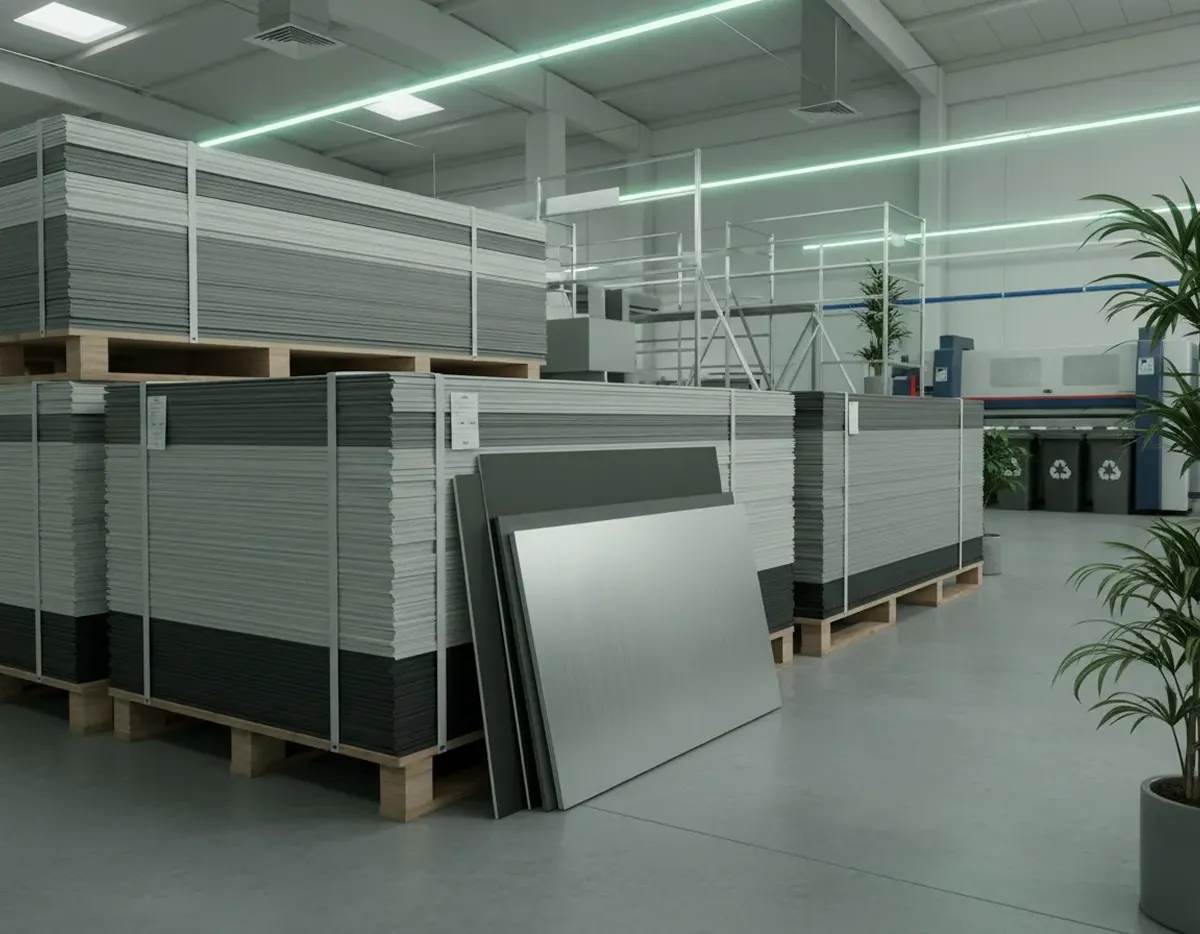
The aluminium skins are fully recyclable. Modern recyclers can separate or process the composite to recover the aluminium (the core is typically PE or mineral-filled FR). In Singapore, not every scrap yard accepts composite panels, so routing through the right facility matters.
How Ruufer handles it.
- During replacements, we sort and route ACP offcuts and removed panels to metal recyclers that can recover aluminium.
- We avoid contamination (e.g., excessive sealant residues) that would reduce recyclability.
- Where available, we coordinate manufacturer or recycler take-back for larger volumes.
Reality check: “Recyclable” only helps when materials actually reach a recycler. That’s why collection and routing—in addition to the material choice—are part of our standard workflow.
ACP vs common alternatives (lifetime view)
Design choices that make ACP even “greener”
- Choose durable finishes. PVDF coatings resist chalking and fade for longer—fewer repaints or panel swaps.
- Optimise spans. Adequate supports reduce vibration and extend service life; no over-spanning to “save” one bracket.
- Contain drainage. Integrated gutters and downpipes prevent dirty streaks, so you clean less and the façade stays fresh.
- Specify repairable details. Standardised trims and accessible fixings make future maintenance small and surgical.
Frequently asked (straight answers)
Will a solid roof make my space too dark?
If you want daylight, keep clear sections (polycarbonate or glass) or design a hybrid: solid ACP over the hottest zone, clear strip where you want light.
Does ACP need special cleaners?
No. Mild soap and water, soft cloths, and a rinse first (to remove grit) are the basics. Avoid harsh solvents.
Is FR-grade ACP “more sustainable”?
FR cores improve fire performance; sustainability still depends on durability, maintenance, and end-of-life routing—areas where ACP generally scores well.
Bottom line
If your priorities are shade, quiet, long life and low upkeep, ACP is a strong sustainability choice: durable in the tropics, easy to maintain, and recyclable when properly routed. Pair it with good detailing and you reduce both operational (cleaning, repairs) and material (replacements) impacts over the roof’s life.
Ready to plan a lower-maintenance upgrade?
Book a Free Site Check. We’ll compare ACP solid roofs with polycarbonate and glass for your space, show finish options, explain our recycling/collection process for old panels, and give a clear price range—so you can choose confidently. Explore next: [ACP Roofing Singapore], [Polycarbonate Roofing Singapore], [Awning Leak & Flashing Repairs].