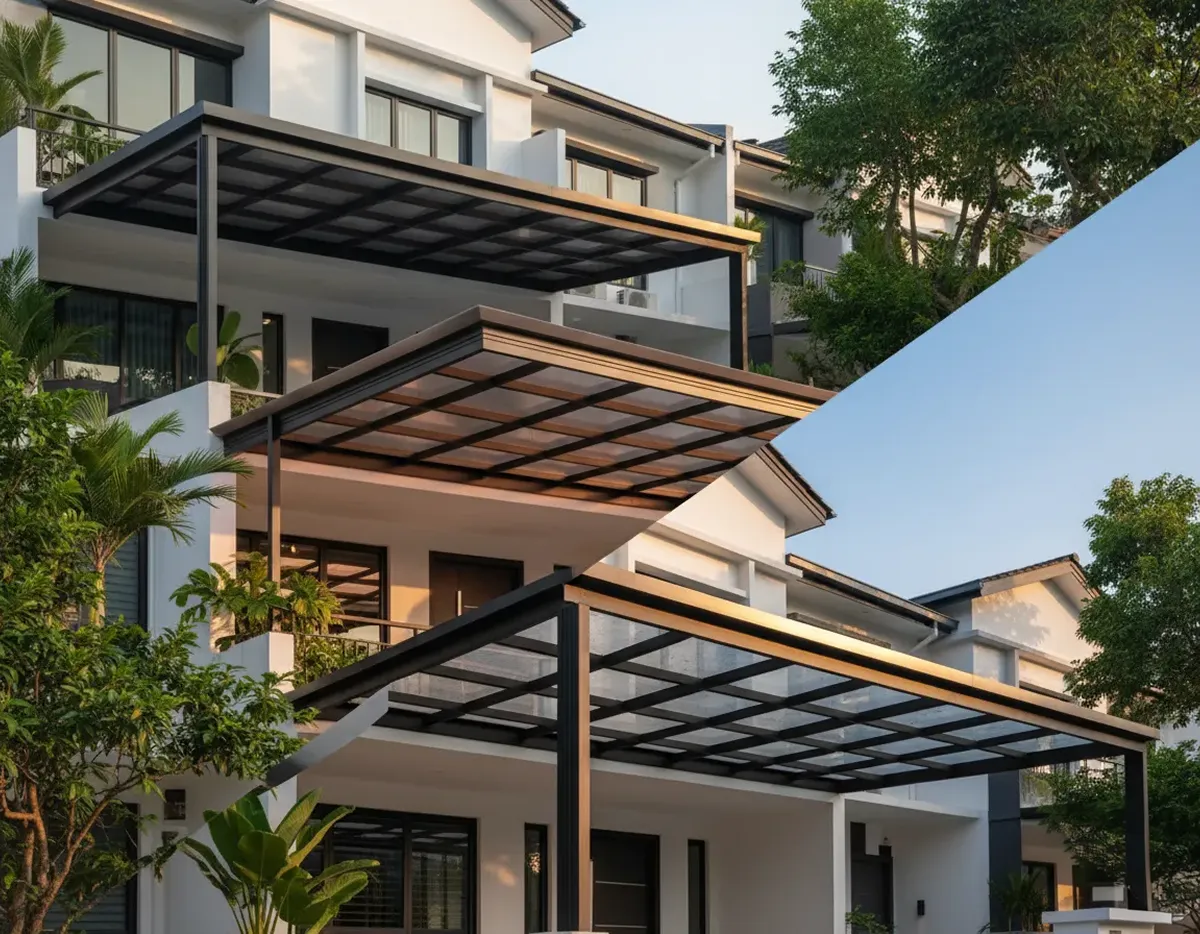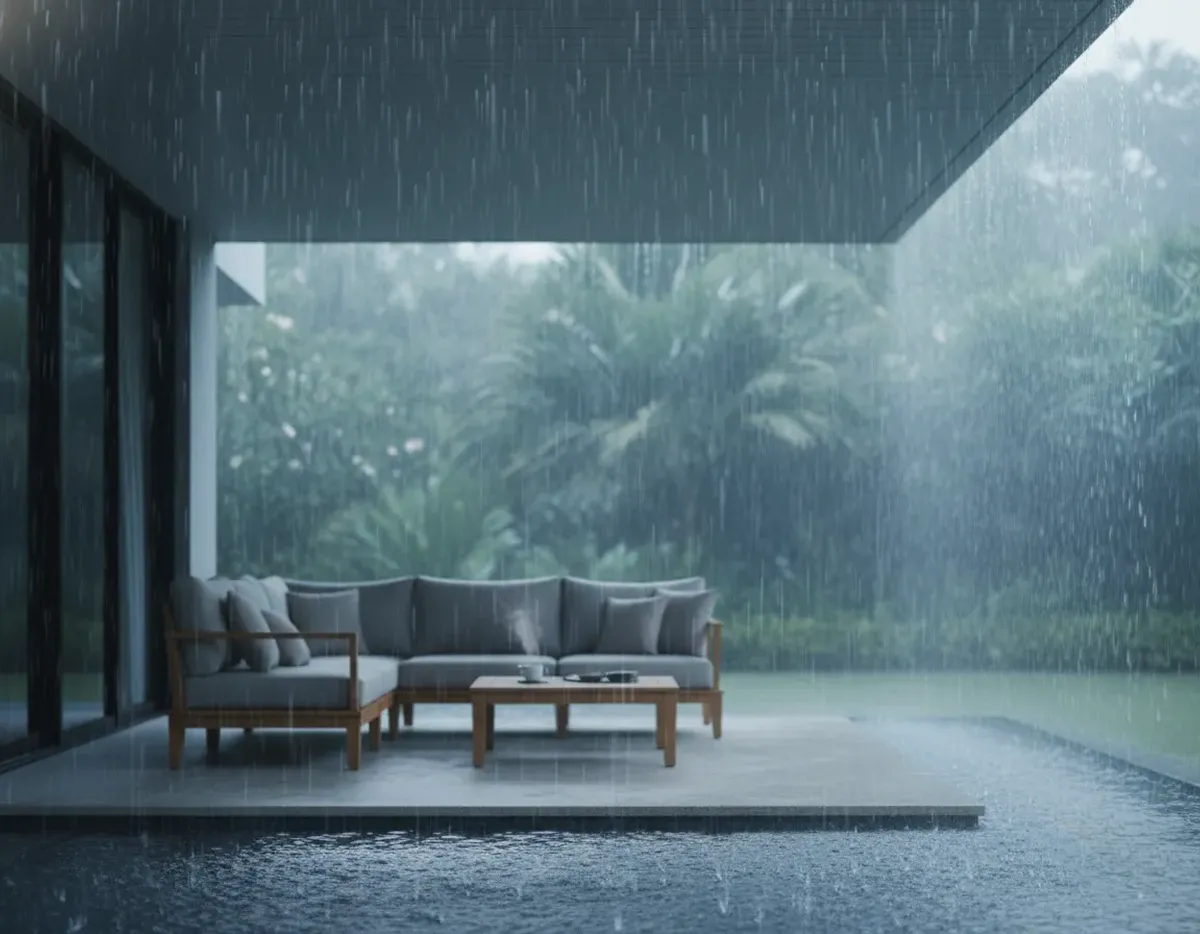
Polycarbonate roofing is one of the most flexible shelter options in Singapore. It lets in natural light, keeps spaces usable during rain, and works across both residential and commercial settings.
But it’s not a one-size-fits-all solution. In the wrong spot, it can trap heat or wear out faster. In the right setup, it creates bright, sheltered spaces that feel open and comfortable.
This guide breaks down where polycarbonate actually works best, and what to consider before installing it.
Why This Matters in Singapore
Singapore’s climate makes roofing decisions more important than they seem.
Heavy Rain
Frequent downpours mean your roofing system needs proper slope and sealing to avoid leakage.
Strong UV and Heat
Polycarbonate allows light through, but without the right type, it can also increase heat under the shelter.
High Humidity
Moisture affects joints, screws and sealants over time, making proper waterproofing essential.
That’s why polycarbonate applications in roofing Singapore projects must be carefully matched to the space.

5 Smart Ways to Use Polycarbonate Roofing
1. Balcony Covers That Stay Bright
Polycarbonate works well for balconies because it protects from rain without blocking daylight.
This makes the space usable for:
- Drying clothes
- Small seating areas
- Storage
What to watch out for:
Use tinted or heat-reducing sheets for balconies that face strong afternoon sun.
2. Patio Shelters That Don’t Feel Enclosed
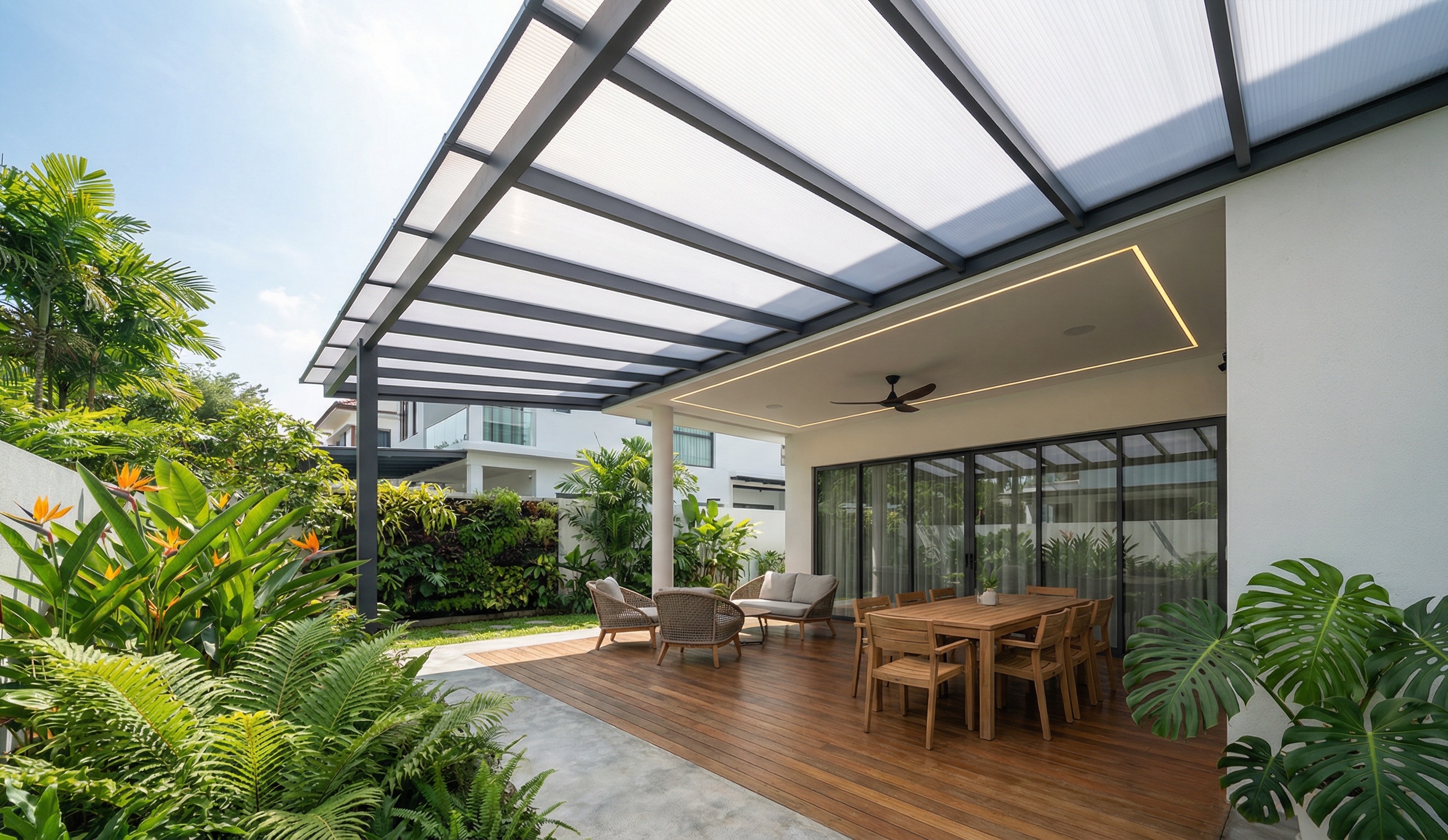
For landed homes, polycarbonate is ideal for patios where you want shelter but still want the space to feel open.
It’s especially useful for:
- Outdoor dining
- Casual seating
- Entertaining guests
Compared to solid roofing, it avoids the “boxed-in” feeling.
3. Walkways That Stay Dry Without Looking Heavy
Covered walkways are often overlooked, but they make a big difference during rainy days.
Polycarbonate is a good fit because:
- It keeps pathways dry
- Maintains visibility
- Doesn’t visually weigh down narrow spaces
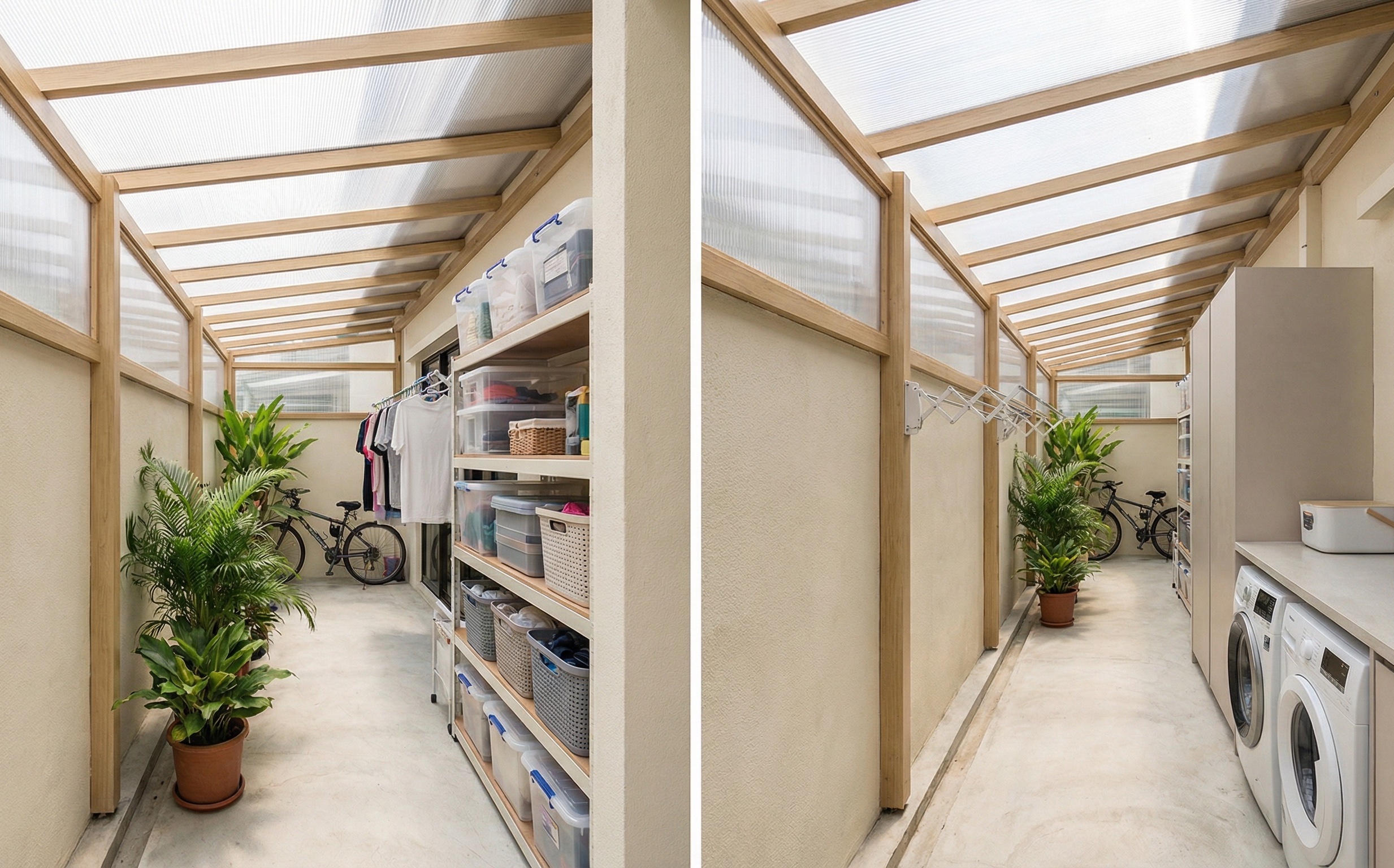
4. Side Yard Covers Without Making It Cramped
Service areas and side yards are usually tight.
Using polycarbonate here helps:
- Protect laundry or storage
- Keep access routes dry
- Maintain brightness in narrow spaces
Solid roofing in these areas can feel too enclosed.
5. Skylight Panels Within Larger Roofing Systems
Instead of using polycarbonate everywhere, many designs use it selectively.
For example:
- Combining solid roofing with polycarbonate panels
- Adding skylight sections to bring in natural light
This gives you the best of both:
Shade where needed, and light where it matters.
Polycarbonate vs Solid Roofing (ACP / Metal)
Choosing between polycarbonate and solid roofing depends on how the space is used.
Polycarbonate Roofing
- Durability: Moderate to high
- Maintenance: Low
- Waterproofing: Good with proper sealing
- Heat reduction: Moderate
- Best use case: Spaces needing natural light (balconies, patios, walkways)
Solid Roofing (ACP / Metal)
- Durability: High
- Maintenance: Low to moderate
- Waterproofing: Excellent
- Heat reduction: Better overall
- Best use case: Car porches, large shelters, heat-sensitive areas

Common Mistakes When Using Polycarbonate Roofing
Polycarbonate performs well, but only if used correctly.
Common mistakes include:
- Using clear sheets in areas with strong sun exposure
- Installing panels without proper slope, leading to water pooling
- Poor waterproofing at joints and screw points
- Insufficient structural support for wider spans
- Choosing polycarbonate where solid roofing would perform better
These issues often lead to faster wear or the need for roof leak repair.
How Ruufer Designs Polycarbonate Roofing That Works Long-Term
As a specialist in roofing Singapore and an experienced awning contractor Singapore, Ruufer focuses on using polycarbonate where it actually makes sense.
This includes:
- Recommending the right type (clear, tinted, heat-reducing)
- Designing proper slope for rainwater drainage
- Ensuring strong support for long-term durability
- Applying proper waterproofing at all joints
- Combining materials when needed for better performance
- Reducing the risk of future roof leak repair
The goal is to make the space usable, comfortable and reliable over time.
Final Thoughts: Using Polycarbonate the Right Way
Polycarbonate works best when it’s used intentionally.
Key takeaways:
- Choose polycarbonate for areas that benefit from natural light
- Use tinted or heat-reducing sheets for high sun exposure
- Ensure proper slope for effective drainage
- Prioritise waterproofing at all joints and connections
- Combine with solid roofing where better heat control is needed
When applied correctly, polycarbonate roofing can brighten up spaces while still providing practical protection in Singapore’s climate.